 listicle
Best Coffee Beans for Home Espresso Machines
Table of Contents
- Quick Comparison: Best Coffee Beans for Home Espresso Machines
- What Makes a Good Espresso Bean
- Espresso Roast vs Coffee Roast: What's the Difference?
- Top Beans for Every Espresso Style
- 6 Bean Blend: Dark Roast House Blend
- Blonde: Sweet Espresso Blend
- African Espresso: Medium-Dark Blend
- Italian Roast: Darkest Roast Blend
- Bali Blue: Single-Origin Med-Dark
- Brazil Santos: Medium Single-Origin
- Guatemala: Medium Single-Origin
- Sumatra: Single-Origin with Syrupy Body
- Bali Coffee Pods: Convenient Single-Origin
- How to Dial In Espresso for Your Machine
- Best Grind Size for Espresso
- Freshness, Storage, and Roast Dates
- Frequently Asked Questions
Last Updated: September 20, 2026
Quick Comparison: Best Coffee Beans for Home Espresso Machines
Finding the best coffee beans for home espresso machines comes down to three variables: roast level, freshness, and how the bean behaves under pressure. According to Specialty Coffee Association brewing standards, grind consistency and bean freshness are the two biggest factors in shot quality.
| Bean | Roast Level | Flavor Profile | Best For |
|---|---|---|---|
| 6 Bean Blend | Dark | Bold, complex, full-bodied | Traditional espresso, milk drinks |
| Blonde | Light-Medium | Sweet, bright, balanced | Sweet espresso, straight shots |
| African Espresso | Medium-Dark | Fruity, floral, cocoa | Pour-over crossover, milk drinks |
| Italian Roast | Darkest | Heavy, smoky, low acidity | Ristretto, bold palates |
| Bali Blue | Medium-Dark | Dark chocolate, molasses | Syrupy single-origin shots |
| Brazil Santos | Medium | Smooth, cocoa, nutty | Everyday espresso |
| Guatemala | Medium | Chocolate, bright fruit | Balanced single-origin |
| Sumatra | Medium-Dark | Earthy, syrupy, dried fruit | Heavy body lovers |
| Bali Coffee Pods | Medium-Dark | Dark chocolate, molasses | Convenience, pod machines |
What Makes a Good Espresso Bean
A good espresso bean is dense, freshly roasted, and roasted for pressure extraction rather than drip brewing. Density matters because espresso forces water through the puck at high pressure, and denser beans resist more evenly, producing better crema and a more balanced shot.
Three things separate espresso-grade beans from generic coffee:
- Bean density: Higher-altitude, harder beans extract more evenly under pressure
- Roast timing: Beans need to rest a few days after roasting to release CO2 before pulling shots
- Solubility: Espresso roast profiles are developed so the bean gives up flavor quickly, in under 30 seconds
Arabica vs Robusta for Espresso
Arabica delivers sweetness, acidity, and complexity. Robusta adds body, crema stability, and caffeine. Most traditional espresso blends use both, not a compromise, but a design choice. Our Italian Roast blends specialty-grade Arabica and Robusta for exactly this reason: Robusta thickens the crema while Arabica keeps the cup from tasting flat.
Roast Level and Flavor Profiles
Roast level decides most of what you taste. Dark roasts push toward chocolate, caramel, and nuts. Medium roasts keep more origin character, fruit, acidity, brightness. Light roasts can taste sour in espresso if your machine runs cool, which is why most home setups do best with medium to dark.
Espresso Roast vs Coffee Roast: What's the Difference?
Espresso roast is not a distinct roast level. It is a roast profile developed so the bean extracts well under pressure in a short time. Coffee roast, by contrast, is developed for slower methods like drip or French press.
Top Beans for Every Espresso Style
Every bean below is roasted to order and shipped the same day, the single biggest lever you have over shot quality. Here is how to match each one to your setup.
6 Bean Blend: Dark Roast House Blend
Our most versatile dark roast, blended from coffees sourced worldwide. It pulls thick, chocolatey shots that hold up in milk drinks, one bag for lattes, cappuccinos, and straight espresso. SHOP FRESH
Blonde: Sweet Espresso Blend
A sweet blend from Central America and Africa, built for a brighter shot. If you drink espresso straight and want less bitterness, start here. SHOP FRESH
African Espresso: Medium-Dark Blend
Kenya, Tanzania, and Ethiopia in one blend, with fruit-forward notes and a cocoa finish. The pick for drinkers who want origin character in a milk drink. SHOP FRESH
Italian Roast: Darkest Roast Blend
Our darkest roast, slow-roasted from specialty-grade Arabica and Robusta. Heavy, smoky, low in acidity, best for ristretto and the old-school Italian profile. SHOP FRESH
Bali Blue: Single-Origin Med-Dark
Grown by smallholder farmers in Kintamani, Bali, at 1,200 to 1,600 meters. Tasting notes of dark chocolate, molasses, and brown sugar. Syrupy and sweet. SHOP FRESH
Brazil Santos: Medium Single-Origin
An elegant, smooth cup with cocoa notes, grown in Parana and Sao Paulo. The everyday espresso for drinkers who want balance over intensity. SHOP FRESH
Guatemala: Medium Single-Origin
From smallholder farmers in Antigua: dark chocolate, bright fruit, and butterscotch. The best single-origin pick for sweetness with structure. SHOP FRESH
Sumatra: Single-Origin with Syrupy Body
Medium acidity, syrupy body, dark chocolate, dried fruit, and an earthy finish. Grown in Aceh and wet-hulled in the traditional Giling Basha method. SHOP FRESH
Bali Coffee Pods: Convenient Single-Origin
The same Bali Blue profile in pod form. If you want single-origin coffee without dialing in a grinder, this is the shortcut. SHOP FRESH
How to Dial In Espresso for Your Machine
Dialing in espresso means adjusting grind size, dose, and yield until the shot tastes balanced rather than sour or bitter. The universal starting point is a 1:2 ratio, 18 grams in, 36 grams out, in 25 to 30 seconds, but that baseline only works if your machine holds temperature and pressure steady.
Match the Bean to Your Machine Type
Thermoblock machines (most sub-$500 home units). These heat water on demand and tend to run cooler with temperature swings between shots. They pair best with medium-dark to dark roasts, which extract more readily at lower temperatures. A light roast on a thermoblock commonly pulls sour no matter how fine you grind.
The Adjustment Order
- Set your dose first and keep it fixed, changing dose mid-dial is the most common reason people chase their own tail.
- Adjust grind size to hit your target time window.
- Adjust yield last, to fix taste once time is in range.
If the shot runs faster than 25 seconds and tastes sour, grind finer. If it runs past 30 seconds and tastes bitter or dry, grind coarser. If time is in range but the shot still tastes wrong, the problem is usually the bean, not the grinder, see the troubleshooting section below.
Troubleshooting Sour vs. Bitter by Bean Type
Most "my espresso tastes bad" problems fall into two buckets, and the fix depends on the bean.
- Sour, thin, or salty shots. Usually under-extraction. On a light or medium roast, this often means the bean is underdeveloped for your machine's temperature ceiling, try a darker roast before grinding finer than your grinder can consistently produce. On a dark roast, sour usually means grind is too coarse or dose is too low.
- Bitter, dry, or ashy shots. Usually over-extraction. On a dark roast, back off the grind or drop the temperature if your machine allows it. On a medium roast, bitterness often signals channeling from an uneven grind rather than a true over-extraction.
- Sour and bitter in the same shot. Classic channeling. Water is punching through one part of the puck and barely touching the rest. Fix distribution and tamp before touching the grind setting.
Best Grind Size for Espresso
The best grind size for espresso is fine enough to create resistance but not so fine that it chokes the machine, a texture close to powdered sugar, finer than drip but coarser than Turkish.
Two things matter more than the exact setting:
- Consistency: A burr grinder produces even particles, which prevents channeling
- Freshness: Freshly roasted beans need a slightly coarser grind than stale ones, because they still release CO2
Freshness, Storage, and Roast Dates
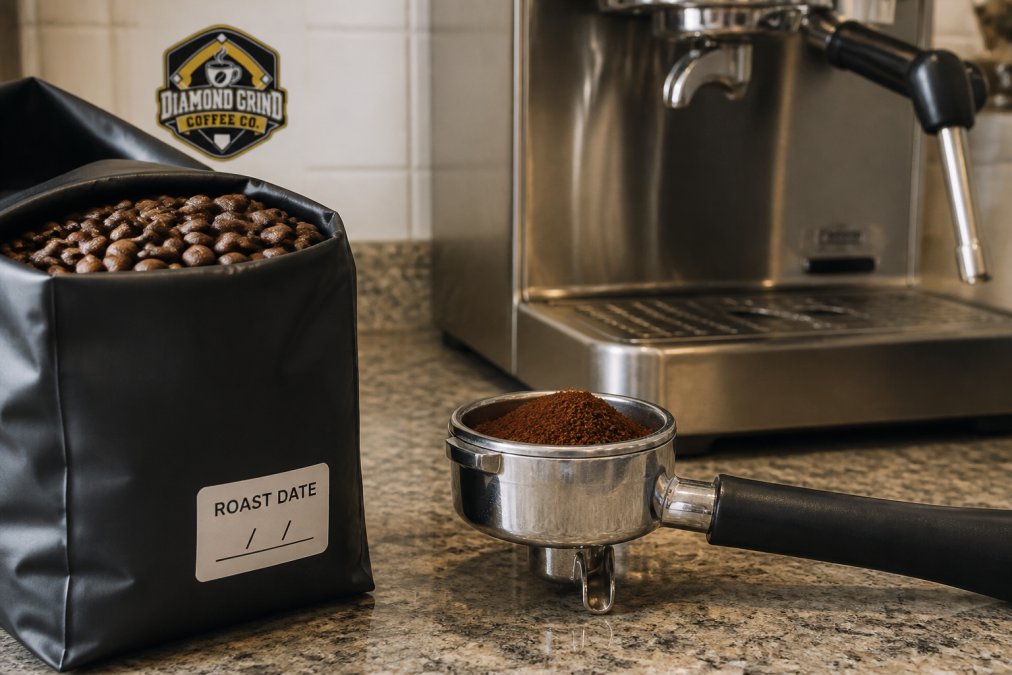
Freshness is the difference between a shot with crema and one that tastes flat. Coffee peaks roughly 4 to 14 days after roasting, then declines. That is why roast dates matter more than "best by" dates, which say nothing about when the coffee was roasted.
Where You Buy Determines How Fresh You Can Get
Most guides stop at "buy fresh beans." The harder question is where fresh beans come from, because the three common purchase channels have very different freshness ceilings.
Storage Rules That Actually Work
- Keep beans in an airtight, opaque container at room temperature, away from the stove and the window.
- Skip the fridge for daily-use beans, moisture and odors transfer every time you open the door.
- The freezer is fine for long-term storage of unopened bags, but only if you thaw the bag fully before opening it, and only if you do not plan to dip in and out.
- Buy in smaller quantities more often rather than stocking up on a "deal."
- Check for a printed roast date, not just a best-by date.
A Simple Freshness Decision Rule
If you pull one or two shots a day, buy one bag at a time from a roast-to-order source and reorder about a week from empty. If you pull four or more, a subscription sized to weekly consumption keeps you inside the peak window.
Frequently Asked Questions
Do I need special coffee beans for an espresso machine?
No, you don't need beans labeled 'espresso roast.' Any high-quality coffee bean can work in a home espresso machine. The key factors are freshness, grind size, and roast level. Darker roasts tend to be more forgiving for beginners because they extract more easily. Lighter roasts require finer grinding and more precise dialing in. Focus on beans roasted within the last two weeks and adjust your grind to match your machine's pressure and basket size.
What is the best grind size for espresso?
Espresso requires a fine grind, similar to table salt or powdered sugar. The exact setting depends on your grinder and machine. Start with a fine setting and adjust: if the shot runs too fast (under 20 seconds), grind finer; if it runs too slow (over 35 seconds), grind coarser. Aim for a 25-30 second extraction for a double shot. Freshly ground beans make the biggest difference, so grind right before brewing.
How does roast level affect espresso extraction?
Roast level changes how easily water extracts flavor from the bean. Dark roasts are more porous and extract faster, often producing chocolatey, nutty, or caramel notes with lower acidity. Medium roasts balance sweetness and acidity, while light roasts are denser and need finer grinding and higher water temperature. For home espresso machines, medium to dark roasts are more forgiving. Try Diamond Grind Coffee's Italian Roast for a deep, heavy flavor or Blonde for a sweeter shot.
Why is bean freshness critical for home espresso?
Fresh beans contain more carbon dioxide, which helps create crema and a full-bodied shot. Beans roasted more than four weeks ago lose most of that gas and taste flat or stale. Look for a roast date on the bag, not just a best-by date. Diamond Grind Coffee roasts your order the same day it ships, so you get beans at peak flavor. Store them in an airtight container away from light and heat, and use within two to three weeks for best results.
Can I use light roast coffee in an espresso machine?
Yes, but light roasts are harder to dial in. They are denser and less soluble, so you need a finer grind, higher water temperature (around 200-205°F), and sometimes a longer pre-infusion. Light roasts often highlight fruity, floral, and acidic notes. If you prefer a more traditional espresso profile, start with medium or dark roasts like Diamond Grind Coffee's Brazil Santos or 6 Bean Blend. Experiment with grind size and dose to avoid sour or bitter shots.