 Listicle
7 Best Coffee Beans for Iced Lattes at Home
Last Updated: October 30, 2026
Quick Summary
The best iced latte beans are medium to dark roasts with full body and chocolate, caramel, or nutty notes that survive ice and milk. Our top pick is the 6 Bean Blend, a dark roast with a bold, chocolatey backbone built for espresso. Every bag is $24.99 and roasted after you order.
- Light, tea-like roasts usually turn flat and watery in an iced latte, so save them for hot brewing.
- Start with one double shot of about 2 ounces over 4 to 6 ounces of milk and a generous glass of ice.
- On a pump machine, dose 18 grams and aim for a 1:2 ratio in 25 to 30 seconds.
- For cold brew concentrate, use a 1:5 ratio by weight and steep coarse grounds 12 to 18 hours.
- Whole bean beats pre-ground because you can adjust the grind as the beans age.
Table of Contents
- What Makes the Best Coffee Beans for Making Iced Lattes at Home
- 7 Best Coffee Beans for Iced Lattes at Home
- 1. 6 Bean Blend: The Bold, Chocolatey Base for Iced Lattes
- 2. African Espresso: Bright Acidity That Cuts Through Milk
- 3. Brazil Santos: Smooth Cocoa Notes for a Mellow Iced Latte
- 4. Blonde: Sweet Espresso for a Lighter Iced Latte
- 5. Guatemala: Dark Chocolate and Butterscotch That Hold Up to Ice
- 6. Peru: Salted Caramel and Citrus for a Silky Iced Latte
- 7. Vanilla Hazelnut: A Flavored Option That Needs Less Syrup
- How to Choose Coffee Beans for Iced Coffee and Iced Lattes
- Best Espresso Beans for Home Machines and Iced Lattes
- Best Beans for Iced Coffee, Cold Brew Lattes, and Espresso Lattes
- Coffee Beans for Cold Brew and Cold Brew Lattes
- Order Fresh-Roasted Iced Latte Beans for Your Next Batch
- Frequently Asked Questions
What Makes the Best Coffee Beans for Making Iced Lattes at Home
Iced lattes are unforgiving drinks. Cold mutes aroma, ice dilutes flavor, and milk blankets everything underneath. That is why the best coffee beans for making iced lattes at home are not simply the beans you love hot. Freshness is one of the biggest levers on flavor, which is why roasting to order matters.
Why Iced Lattes Need a Different Bean Than Hot Lattes
Heat carries aroma; cold suppresses it.
The fix is a bean with more body, more sweetness, and a flavor profile built to push through.
There is also the dilution problem. Ice melts. A concentrated espresso shot poured over ice and milk gets weaker by the minute.
Watch out: using a very light, tea-like roast for an iced latte usually produces a flat, watery drink.
7 Best Coffee Beans for Iced Lattes at Home
Here are our seven picks, ranked by how well each one performs over ice and milk. Every bag is $24.99, roasted after you order, and available in customizable grind options.
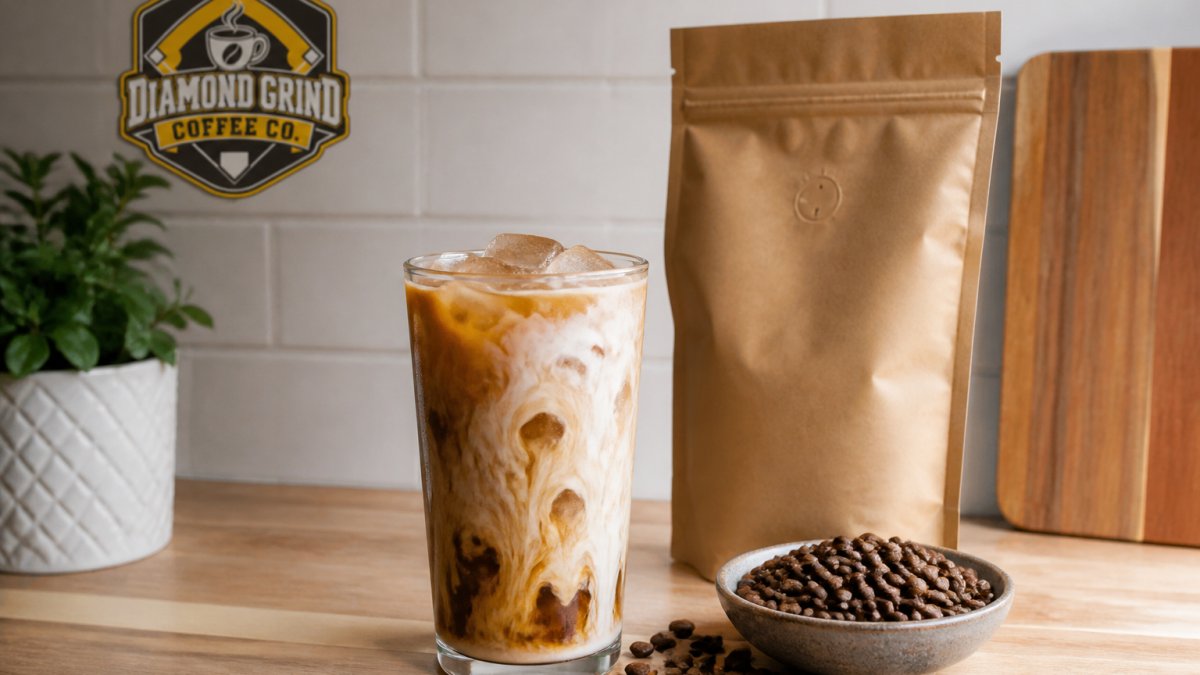
1. 6 Bean Blend: The Bold, Chocolatey Base for Iced Lattes
Our house blend is the closest thing to a sure bet for iced lattes. A dark roast built from six coffees, it delivers the bold, chocolatey backbone that survives ice, milk, and a long sit in the glass.
Best for: anyone who wants a café-style iced latte with real depth. Skip if: you drink your coffee black and light.

2. African Espresso: Bright Acidity That Cuts Through Milk
A medium-dark blend of Kenyan, Tanzanian, and Ethiopian coffees, African Espresso brings the acidity that makes an iced latte taste alive. That brightness slices through cold milk instead of sinking under it.
This is the pick for drinkers who find dark roasts heavy.

3. Brazil Santos: Smooth Cocoa Notes for a Mellow Iced Latte
Brazil Santos is a medium-roast single origin with an elegant, smooth cup and clear cocoa notes. It is the quiet, dependable option: no sharp edges, just a rounded chocolate sweetness that pairs naturally with milk.
If you drink iced lattes daily and want something you never get tired of, this is it.
4. Blonde: Sweet Espresso for a Lighter Iced Latte
Blonde is a sweet blend drawn from Central American and African coffees, built for sweet espresso. It produces a lighter, gentler iced latte where sweetness leads and roast character stays in the background.
This is the one to reach for if you like a sweeter flavor profile.

5. Guatemala: Dark Chocolate and Butterscotch That Hold Up to Ice
Guatemala is a medium roast from smallholder farms in Antigua, with dark chocolate, bright fruit, and butterscotch in the cup. The listing describes dark chocolate, bright fruit, and butterscotch in the cup.
The fruit keeps it from tasting flat, and the chocolate gives it weight against the milk.
6. Peru: Salted Caramel and Citrus for a Silky Iced Latte
Peru brings salted caramel, silky sweetness, and citrus from a medium roast grown in the Piura and Amazonas regions.
This is the dessert-adjacent iced latte, the one that tastes indulgent even when you add nothing but milk and ice. A common mistake is over-grinding it; keep the grind matched to your espresso machine.
7. Vanilla Hazelnut: A Flavored Option That Needs Less Syrup
Vanilla Hazelnut is a medium-roast single origin lightly flavored with natural vanilla and hazelnut.
How to Choose Coffee Beans for Iced Coffee and Iced Lattes
Choosing beans for iced drinks comes down to four things: roast level, body, flavor profile, and freshness. Get those right and the drink mostly makes itself.
- Roast level: medium to dark roasts hold up best over ice and milk. Light roasts tend to vanish.
- Body: fuller-bodied beans survive dilution. Thin, tea-like coffees do not.
- Flavor profile: chocolate, caramel, nut, and dark fruit notes read well cold. Delicate florals usually do not.
Whole bean beats pre-ground every time for iced lattes, because you control the grind for your brewer and the coffee stays fresher longer. If you buy pre-ground, choose the grind that matches your machine and use it within a few weeks.
A quick note on ratios: start with one double shot (about 2 ounces) over 4 to 6 ounces of milk and a generous glass of ice, then adjust. Too milky and the coffee disappears; too strong and the ice dilution never catches up.
Best Espresso Beans for Home Machines and Iced Lattes
The best espresso beans for home machines are fresh, correctly ground, and matched to the drink you are building. For iced lattes specifically, lean toward medium and dark roasts with strong sweetness and body. But the machine you own changes which bean and grind will actually work, so here is how to match them.
Match the Bean to Your Equipment
Pump espresso machines (semi-automatic or automatic): These give you the most control and the most forgiveness.
Moka pots: A moka pot brews a strong, concentrated coffee that is closer to espresso than drip but not true espresso.
Manual lever and portable espresso makers: These reward a fine, consistent grind and a bean with enough sweetness to forgive small pressure variations.
Dial-In Numbers That Actually Help
A few concrete starting points save a lot of trial and error:
- Dose: 18 grams for a double shot on most home machines; 14 to 16 grams for smaller baskets.
- Yield: 1:2 ratio for a concentrated shot that survives ice and milk; 1:2.5 if you prefer a slightly softer drink.
- Time: 25 to 30 seconds from first drop to finish on a pump machine.
Whole Bean Versus Pre-Ground for Espresso
Whole bean is the better choice for espresso because you can adjust the grind as the beans age.
Our 6 Bean Blend and African Espresso are the two we would point most home baristas toward. Both are built for espresso, both have the structure to survive ice, and both are roasted to order.
Best Beans for Iced Coffee, Cold Brew Lattes, and Espresso Lattes
Not every iced drink is built the same way, and the bean should follow the method. An espresso-based iced latte needs a concentrated, syrupy shot to stand up to milk and ice.
| Drink | Brew Method | Best Bean Style | Why It Works |
|---|---|---|---|
| Iced latte | Espresso over ice | Medium to dark roast, full body | Concentrated shot survives milk and dilution |
| Cold brew latte | Steeped coarse grounds | Dark French roast or medium blend | Slow extraction builds smooth, low-acid flavor |
| Iced coffee | Hot brew chilled or poured over ice | Medium roast, balanced sweetness | Keeps clarity without turning bitter |
For iced coffee poured hot over ice, a medium roast like Brazil Santos keeps things clean and balanced. For cold brew, our Cold Brew Coffee blend is ground coarse and built specifically for the method.
Coffee Beans for Cold Brew and Cold Brew Lattes
Cold brew rewards coarse grinds and darker roasts, but a cold brew latte is a different drink from an espresso iced latte, and the bean and ratio should follow the method. Our Cold Brew Coffee comes in two expressions: a dark French roast blended specifically for cold brew, and a medium blend with smooth chocolate, toffee, and floral tones that works equally well for cold brew or nitro.
Cold Brew Latte Versus Espresso Iced Latte
The difference is concentration and texture. An espresso iced latte is built from a small, intense shot poured over milk and ice. A cold brew latte is built from a larger volume of steeped, diluted cold brew concentrate mixed with milk. The cold brew version is smoother, lower in acidity, and more forgiving, but it can taste watery if the concentrate is too weak.
| Factor | Espresso Iced Latte | Cold Brew Latte |
|---|---|---|
| Coffee base | 1 double shot (about 2 oz) | 4 to 6 oz cold brew concentrate |
| Milk | 4 to 6 oz | 4 to 6 oz |
| Ice | Fill glass two-thirds | Fill glass two-thirds |
| Bean style | Medium to dark, full body | Dark French roast or medium blend |
| Grind | Fine espresso | Coarse, like sea salt |
| Best for | Café-style depth | Smooth, low-acid refreshment |
Cold Brew Ratios and Dilution
A common starting point for cold brew concentrate is a 1:5 ratio by weight: one part coarse coffee to five parts cold water. Steep for 12 to 18 hours at room temperature or in the refrigerator, then strain. For a cold brew latte, mix equal parts concentrate and milk over ice, then adjust: more concentrate for a stronger drink, more milk for a softer one. If you prefer to drink cold brew black, dilute the concentrate with water at roughly 1:1 before serving.
The dark French roast gives you the classic cold brew profile: low acidity, deep chocolate, and a syrupy body that holds up when you add milk for a cold brew latte. The medium option is the lighter, more versatile pick if you also want to drink it black or use it for nitro.
Which Bean for Which Cold Drink
- Cold brew latte: Dark French roast for a classic, chocolatey drink; medium blend for a smoother, more floral version.
- Nitro cold brew: Medium blend, because its toffee and floral notes read well through the nitrogen texture.
- Iced coffee poured hot over ice: A medium roast like Brazil Santos keeps things clean and balanced without turning bitter as it chills.
Steep coarse grounds in cold water for 12 to 18 hours, then dilute to taste before adding milk. Store concentrate in the refrigerator for up to a week; it holds its flavor well and makes the next latte faster than pulling a shot.
Order Fresh-Roasted Iced Latte Beans for Your Next Batch
Here is the challenge most iced latte drinkers run into: the bag on the grocery shelf may have been roasted months ago, and no amount of good technique fixes stale coffee.
We roast every order after it is placed and ship it the same day it is roasted. Choose whole bean or a custom grind, try a sample pack if you want to explore, and take advantage of free shipping on U.S. orders.
Frequently Asked Questions
Should you use espresso or regular coffee for an iced latte?
Espresso is the standard base because it is concentrated, so ice and milk dilute it without washing out the flavor. A double shot of espresso plus 6 to 8 ounces of cold milk and a full glass of ice gives the classic ratio. Regular drip coffee works if you brew it stronger than usual, but it turns watery faster. If you use a home espresso machine, choose beans roasted for espresso, like Diamond Grind's African Espresso or 6 Bean Blend, and grind fine.
Are dark or medium roast beans better for iced lattes?
Dark roast beans hold their flavor better against milk and ice because the bolder, chocolatey notes survive dilution. Medium roasts work well when you want sweetness and fruit to come through, especially in a lighter iced latte. A medium-dark blend like African Espresso splits the difference. Avoid very light roasts for milk-heavy iced drinks unless you add extra coffee, since the delicate acidity gets lost.
Are espresso beans good for cold brew?
Espresso beans can work for cold brew, but they are usually ground finer and roasted for pressure extraction, so the result can taste sharp or thin. Cold brew rewards coarse grounds and a long steep, which is why a blend made for cold brew performs better. Diamond Grind's Cold Brew Coffee is a dark French roast with very coarse grounds. If you only have espresso beans, grind them coarse and expect a stronger, more intense concentrate.
How do you keep an iced latte from tasting bitter or watery?
Bitter comes from over-extraction or stale beans, and watery comes from too much ice melt. Pull a shorter, stronger shot, use milk straight from the fridge, and chill your glass first. Brew the espresso directly over the ice so it cools fast instead of melting slowly. Freshness matters most: beans roasted recently and ground just before brewing taste sweeter. Diamond Grind roasts after you order and ships the same day it is roasted.
What grind size should I use for iced latte beans?
Match the grind to your brewer. Espresso machines need a fine grind, moka pots need fine to medium, and cold brew needs coarse. Diamond Grind offers customizable grind options, from whole bean to espresso to coarse. If you are unsure, order whole bean and grind in small batches right before brewing, since pre-ground coffee loses aroma faster.