 listicle
Best Coffee Subscription Without Long Term Commitment
Table of Contents
- Why a No-Commitment Coffee Subscription Changes Everything
- How to Choose a Coffee Subscription That Fits Your Routine
- Fresh Roasted Coffee Online: What to Look For
- Cancel Anytime Coffee Delivery: How Flexibility Works
- Diamond Grind Coffee: Sample Packs Without the Lock-In
- Long-Term Cost Analysis: Budgeting for Flexible Coffee
- Troubleshooting Subscription Fatigue and Equipment Pairing
- Frequently Asked Questions
Last Updated: September 23, 2026
Why a No-Commitment Coffee Subscription Changes Everything
The best coffee subscription without long term commitment is a flexible delivery plan that ships freshly roasted beans on your schedule, with no minimum number of orders and the option to pause or cancel at any time. At Diamond Grind Coffee, we roast every small-batch order the same day it ships.
Most coffee lovers have been burned by a subscription before: you sign up for a deal, forget about it, and end up with a pantry full of coffee you never wanted. The flexible model gives you freshly roasted coffee online without the auto-renew trap.
How to Choose a Coffee Subscription That Fits Your Routine
Start with your actual consumption, not the deal. A coffee subscription only works when the shipping cadence matches how fast you brew. Track how many bags you finish in a month before you pick a frequency.
Frequency, Shipping, and Customization
Flexible delivery means you control how often bags arrive, when they ship, and how the beans are ground. Rule of thumb: one 12-ounce bag per week for a two-cup-a-day household.
Look for these features before signing up:
- Adjustable subscription frequency, from weekly to every six weeks
- The ability to pause rather than cancel outright
- Grind options: whole bean, standard drip, espresso, and coarse
- A published roast date on every bag
- Free shipping thresholds that don't require a bulk order
Single-Origin vs. Blends and Roast Levels
Single-origin coffees trace to one region, giving them a clearer, more distinctive flavor profile; blends combine beans for consistency and balance.
Roast level changes everything: light roasts keep more acidity and fruit, medium roasts balance sweetness and body, and dark roasts push cocoa, caramel, and molasses forward. Sample packs let you taste across the range before buying full bags.
Fresh Roasted Coffee Online: What to Look For
Freshness is the most important quality signal in coffee, and the easiest to fake. A roast date printed on the bag is the only proof that matters.
Coffee peaks roughly 4 to 14 days after roasting; after that, the oils oxidize and flavor flattens. Same-day shipping after roasting helps get the bag to you inside the peak window.
Here's what separates genuinely fresh operations from marketing claims:
- Roast date, not just a "best by" date, printed on the label
- Small-batch production rather than mass roasting
- Same-day shipping after roasting
- Whole bean options so you grind right before brewing
Cancel Anytime Coffee Delivery: How Flexibility Works
Cancel anytime coffee delivery means no minimum order count, no cancellation fee, and no phone call required. The best services let you manage everything from your account in under a minute.
Watch for the "pause versus cancel" trap: some providers let you pause a shipment but quietly resume billing later. Read the terms before entering a card number.
A genuinely flexible plan gives you:
- One-time purchases with no recurring billing at all
- The option to skip a single shipment
- Self-service cancellation without contacting support
- No minimum commitment period
If a provider makes you call to cancel, that's a signal. The friction is the business model.
Diamond Grind Coffee: Sample Packs Without the Lock-In
Diamond Grind Coffee sells sample packs as one-time purchases, so you can taste before considering a recurring plan. Each pack runs $24.99 for six 2-ounce portions.
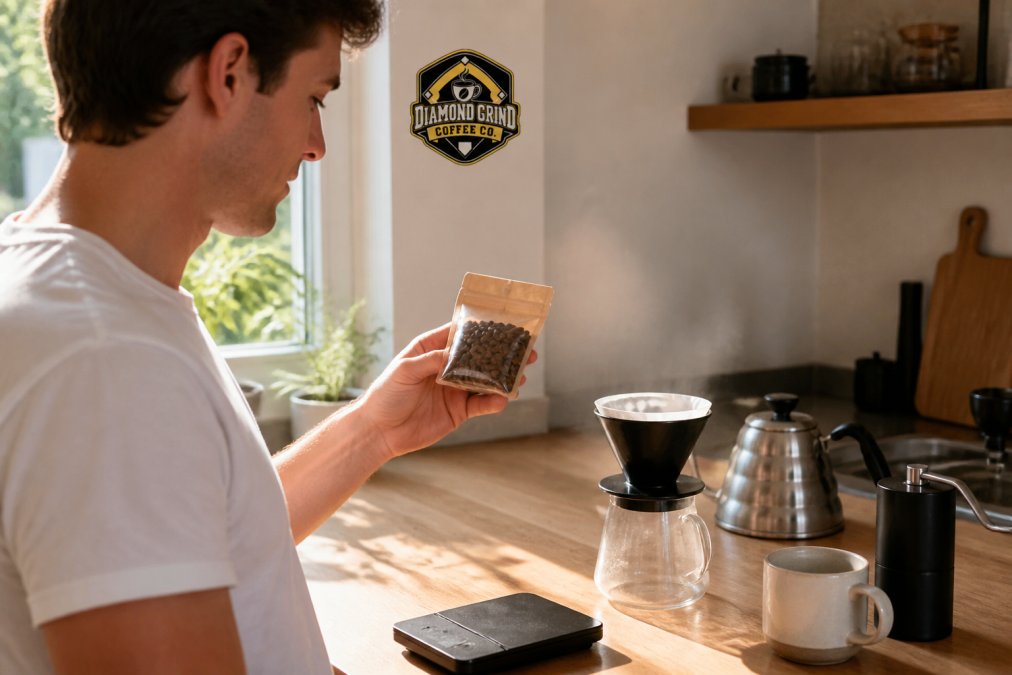
Three packs cover different drinkers:
Best Sellers Sample Pack: 6Bean →
| Sample Pack | What's Inside | Best For |
|---|---|---|
| Best Sellers Sample Pack | 6Bean, Cowboy, Breakfast, Peru, Mexico, Bali | First-time buyers who want the range |
| Single Origin Favorites | Brazil Santos, Colombia, Costa Rica, Ethiopia, Honduras, Tanzania | Drinkers chasing distinct tasting notes |
| Flavored Coffees Sample Pack | French Vanilla, Hazelnut, Cinnabun, Caramel, Mocha | Anyone who wants flavored coffee without added sugar |
The Best Sellers pack includes the 6Bean Blend, a dark roast, and the Cowboy Blend with cocoa, caramel, and vanilla tones. The Single Origin pack leans into traceability: Ethiopia beans from smallholder farmers in the Sidama Zone at 1,700 to 1,900 meters, with milk chocolate, fruity, and caramel notes.
Every order ships the same day it's roasted, and U.S. orders ship free. Pick your grind, whole bean, espresso, or coarse.
Long-Term Cost Analysis: Budgeting for Flexible Coffee
Most roundups stop at the sticker price. The real question is cost per cup.
Cost Per Cup: Subscription vs. Grocery Store
Start with a standard 12-ounce bag. A grocery-store bag runs $8 to $14; a freshly roasted specialty bag from a flexible subscription commonly lands between $16 and $25.
Now run it per cup.
The Hidden Cost of Stale Beans
That gap narrows fast once you account for waste. Grocery-store coffee is often weeks or months past its roast date by the time it hits the shelf, and it keeps declining on your counter. Pour out the last third of a bag because it tastes flat, and your effective cost per cup rises by about 50 percent.
What Flexible Actually Costs You
Flexible plans carry a premium over locked-in annual plans because you're buying the right to stop. That premium is usually a few dollars per bag, and it disappears if you'd otherwise forget to cancel and eat two or three unwanted shipments.
Three costs people forget to model:
- Wasted coffee from bags that go stale before you finish them (the biggest line item for most households)
- Shipping fees that erase the discount on a "cheaper" plan, free U.S. shipping removes this entirely
- The forgotten subscription, a locked plan you stopped drinking but kept paying for, which can quietly cost $50 to $75 over three months
A Simple Budget Framework
Track two numbers for one month: cups you actually brew and bags you actually finish. Divide total coffee spend by cups brewed for your true cost per cup.
Troubleshooting Subscription Fatigue and Equipment Pairing
Subscription fatigue is the number-one reason people cancel coffee plans, and it almost never has anything to do with the coffee, it happens when bags arrive faster than you brew them. The fix is matching your cadence to your consumption and knowing how to clear a backlog.
Diagnosing and Clearing a Coffee Backlog
A backlog is any time you have more unopened bags than you'll finish before the next shipment. Here's how to spot it and what to do.
Matching Your Subscription to Your Brewing Method
Grind size is the most common mismatch and the easiest to fix. Order the grind that matches your setup, or buy whole bean and dial it in yourself.
- Espresso machines need a fine, consistent grind and fresh beans. Fresh beans release more gas, so grind slightly coarser than you would with older beans to avoid channeling. Order espresso grind or whole bean and use a burr grinder.
- Pour-over (V60, Chemex, drip) rewards a medium grind. This is the most forgiving method for a subscription because it tolerates a range of roasts and origins well.
- French press and cold brew want a coarse grind. These methods also use the most coffee per cup, which makes them the best tool for clearing a backlog.
- Nespresso and capsule machines can work with whole bean or a fine espresso grind paired with a reusable capsule, but check your machine's guidance, too fine a grind can clog the system.
- Moka pot sits between espresso and drip: a fine-to-medium grind, slightly coarser than true espresso.
Frequently Asked Questions
Can I cancel a coffee subscription at any time?
Yes, many coffee subscriptions now offer cancel anytime coffee delivery with no long-term commitment. You can pause, skip, or cancel your plan directly from your account, often without fees. This flexibility lets you try different roasters and adjust based on how much you drink. Always check the terms before signing up, but the best options make cancellation a simple, self-service process.
How do I choose the right coffee subscription for my brewing method?
Start by matching the grind to your equipment. If you use a Nespresso machine, look for compatible pods or a subscription that offers espresso grind. For pour-over, drip, or French press, choose whole bean or pre-ground options sized for your brewer. Diamond Grind Coffee offers customizable grind options including whole bean, standard, espresso, and coarse, so you can tailor each bag to your setup.
Is it worth getting a coffee subscription without a long-term commitment?
It can be, especially if you value freshly roasted coffee online and want to avoid stale grocery store bags. A flexible subscription lets you test different roasts and origins without being locked in. You get access to roast dates, tasting notes, and small-batch quality that often surpasses what sits on shelves. The key is finding a provider that roasts to order and ships quickly.
What is the difference between a prepaid and a month-to-month coffee subscription?
Prepaid plans usually require an upfront payment for several months or a year, often at a discount but with less flexibility. Month-to-month plans let you pay as you go, skip shipments, or cancel anytime. If you are unsure about your consumption or want to try multiple roasters, a month-to-month or sample pack approach is safer. It avoids waste and lets you adjust based on your actual brewing habits.