 listicle
Best Coffee Sample Packs for Beginners
Table of Contents
- What Is a Coffee Sample Pack and Why Beginners Should Start Here
- Quick Comparison: Sample Packs at a Glance
- How to Choose Coffee Beans for Beginners
- Coffee Roast Types Explained
- Best Brewing Methods for Beginners
- Top Coffee Sample Packs to Start Your Journey
- How to Store Coffee Beans for Maximum Freshness
- Sensory Training: Learning to Taste Coffee Like a Beginner
- Frequently Asked Questions
Last Updated: October 7, 2026
What Is a Coffee Sample Pack and Why Beginners Should Start Here
The best coffee sample packs for beginners are curated collections of small coffee portions, typically 2-ounce bags, that let you explore multiple roast profiles, origins, and flavor notes without committing to full-size purchases. For beginners, sample packs solve coffee discovery's biggest problem: finding what you like without wasting money on beans you won't finish.
Sample packs mean you taste before you invest: instead of buying a 12-ounce bag and hoping it works with your brewing method, you try six coffees across a range of roast types, building your palate faster.
Sample packs eliminate that gamble: you learn what light roasts taste like versus dark, whether single-origins appeal more than blends, and which brewing method suits you.
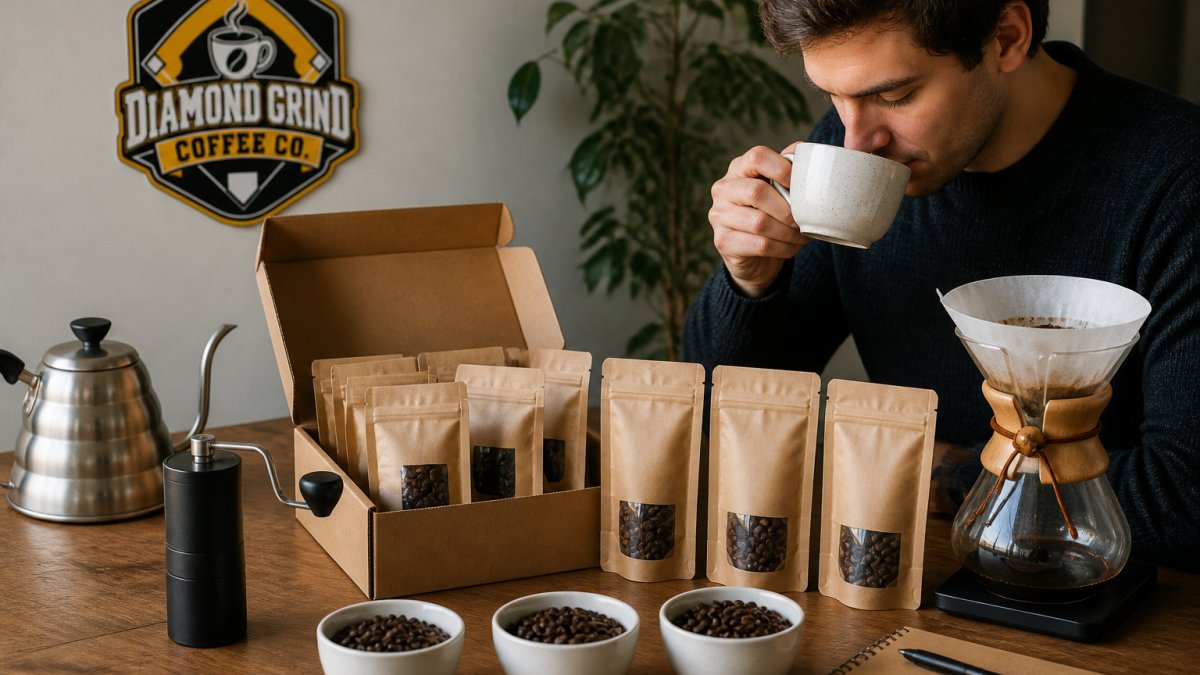
The real advantage is sensory training: tasting six coffees side by side develops your palate faster, teaching you the difference between citrus and berry notes and what "body" means when a silky-smooth cup sits next to a brighter, more acidic one.
Quick Comparison: Sample Packs at a Glance
| Sample Pack | Best For | Roast Range | Flavor Profile | Price |
|---|---|---|---|---|
| Best Sellers Sample Pack | Exploring blends and single origins | Light to dark | Diverse (chocolate, caramel, citrus) | $24.99 |
| Single Origin Favorites Sample Pack | Understanding bean origins | Light to medium-dark | Varied by region (fruity, floral, cocoa) | $24.99 |
| Flavored Coffees Sample Pack | Enjoying familiar flavors | Medium | Sweet (vanilla, hazelnut, cinnamon) | $24.99 |
Each pack contains six 2-ounce portions, enough to brew 2-3 cups per variety, the sweet spot for evaluating a coffee fairly.
How to Choose Coffee Beans for Beginners
Choosing coffee beans as a beginner comes down to three decisions: roast level, origin preference, and brewing method. Most beginners pick based on marketing language ("bold," "smooth," "rich") without knowing what those words mean in the cup.
Start with your brewing method. French press coffee tastes different from pour-over because of how each extracts flavor: a coarse French press grind pulls out more oils and creates heavier body, while a fine pour-over grind highlights acidity and clarity.
Next, consider what flavors appeal to you in other foods. If you enjoy chocolate and caramel in desserts, you'll gravitate toward medium and dark roasts with cocoa notes; if you like bright, fruity flavors, light roasts with berry and citrus notes will feel natural.
The third factor is freshness. Coffee begins losing flavor immediately after roasting, so beans roasted weeks ago taste flat next to beans roasted days ago.
Single-Origin vs. Blended Coffee
Single-origin coffee comes from one specific region, farm, or cooperative. You taste the terroir, the influence of altitude, soil, climate, and processing method. A Peru single-origin tastes different from a Brazil single-origin because of where the beans grew and how they were processed.
Blended coffee combines beans from multiple origins to create a specific flavor profile. Blends are more consistent batch to batch because the roaster can adjust proportions to hit a target flavor, and more forgiving, if one origin varies slightly, the blend absorbs the difference.
For beginners, blends are often easier to enjoy because they're balanced and approachable. Single-origins are about tasting the character of a place, and may have more pronounced acidity or complexity that takes practice.
The Best Sellers Sample Pack from Diamond Grind Coffee includes both: three blends (6Bean, Cowboy, Breakfast) and two single-origins (Peru, Mexico). You'll notice how the blends feel more rounded and the single-origins more distinctive.
Coffee Roast Types Explained
Roast level is the easiest variable to understand and the most impactful on flavor. Light roasts are removed right after the first crack, preserving origin characteristics and highlighting acidity, brighter, more complex, often fruity or floral.
Medium roasts go past the first crack but stop before the second, balancing origin character with roast flavors: some brightness plus the body and sweetness that develop with longer roasting. They're the most versatile, working with most brewing methods and palates.
Dark roasts go well past the second crack, turning dark brown to nearly black. Roasting develops bold flavors, chocolate, caramel, molasses, nuts, while acidity drops and the coffee feels heavier.
Medium-dark roasts split the difference: some roast character, some origin character, darker than medium but not as heavy as full dark roasts.
Roast level completely changes how coffee tastes: the same bean roasted light versus dark produces two different experiences. A light roast Peru tastes bright and citrusy; a dark roast Peru tastes chocolatey and sweet.
Best Brewing Methods for Beginners
Your brewing method determines how water extracts flavor from the coffee grounds. Different methods create different results from the same coffee.
Drip coffee makers are the easiest entry point: add grounds, add water, press a button. The machine controls temperature and contact time, so most produce a decent cup, though quality varies.
French press brewing gives you more control: add coarse grounds, pour hot water, steep four minutes, then press a metal filter.
Pour-over brewing requires more attention but produces excellent results: place a filter cone over your cup, add grounds, and slowly pour hot water through them.
Espresso machines create pressure-driven extraction: hot water forced through finely ground coffee at high pressure. Espresso is concentrated and intense, the base for lattes, cappuccinos, and americanos.
For beginners with sample packs, start with whatever brewing method you already own, a sample pack works with drip makers, French presses, and pour-overs equally well.
Top Coffee Sample Packs to Start Your Journey
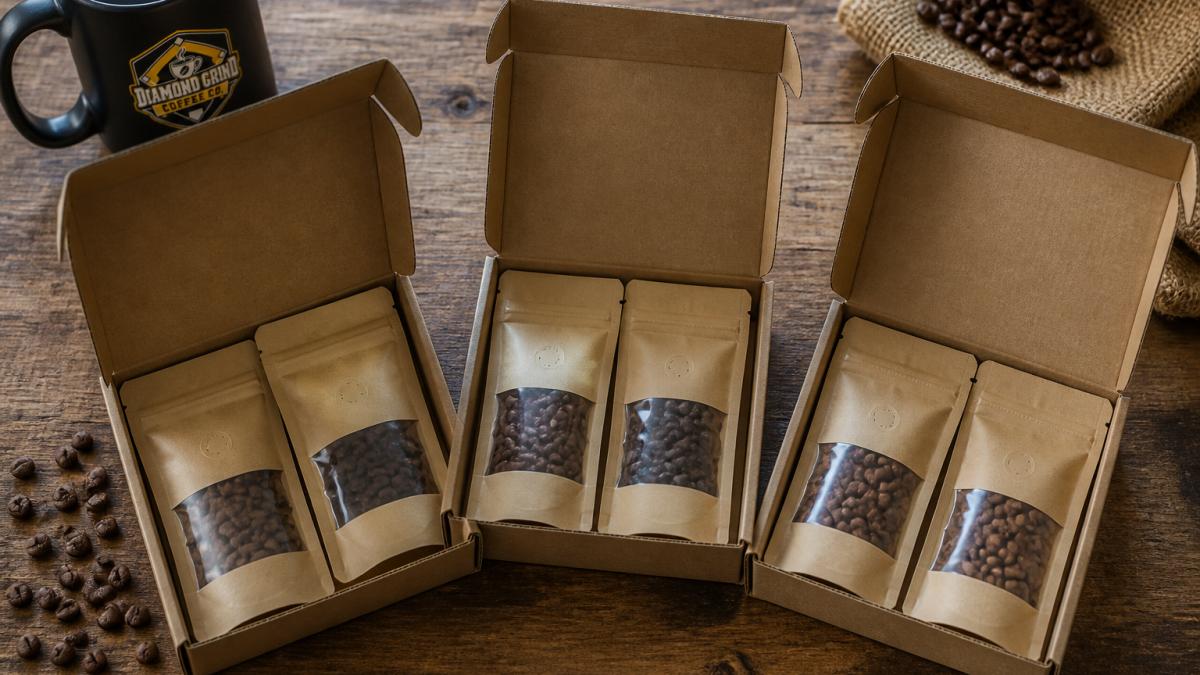
Best Sellers Sample Pack: 6Bean, Cowboy, Breakfast, Peru, Mexico, Bali
This is our top recommendation for beginners because it covers the full spectrum of what coffee can taste like: three blends and three single-origins, spanning medium to dark roasts.
The 6Bean Blend is a dark roast house blend designed for espresso, bold and full-bodied with a clean finish. Cowboy Blend combines dark and medium roasts for cocoa, caramel, and vanilla tones.
Then come the single-origins. Peru is a medium roast with salted caramel, silky sweetness, and citrus notes, grown at high altitude in the Piura and Amazonas regions. Mexico is medium roast with chocolate, cinnamon, and green apple, earthier than Peru.
What makes this pack brilliant for beginners is the progression: light to dark, blend to single-origin, smooth to complex. By the time you finish all six varieties, you know what you actually prefer.
Coffee flavor science and tasting guides explain that this kind of structured tasting, comparing coffees side by side, trains your palate faster than drinking random coffees over months.
Best Sellers Sample Pack: 6Bean, Cowboy, Breakfast, Peru, Mexico, Bali →
Price: $24.99
Single Origin Favorites Sample Pack
If you're already leaning toward single-origin coffees, this pack is your starting point: six single-origins from different regions, Brazil Santos, Colombia, Costa Rica, Ethiopia, Honduras, and Tanzania, each tasting distinctly different because of where it grew and how it was processed.
Brazil Santos is a medium roast with elegant, smooth cocoa notes. Colombia is medium roast with dried orange, berry, and chocolate. Costa Rica is medium roast with sweet apple, raisin, and honey, the sweetest in the pack. Ethiopia is medium-light with milk chocolate, fruity, and caramel notes. Honduras is medium-dark with caramel, spice, and brown sugar. Tanzania is medium-light with pear, floral, jasmine, and strawberry.
This pack teaches you how origin shapes flavor: similar altitudes and processing methods, but completely different tasting profiles because of regional differences in soil, climate, and bean varieties.
Price: $24.99
Flavored Coffees Sample Pack
Flavored coffees get dismissed by purists, but beginners often enjoy them because familiar flavors make the experience less intimidating. This pack includes French Vanilla, Hazelnut, Cinnabun, Caramel, and Mocha, all medium roasts.
The key detail: these are flavored with high-quality natural flavoring oils applied while the beans are still warm after roasting, not cheap syrups added to low-grade coffee. Each starts as specialty-grade single-origin coffee, so the cup tastes like the flavor name without tasting artificial.
French Vanilla is rich and creamy. Hazelnut pairs nutty flavors with Brazilian coffee. Cinnabun tastes like a cinnamon roll without the calories or sugar crash. Caramel is buttery and sweet. Mocha combines chocolate with coffee.
These are perfect for beginners who aren't sure they like black coffee yet, and for anyone who wants an afternoon cup without the full caffeine load.
Price: $24.99
How to Store Coffee Beans for Maximum Freshness
Storage directly impacts how long your coffee stays fresh. Coffee begins losing flavor the moment it's roasted. Your job is to slow that process.
The enemies of coffee freshness are air, light, heat, and moisture.
Store your coffee in an airtight container away from light and heat. A sealed bag with a one-way valve works well, the valve lets CO2 escape without letting oxygen in.
Keep your coffee at room temperature. A kitchen cabinet away from the stove is ideal. Avoid the fridge, where temperature fluctuations cause condensation.
Grind your coffee just before brewing. Whole beans stay fresh much longer than ground coffee because grinding exposes more surface area to oxygen, so grinding a week's worth at once starts losing flavor immediately.
That's why freshly roasted coffee matters, you start from peak flavor.
Diamond Grind Coffee roasts your order the same day it ships, so it arrives at peak freshness.
Sensory Training: Learning to Taste Coffee Like a Beginner
Coffee tasting is a learnable skill. You're not born able to taste "salted caramel" or "bright citrus" in coffee, you develop it through practice and comparison.
Start by noticing the aroma. Before you taste, smell the grounds: chocolate? Fruit? Flowers? Nuts?
Next, notice the body, how the coffee feels in your mouth. Light and tea-like? Medium and balanced? Heavy and syrupy?
Then taste for acidity. Acidity in coffee isn't about pH, it's about brightness and liveliness. A bright coffee feels crisp on your tongue; a low-acid coffee feels smooth and mellow.
Finally, notice the flavor notes. This is hardest because it requires a reference point: if you've never tasted a pear, you can't identify pear notes in coffee.
The best way to develop these skills is using the best coffee sample packs for beginners, tasting coffees side by side.
Keep notes.
Starting with a sample pack isn't just about finding coffee you like, it's about building a foundation for coffee appreciation.
Frequently Asked Questions
Are coffee sample packs worth it for beginners?
Yes. Sample packs let you explore multiple roast profiles, single-origin beans, and flavor varieties without committing to full-size bags. At $24.99 for six 2oz samples, you're paying roughly the same per ounce as full-size purchases while discovering what you actually enjoy. Beginners benefit most because you'll learn your preferences before investing in larger quantities.
How do I choose the right coffee beans for my brewing method?
Your brewing method determines grind size and extraction time, which affect which roasts work best. French press and espresso machines need consistent, specific grind sizes. Drip coffee is forgiving with most roasts. Sample packs let you test different roast profiles with your equipment. Whole bean samples give you the flexibility to grind to your preferred size, whether coarse, medium, or espresso-fine.
What are the different types of coffee roasts for beginners?
Light roasts preserve origin flavors and acidity, offering fruity and floral notes. Medium roasts balance origin character with roast flavors, delivering chocolate, caramel, and nutty notes. Dark roasts emphasize roast characteristics with bold, smoky, and full-bodied profiles. Beginners typically start with medium roasts because they're approachable and forgiving, then explore light and dark as their palate develops.
How long does fresh roasted coffee stay fresh?
Coffee begins degassing immediately after roasting, and flavor compounds oxidize over time. Sample packs roasted to order arrive at their freshest. Store beans in an airtight container away from heat and light to extend freshness. For beginners, consuming samples ensures you experience coffee at its best.