 listicle
Best Small-Batch Coffee Beans Online: 2026 Guide
Table of Contents
- What Makes Small-Batch Coffee Worth Buying Online
- Quick Comparison: Sample Packs vs. Single Origins
- Best Small-Batch Coffee Roasters: Single-Origin Selections
- Best Espresso Beans for Home Machines
- Coffee Beans for Different Brewing Methods
- How to Store Coffee Beans for Maximum Freshness
- Choosing Your First Small-Batch Order
- Frequently Asked Questions
Last Updated: October 5, 2026
What Makes Small-Batch Coffee Worth Buying Online
Small-batch coffee beans represent a fundamentally different approach to how you get coffee. When you buy small batch coffee beans online, you're choosing freshness over convenience, traceability over anonymity, and flavor intensity over shelf stability. Coffee degrades rapidly after roasting, losing aromatic compounds and developing stale, flat notes within weeks (Changes in sensory quality characteristics of coffee during storage).
At Diamond Grind Coffee, we roast your order the same day it ships, so beans arrive days old, not months. Freshly roasted beans deliver bold, vibrant flavor.
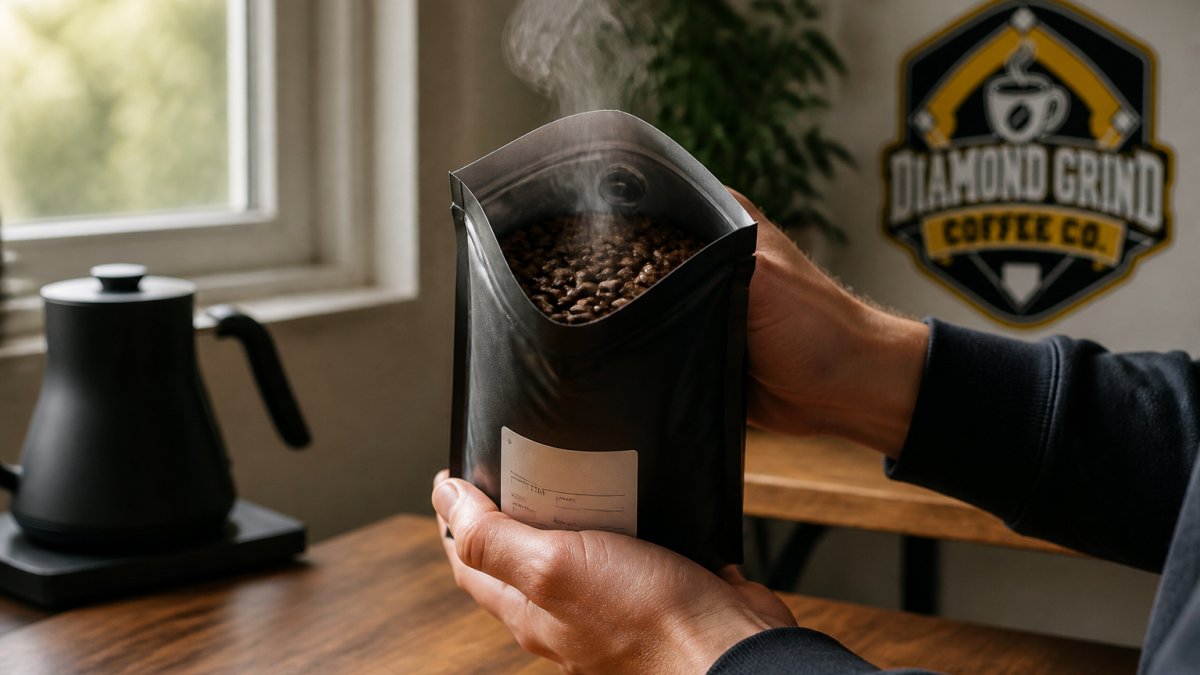
Small-batch roasting also means you know your coffee's origin. Instead of a generic "medium roast blend," you get specifics: the farm, the altitude, the processing method, the tasting profile. Many small-batch roasters work directly with farmers.
The freshness advantage extends to brewing. Fresh beans bloom properly when water hits them, releasing CO2 and allowing even extraction. This is why coffee enthusiasts, home baristas, and athletes seeking pre-workout energy all gravitate toward freshly roasted beans.
Quick Comparison: Sample Packs vs. Single Origins
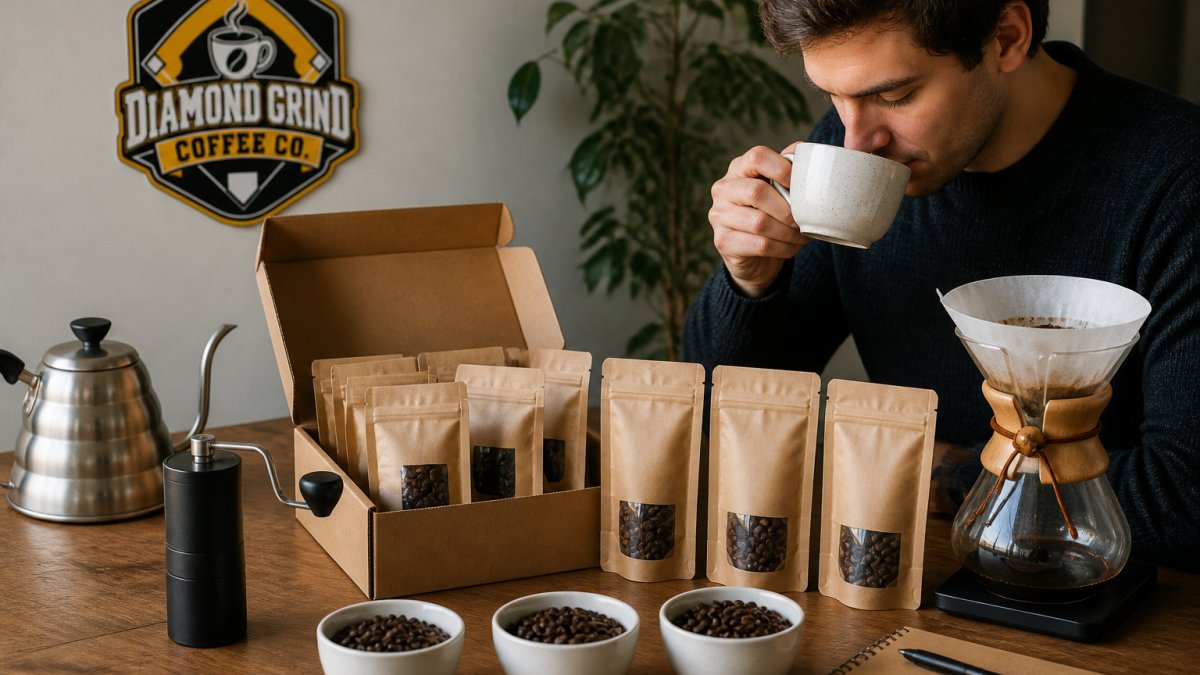
Deciding between sample packs and single-origin bags comes down to where you are in your coffee journey. Sample packs let you explore multiple origins and roast levels without committing to a full bag of something untested. Single-origin bags let you dial in a favorite and buy it repeatedly.
Sample packs make sense if you're building your palate. Many coffee drinkers assume they like dark roasts because that's what they've always had. Sample packs eliminate the risk of ordering a full bag and disliking it.
| Option | Best For | Cost Per Serving | Commitment | Variety |
|---|---|---|---|---|
| Sample Pack (6 x 2oz) | Exploration and discovery | ~$0.80 per 2oz | Low, no subscription | 6 different coffees |
| Single Origin (full bag) | Regular drinkers with a favorite | ~$0.35 per 2oz | Flexible, order when you run out | One coffee, repeatable |
| Flavored Sample Pack | Variety seekers who enjoy added flavors | ~$0.80 per 2oz | Low, no subscription | 6 flavored options |
The Best Sellers Sample Pack from Diamond Grind Coffee includes house blends (6Bean, Cowboy, Breakfast) alongside single origins (Peru, Mexico, Bali), ideal for comparing blends to single origins. The Single Origin Favorites Sample Pack focuses purely on single origins from Brazil, Colombia, Costa Rica, Ethiopia, Honduras, and Tanzania, letting you taste how geography and altitude shape flavor.
If you already know you love medium roasts with chocolate and caramel notes, order Colombia or Peru directly. If you're still exploring, sample packs are the smarter investment.
Best Small-Batch Coffee Roasters: Single-Origin Selections
Single-origin coffees showcase what a specific region produces. Unlike blends, which mix beans from multiple origins for balance, single origins highlight the terroir: the altitude, soil, climate, and processing that define a coffee's character.
Colombia ($24.99) delivers dried orange, berry, and chocolate notes. The beans come from smallholder farmers in Medellin, grown at 1,300-1,500 meters in volcanic loam soil. The fully washed process and sun drying in solar dryers create a clean, bright cup.
Ethiopia Natural ($24.99) offers milk chocolate, fruity, and caramel notes in a medium-light roast. This Sidama zone coffee delivers the floral and fruity characteristics Ethiopian coffees are known for. Natural processing (where the entire fruit dries around the bean before removal) creates a complex, sometimes winey profile.
Peru ($24.99) produces salted caramel, silky sweet, and citrus notes. Grown at 1,100-1,700 meters in Peru's Piura and Amazonas regions, these beans are gully-washed and sun-dried. The medium roast balances sweetness with subtle acidity and shines in pour-over brewing.
Bali Blue Moon ($24.99) is a medium-dark roast with dark chocolate, molasses, and brown sugar notes. Bali coffees are wet-hulled, creating a heavier body and earthier profile. This roast works exceptionally well for espresso, where the heavier body cuts through milk and maintains flavor intensity in milk-based drinks.
Guatemala ($24.99) offers dark chocolate, bright fruit, and butterscotch in a medium roast. Grown in Antigua at 1,200-1,616 meters, Guatemalan coffees often have more body and less acidity than Central American neighbors. The fully washed, sun-dried process creates a clean, balanced cup for any brewing method.
Best Espresso Beans for Home Machines
Espresso requires specific bean characteristics that differ from drip coffee. The pressure and speed of extraction demand beans with the right density, roast profile, and flavor intensity.
6Bean Blend ($24.99 in the Best Sellers Sample Pack) is explicitly designed for espresso. This dark roast house blend combines coffees from around the world for a meticulous balance of body, crema, and flavor. Dark roasts are less dense than light roasts, allowing faster water penetration under pressure, and produce more surface oils that contribute to crema.
Bali Blue Moon is the single-origin espresso recommendation. The medium-dark roast and heavier body from wet-hulling make it ideal for espresso machines. Its syrupy body stays prominent even when diluted with water (Americano) or milk (cappuccino, latte), maintaining chocolate and molasses notes without becoming bitter.
Cowboy Blend (medium-dark blend with cocoa, caramel, and vanilla notes) also works well for espresso, though slightly less intense than the 6Bean. Its vanilla and caramel notes become more pronounced in espresso's concentrated form.
For home espresso machines, grind consistency matters as much as the bean. Espresso requires a very fine, uniform grind, much finer than French press. Diamond Grind Coffee offers customizable grind options including espresso grind, pre-ground to the exact consistency your machine needs, eliminating the guesswork of dialing in your home grinder.
Coffee Beans for Different Brewing Methods
Your brewing method determines which roast level and grind size perform best. Each method extracts coffee differently, and beans must match that extraction style.
Pour-Over and Drip Coffee: Medium roasts shine here. Longer contact time lets subtle acidity and flavor complexity develop without over-extraction. Colombia, Peru, Guatemala, and Ethiopia all work beautifully. Grind medium, similar to kosher salt.
Best Sellers Sample Pack: 6Bean, Cowboy, Breakfast, Peru, Mexico, Bali →
French Press: Medium-dark and dark roasts suit French press because immersion brewing (grounds steep in hot water for 4 minutes) extracts more oils and body. Cowboy Blend and 6Bean Blend are excellent choices.
Espresso: Medium-dark and dark roasts only. Bali Blue Moon and 6Bean Blend are the top choices. Grind must be very fine and uniform. Inconsistent grind size leads to channeling (water finding paths of least resistance through the puck), which ruins the shot.
Cold Brew: Any roast works, but medium and medium-dark roasts are most popular for the smooth, less-acidic profile cold brew is known for. Cold brew steeps 12-24 hours, so extraction is slow and gentle.
Moka Pot (Stovetop Espresso): Medium-dark roasts work best because the pot's pressure sits between drip and true espresso. Bali or Cowboy Blend deliver the needed body. Grind medium-fine, finer than pour-over but not as fine as espresso.
| Brewing Method | Best Roast Level | Grind Size | Contact Time | Recommended Bean |
|---|---|---|---|---|
| Pour-Over | Medium | Medium | 2-3 minutes | Colombia, Peru, Guatemala |
| French Press | Medium-Dark | Coarse | 4 minutes | Cowboy Blend, 6Bean Blend |
| Espresso Machine | Medium-Dark | Very Fine | 25-30 seconds | Bali Blue Moon, 6Bean Blend |
| Cold Brew | Medium to Dark | Coarse | 12-24 hours | Any single origin or blend |
| Moka Pot | Medium-Dark | Medium-Fine | 5-10 minutes | Bali, Cowboy Blend |
The Flavored Coffees Sample Pack (French Vanilla, Hazelnut, Cinnabun, Caramel, Mocha) works best in pour-over, drip, or Moka pot where flavoring oils fully dissolve and develop. All of our flavored coffees start as specialty grade single origin coffee roasted in small batches to a smooth medium.
How to Store Coffee Beans for Maximum Freshness
Storage determines how long your small-batch coffee stays fresh. The enemies of freshness are oxygen, light, heat, and humidity.
Whole beans stay fresh longer than ground coffee because grinding dramatically increases surface area exposed to oxygen. Whole beans maintain quality 2-3 weeks after roasting if stored properly, up to 4 weeks in ideal conditions.
Store beans in an airtight container away from direct sunlight and heat; a dark cupboard or pantry works well. Avoid clear containers near windows, since light degrades the oils and compounds that create flavor, and avoid counters near stoves where heat fluctuates.
Temperature consistency matters more than absolute coldness; room temperature (around 70°F) is ideal.
The roast date on Diamond Grind Coffee bags tells you exactly when your beans were roasted. Beans roasted 3-10 days before brewing deliver peak flavor; 2-4 weeks old are still excellent.
Choosing Your First Small-Batch Order
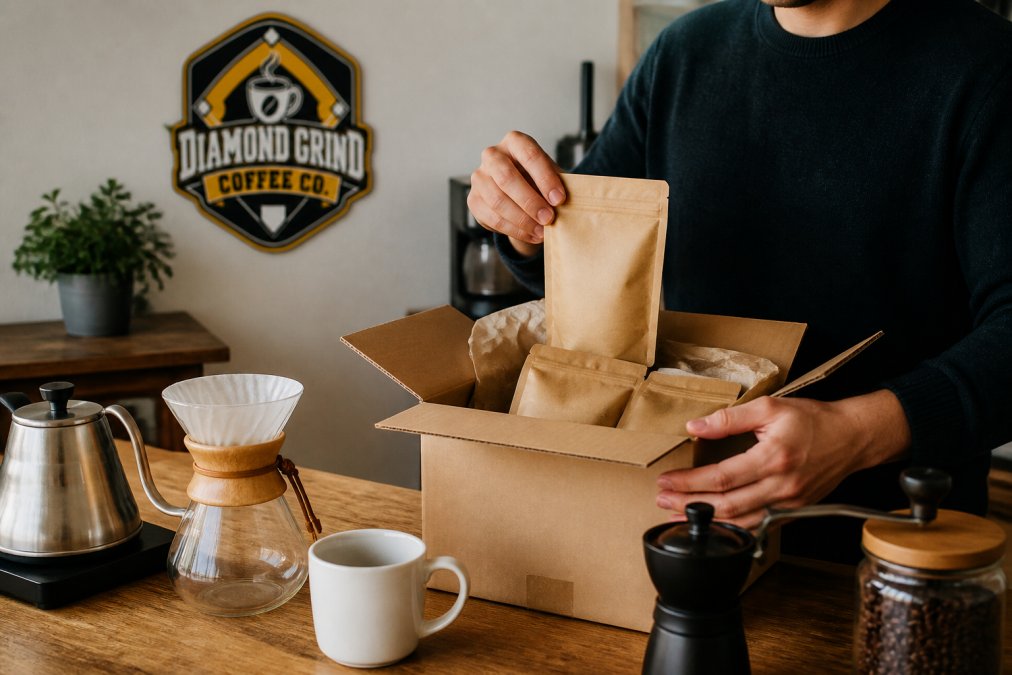
If you're new to small-batch coffee, start with a sample pack. The Best Sellers Sample Pack ($24.99) includes six 2-ounce packs: three blends (6Bean, Cowboy, Breakfast) and three single origins (Peru, Mexico, Bali), a complete introduction to how blends differ from single origins and how roast levels taste.
Spend a week with each sample, brewing in your usual method and noting the flavor notes on the package. You'll quickly discover which profiles appeal to you: some gravitate toward the chocolate and caramel notes of darker roasts, others prefer the fruity, floral notes of lighter roasts. Neither is "correct", it's purely personal preference.
After the sample pack, order a full bag of your favorite. If Peru's salted caramel and citrus notes won you over, order Peru; if the Cowboy Blend's cocoa and caramel did, commit to that.
Consider your brewing method when choosing. Espresso machine owners should try Bali Blue Moon next; pour-over fans can pick any single origin. If you're still using a basic drip machine, start with a forgiving medium roast like Colombia or Guatemala.
Diamond Grind Coffee ships free within the U.S., and orders are roasted after you place them, then shipped the same day. Your beans arrive within 2-3 business days, still radiating the freshness that makes small-batch coffee worth buying online.
Fresh coffee delivered to your door offers bold flavor and peak freshness for home and office professionals. Diamond Grind Coffee roasts your small-batch order the same day it ships, delivering the aromatic complexity and vibrant taste stale supermarket coffee cannot.
Frequently Asked Questions
What does small-batch roasted coffee mean?
Small-batch roasted coffee is roasted in limited quantities, typically in smaller roasting runs than mass-produced coffee. This approach allows roasters to control quality closely and roast beans fresher to order. Many small-batch roasters, like Diamond Grind Coffee, roast your order the same day it ships, ensuring you receive coffee at peak freshness with bold, vibrant flavor rather than beans that have sat in warehouses for weeks or months.
How fresh should coffee beans be when you buy them?
Ideally, buy coffee beans within 2-4 weeks of the roast date printed on the bag. Coffee is most flavorful between 3-10 days after roasting, but remains excellent for several weeks if stored properly in an airtight container away from heat and light. When ordering small-batch coffee online, check that the roaster publishes the roast date and ships quickly; roast-to-order services ensure maximum freshness since beans are roasted after your order arrives.
Which coffee beans are best for espresso machines?
Espresso typically works best with medium to dark roasts that produce rich body and crema. Look for beans labeled suitable for espresso or with tasting notes of chocolate, caramel, or nutty flavors. The 6Bean Blend from Diamond Grind Coffee is specifically described as great for espresso, featuring a dark roast with a meticulous blend of beans from around the world. Whole bean or espresso-grind options allow you to dial in extraction on your home machine.
How should I store freshly roasted coffee beans?
Store coffee beans in an airtight container away from direct sunlight, heat, and moisture. A sealed bag with a one-way valve works well if kept in a cool, dark cupboard or pantry. Grind beans just before brewing to preserve flavor and aroma. For small-batch coffee delivered fresh, proper storage ensures your beans stay vibrant throughout their optimal drinking window.
What is the difference between single-origin and blended coffee?
Single-origin coffee comes from one specific farm, region, or country, offering distinct flavor characteristics tied to that location's climate and soil. Blended coffee combines beans from multiple origins to create balanced, complex flavor profiles. Single-origin coffees highlight unique tasting notes like citrus or floral; blends typically aim for smoothness and consistency. Diamond Grind Coffee offers both: single-origin options like Colombia and Ethiopia Natural showcase terroir, while blends like Cowboy and Breakfast provide balanced, approachable cups.