 how-to
How to Sample Different Coffee Origins: A 2026 Guide
Table of Contents
- What You'll Need to Start Sampling Coffee Origins
- A Coffee Cupping Guide for Beginners: The 15-15-15 Method
- How to Identify Coffee Tasting Notes Without Guessing
- How Water Chemistry Changes What You Taste
- Comparing Origins Side by Side: A Practical Framework
- Best Coffee Beans for Home Espresso Machines
- Budget-Friendly Sampling: How to Explore Without Overspending
- Frequently Asked Questions
Last Updated: September 28, 2026
What You'll Need to Start Sampling Coffee Origins
Coffee origin is the country, region, and farm where a coffee was grown, and it shapes flavor more than any other single factor. Learning how to sample different coffee origins starts with a few basic tools and a willingness to taste slowly.
You do not need a lab. A kitchen table works fine.
Here is your starter kit:
- Three to six coffees from different countries
- A digital scale that reads in grams
- A burr grinder, or coffee ground to order
- Identical small cups, 6 to 8 ounces each
- A timer and a large spoon
- Hot water, just off a boil
- A notebook for tasting notes
Freshness matters more than gear. At Diamond Grind Coffee, every small-batch order is roasted the same day it ships, so the cup you taste actually reflects the origin rather than stale, flat beans. Old coffee tastes like cardboard no matter where it grew.
A Coffee Cupping Guide for Beginners: The 15-15-15 Method
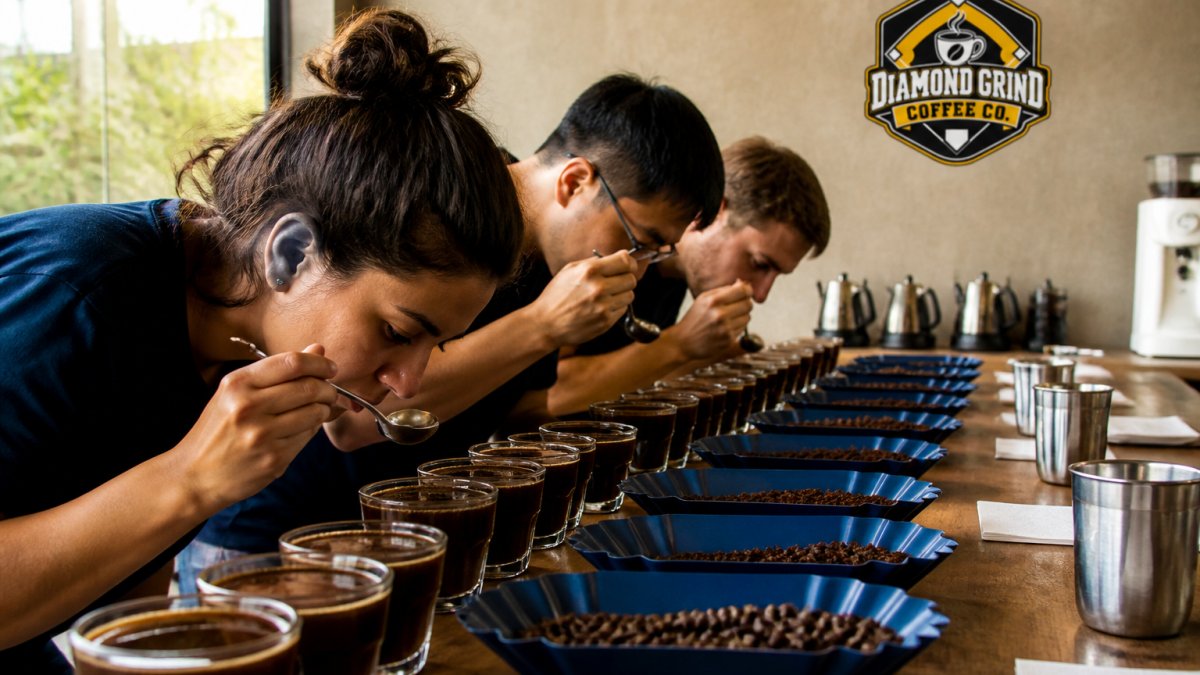
This coffee cupping guide for beginners breaks the process into three simple numbers: 15 grams of coffee, 15 times the water, and 15 minutes from start to first sip. Cupping is the industry's standard method for tasting coffee side by side without brewing variables getting in the way. Most sampling guides stop at "buy a sampler pack." This one teaches you the actual protocol so you can compare origins.
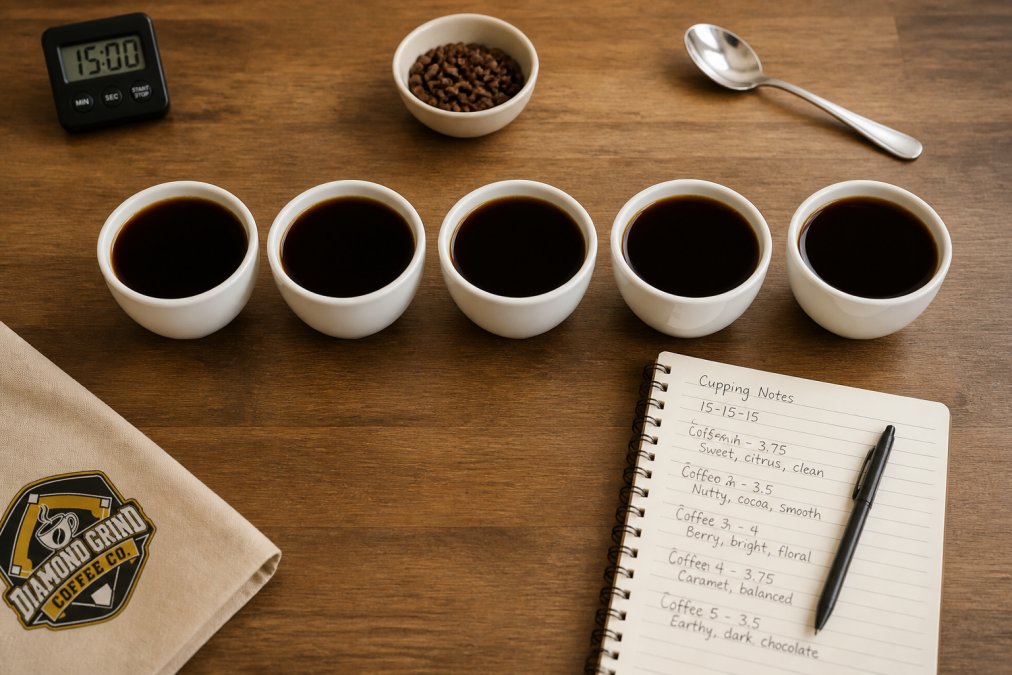
Setting Up Your Cupping Table
Weigh 15 grams of coffee into each cup. Use a coarse grind, similar to sea salt. Heat water to about 200°F and pour 225 grams over each dose, which is 15 times the coffee weight.
Work in a flight of three to six cups. Fewer than three and you lose the side-by-side contrast that makes origin differences visible. More than six and your palate fatigues before you finish. Label each cup with a number, not the origin name, so you taste blind. Blind tasting is the single biggest upgrade you can make to a home session, because it strips out the expectation that Ethiopia "should" taste fruity.
Let the cups sit for four minutes. A crust of grounds will float on top. Do not stir yet.
The Slurp, the Spit, and the Score
Break the crust with your spoon and smell. That burst of aroma is where most of your tasting notes live.
Slurp a small amount from the spoon. Slurping sprays coffee across your whole tongue, which hits more taste buds at once. Then spit it out and move to the next cup.
Score each coffee on a simple scale:
- Acidity: bright and lively, or flat and dull
- Body: light and tea-like, or heavy and syrupy
- Sweetness: from faint to rich
- Aftertaste: how long the flavor lingers
The Full Home Cupping Protocol, Step by Step
A real cupping has a fixed sequence. Follow it in order and your notes will be comparable across sessions, which is what turns tasting into learning.
- Smell the dry grounds. Before water touches the coffee, note the fragrance. This is the only stage where you smell the roast and origin without extraction in the way.
- Pour and wait four minutes. Pour 225 grams of 200°F water over each 15-gram dose. Start your timer. Do not stir.
- Break the crust. At four minutes, push the spoon through the floating grounds and inhale the aroma that releases. This is the bloom aroma, and it is usually the most intense smell of the whole session.
- Skim the foam. Use two spoons to lift off the grounds and foam so the liquid underneath is clear.
- Taste at hot, warm, and cool. Slurp at roughly 160°F, again around 140°F, and once more near room temperature. Flavors shift as the cup cools, and a coffee that tastes flat hot often opens up warm.
- Score, then re-taste. Write your scores before you look at any bag or label. Then taste again with the origin known and see whether your notes hold up.
Scoring Without a Professional Scoresheet
You do not need the full specialty-coffee scoresheet to learn from cupping. A simple 1-to-5 scale across five attributes is enough to compare origins honestly:
- Acidity, 1 is flat and dull, 5 is bright and juicy
- Body, 1 is thin and tea-like, 5 is heavy and syrupy
- Sweetness, 1 is faint, 5 is rich and lingering
- Balance, 1 is one note dominating, 5 is everything in proportion
- Aftertaste, 1 vanishes quickly, 5 stays with you for minutes
What to Write Down (and What to Ignore)
Keep notes short and concrete. A useful entry looks like "Cup 3: bright, lemon, medium body, sweet finish, 18/25." A useless entry looks like "good coffee." Record the origin, the roast level, the process, and the date alongside your scores so you can compare sessions weeks apart.
How to Identify Coffee Tasting Notes Without Guessing
Stop hunting for the "right" word. Learning how to identify coffee tasting notes is about linking what you taste to flavors you already know, not memorizing a vocabulary list.
- Fruity: citrus, berry, stone fruit, dried fruit
- Nutty: almond, hazelnut, cocoa
- Sweet: caramel, honey, brown sugar, molasses
- Earthy: spice, wood, tobacco, tea
Using the Flavor Wheel to Find the Right Words
The flavor wheel works from the inside out. Start at the center with a broad family, then trace outward to a specific note. If a coffee tastes fruity, follow that spoke toward berry, then toward strawberry.
How Water Chemistry Changes What You Taste
Your water is roughly 98% of the cup, so it can hide or reveal an origin entirely. This is the angle most sampling guides ignore.
Two things matter most: mineral content and chlorine.
- Too soft: coffee tastes flat and hollow
- Too hard: flavors turn muddy and dull
- Chlorine: adds a chemical, band-aid note
Comparing Origins Side by Side: A Practical Framework
Tasting one coffee at a time tells you little. The real skill is comparing coffee origins side by side.
Use this framework for every flight:
| What to Compare | How to Judge It | Why It Matters |
|---|---|---|
| Acidity | Bright vs. flat | Shows growing region |
| Body | Light vs. syrupy | Tied to processing |
| Sweetness | Faint vs. rich | Signals ripeness |
| Aftertaste | Short vs. long | Reveals quality |
| Aroma | Fruity vs. earthy | Points to origin |
Altitude and terroir drive much of this.
Single-Origin vs. Blends: When to Sample Each
Sample single-origin coffees when you want to learn a place. One origin, one flavor story, nothing blended in to blur it.
Best Coffee Beans for Home Espresso Machines
The best coffee beans for home espresso machines are fresh, medium to medium-dark roasts with a consistent grind.
Origin still matters here. A few standouts for espresso:
- Bali Blue: dark chocolate, molasses, brown sugar
- Colombia: dried orange, berry, chocolate
- Brazil Santos: smooth cocoa, elegant body
Budget-Friendly Sampling: How to Explore Without Overspending
You do not need full bags to learn coffee origins. Sample packs give you small doses of several coffees, so you can taste widely before committing to a favorite.
Here is the budget-friendly playbook:
- Buy 2-ounce sample packs instead of 12-ounce bags
- Split a sampler with a friend and trade notes
- Cup several origins in one session to save beans and time
- Keep a running list of what you love before buying full size
Frequently Asked Questions
What is the 15-15-15 rule for coffee?
The 15-15-15 rule is a simple cupping framework: wait 15 seconds after pouring hot water over the grounds, then 15 minutes for the crust to form and break, and finally evaluate the coffee at 15 minutes after breaking the crust. This timing lets you observe aroma, flavor development, and aftertaste at consistent stages.
How many coffee origins should I sample at once?
Sample three to five origins in one session. Fewer than three makes side-by-side comparison hard; more than five overwhelms your palate and you lose the ability to distinguish subtle differences. A six-pack of 2oz sample bags gives you enough for two or three cupping sessions. Keep each sample to about 8 grams of coffee per 150ml of water so you can taste without fatigue.
Does roast level affect how I sample coffee origins?
Yes. Darker roasts mask origin character with roast-driven flavors like smoke and bittersweet chocolate, while lighter roasts preserve the acidity, floral notes, and fruit tones that distinguish a Colombia from an Ethiopia. When comparing origins, try to sample coffees at similar roast levels so the differences you taste come from the bean's terroir, processing, and varietal, not the roast profile.
Can I use my home espresso machine to sample different coffee origins?
You can. For sampling, start with a pour-over or cupping method, then pull espresso shots of the origins you liked best. If you want to explore espresso specifically, look for medium or medium-dark single origins with chocolate, caramel, or nut tasting notes. They hold up well to the pressure and short extraction time of an espresso machine.