 ultimate-guide
Why Fresh Roasted Coffee Tastes Better: A 2026 Guide
Table of Contents
- Why Fresh Roasted Coffee Tastes Better Than Stale Beans
- How to Tell if Coffee Is Fresh Before You Brew
- How Long to Rest Coffee After Roasting for Peak Flavor
- Fresh Roasted Coffee Storage: Keeping Flavor Week After Week
- Grind Timing and Freshness: Why Whole Bean Wins
- What to Look For When Buying Fresh Roasted Coffee Online
- Conclusion: Freshness Is the Difference You Can Taste
- Frequently Asked Questions
Last Updated: October 9, 2026
Why Fresh Roasted Coffee Tastes Better Than Stale Beans
If you have ever brewed a bag of coffee the week it was roasted and then returned to the same beans a month later, you already know why fresh roasted coffee tastes better. The difference is not subtle. Fresh beans bloom aggressively, fill the kitchen with aroma, and land in the cup with sweetness and clarity. Old beans taste flat, papery, and hollow, no matter how expensive they were.
At Diamond Grind Coffee, we roast every small-batch order the same day it ships, so the gap between roast and brew stays as short as possible. This guide explains what actually changes inside a roasted bean, how to tell if coffee is fresh before you brew, how long to rest coffee after roasting, and how fresh roasted coffee storage protects the flavor you paid for.
What Happens to Coffee After Roasting
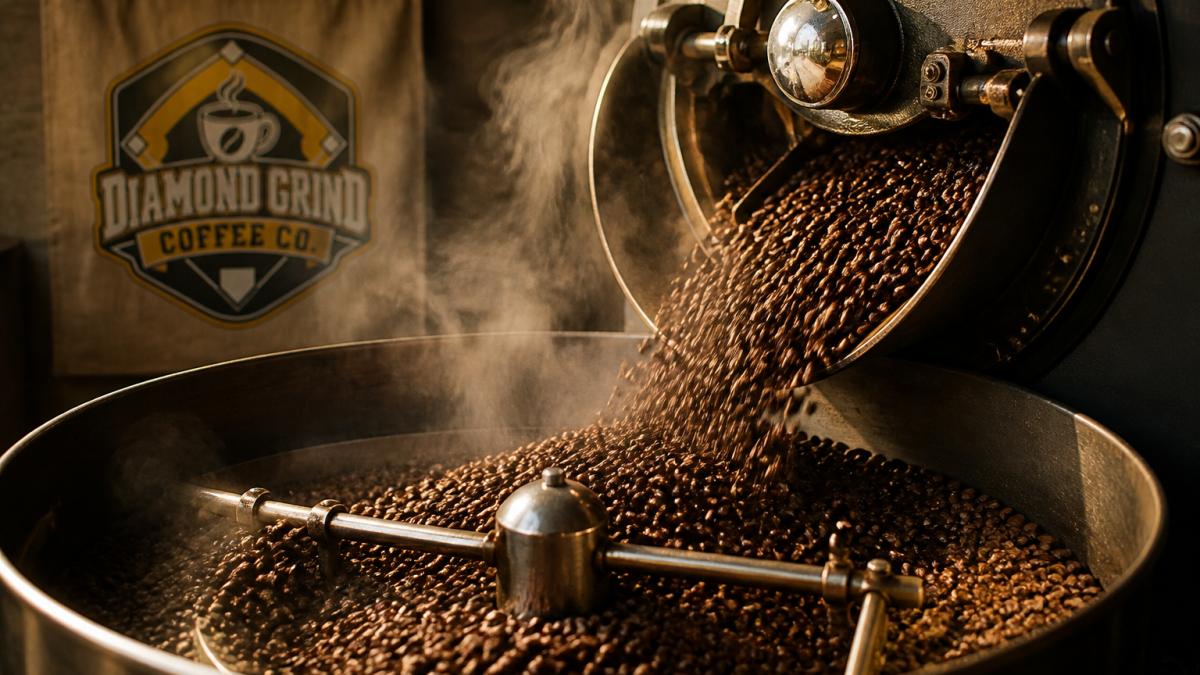
Roasting is a controlled burn. Green coffee has almost none of the aroma we associate with coffee; heat triggers hundreds of chemical reactions that build the flavor compounds, then traps most of them inside the bean as carbon dioxide. That trapped gas is the clock.
Within the first days after roasting, beans release carbon dioxide steadily. This is why a very fresh bean can taste slightly muted or "gassy" in the cup. As the gas escapes, oxygen moves in, and oxygen is what flattens coffee over time. Oils that carry aroma oxidize, volatile compounds fade, and the bean slowly goes stale. The Specialty Coffee Association's guidance on coffee freshness treats this oxidation window as one of the most important variables in cup quality, which is why roast date, not "best by" date, is the number that matters.
How to Tell if Coffee Is Fresh Before You Brew
Knowing how to tell if coffee is fresh comes down to four checks: the roast date, the smell, the bloom, and the bean itself.
Fresh coffee is coffee that still has trapped carbon dioxide, visible oils, and a printed roast date within the last few weeks. If the bag lists only a "best by" date, treat it as a signal that the roaster would rather you not know the roast date.
Run through this checklist before you commit to a bag:
- The bag prints an actual roast date, not just a best-by date
- The beans smell sweet, chocolatey, or fruity when you open the bag, not like cardboard or hay
- Pouring hot water over the grounds produces a visible bloom, a domed, bubbling expansion
- The beans look matte to lightly glossy, without a dull, dried-out surface
- The bag has a one-way degassing valve, which lets CO2 out without letting oxygen in
A weak or missing bloom is the clearest sign of stale coffee. Fresh grounds puff up and bubble when hot water hits them because they are still releasing gas. Old grounds just sit there.
How Long to Rest Coffee After Roasting for Peak Flavor
The answer depends on the brew method, and it is shorter than most people expect.
For most brewing methods, coffee peaks between 4 and 14 days after roasting. Espresso tends to need the longer end of that range because the trapped CO2 interferes with pressure and extraction, producing gushers and sour shots. Pour-over, drip, and French press drink well from about day 4 onward, once the most aggressive off-gassing has settled.
Here is how we would map it:
| Brew Method | Best Rest Window | Why |
|---|---|---|
| Espresso | 7-14 days | CO2 disrupts pressure and extraction |
| Pour-over | 4-10 days | Needs degassing for even extraction |
| Drip | 4-12 days | Forgiving window, flavor peaks mid-range |
| French press | 3-8 days | Immersion brewing tolerates fresher beans |
| Cold brew | 5-21 days | Long steep hides small freshness differences |
Past roughly three to four weeks, quality drops quickly for most roasts. Darker roasts fade faster than lighter ones because more of their surface oil is exposed to oxygen from the start.
Fresh Roasted Coffee Storage: Keeping Flavor Week After Week
Fresh roasted coffee storage is simple in principle and widely botched in practice. The enemies are oxygen, moisture, heat, and light, in roughly that order.
Store beans in an opaque, airtight container at room temperature, ideally with a one-way valve so carbon dioxide can escape without letting air in. Keep the container in a cupboard, not on top of the espresso machine where the heat cycles every morning. Buy in quantities you will finish in two to three weeks rather than chasing bulk discounts on a five-pound bag.
Whole bean beats pre-ground here for one reason: surface area. Grinding exposes the interior of the bean to oxygen all at once, and ground coffee can lose noticeable aroma within days. Whole beans hold their character for weeks in the same conditions.
Best Sellers Sample Pack: 6Bean, Cowboy, Breakfast, Peru, Mexico, Bali →
That is the core of the whole argument. Freshness is not a marketing word, it is a measurable countdown from the moment the roaster drops the batch.
Grind Timing and Freshness: Why Whole Bean Wins
Grinding right before brewing is the single highest-impact habit change most coffee drinkers can make, and it costs nothing.
A burr grinder set to your brew method preserves the aromatics that a blade grinder and a pre-ground bag throw away. Grind size also has to match the method: fine for espresso, medium for drip, coarse for French press. Diamond Grind Coffee ships whole bean by default and also offers standard, espresso, and coarse grind options for anyone who would rather skip the grinder, so the grind arrives matched to how you actually brew.
The trade-off is real. Pre-ground convenience costs you the top notes, the bright fruit and floral character that shows up in a fresh light roast. If you drink coffee for caffeine alone, that matters less. If you drink it for flavor, grind fresh.
What to Look For When Buying Fresh Roasted Coffee Online
Buying fresh roasted coffee online comes down to one question: does the roaster tell you the roast date and ship fast enough for it to matter?
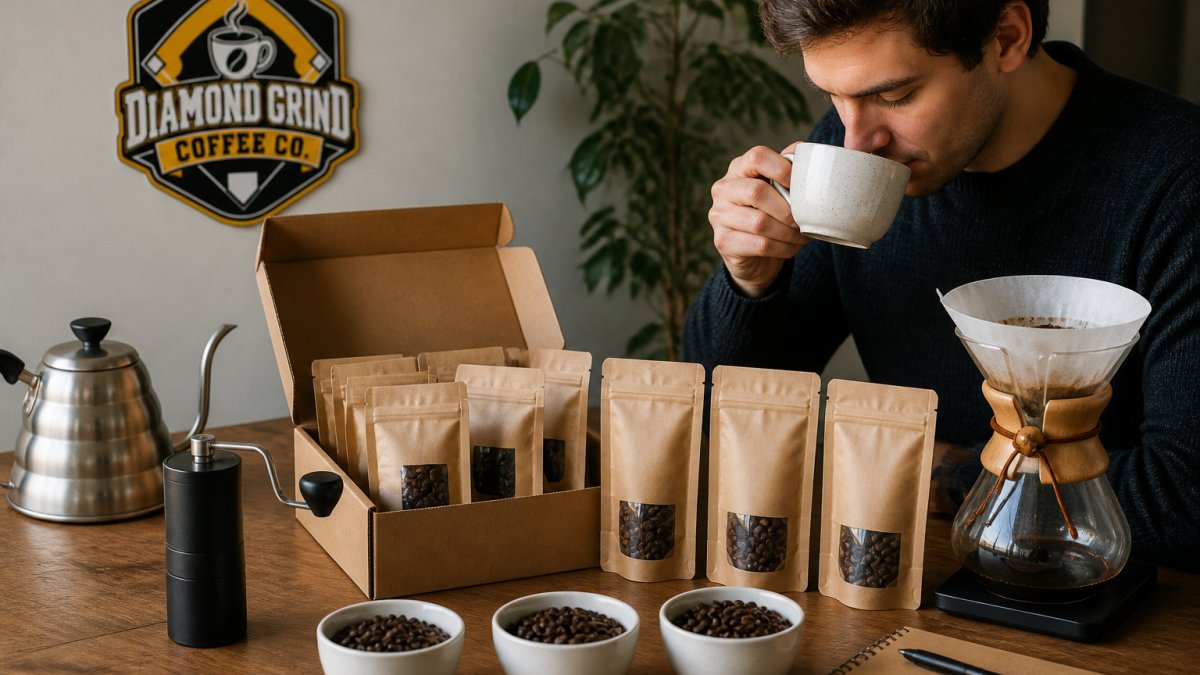
Look for a printed roast date, same-day or next-day shipping after roasting, and a roaster who grinds to order rather than stocking pre-ground bags on a shelf. Sample packs are the cheapest way to test a roaster before committing to a full-size bag, and they let you compare origins and roast levels side by side.
For a low-risk first order, our Best Sellers Sample Pack puts six 2-ounce packs in one box, from the dark 6Bean Blend to the medium Peru Single Origin with its salted caramel and citrus profile. If you already know you prefer single origins, the Single Origin Favorites Sample Pack covers six growing regions, and the Flavored Coffees Sample Pack runs from French Vanilla to Cinnabun. Each pack is $24.99, and U.S. orders ship free.
U.S. Food and Drug Administration guidance on food storage and date labeling
Conclusion: Freshness Is the Difference You Can Taste
Freshness is the variable most coffee drinkers never control, and it is the one that changes the cup the most. Roast date, rest time, storage, and grind timing are all decisions you make before the water ever touches the grounds.
If you want that difference without the guesswork, Diamond Grind Coffee roasts your small-batch order the same day it ships, offers whole bean and custom grind options, and delivers with free U.S. shipping. Get started with Diamond Grind Coffee and taste what a short trip from roaster to cup actually does.
SHOP FRESH
Frequently Asked Questions
Why does fresh roasted coffee taste better?
Coffee beans release carbon dioxide and aromatic oils for days after roasting. Those compounds carry the flavor you taste in the cup. Once they fade, the coffee turns flat and papery. Fresh roasted coffee still has those oils intact, so you get the sweetness, acidity, and body the roaster intended. Beans sitting on a shelf for months lose most of that before you ever open the bag.
How long should coffee rest after roasting before brewing?
Most coffees hit their best flavor 3 to 7 days after the roast date. Espresso often needs 5 to 10 days because the trapped carbon dioxide interferes with extraction. Pour-over and drip drinkers can brew as soon as 24 to 48 hours after roasting, though the cup improves for the first week. If your coffee tastes sharp or gassy, give it another day or two.
How can you tell if coffee is fresh?
Check the roast date, not the best-by date. Bags with a printed roast date within the last two weeks are your best bet. Fresh beans also feel oily or matte rather than dry and cracked, and they smell sweet and bright when you open the bag. If the beans look pale and smell like cardboard or hay, they are past their prime.
What is the best way to store fresh roasted coffee?
Keep beans in an airtight, opaque container at room temperature, away from light, heat, and moisture. Do not store them in the fridge or freezer unless you seal them in a vacuum bag and use them within a month. Buy only what you will drink in two to three weeks. Grinding right before brewing preserves more aroma than any storage trick.