 ultimate-guide
Benefits of Small Batch Roasted Coffee
Table of Contents
- Why Small Batch Roasted Coffee Tastes Better
- Small-Batch Coffee vs. Mass-Produced Coffee: What's the Difference?
- How Small-Batch Roasting Works: Precision at Every Step
- How Long to Rest Coffee After Roasting for Peak Flavor
- How to Store Roasted Coffee Beans to Preserve Freshness
- Bean Origin and Traceability in Small Batch Coffee
- How to Verify Small Batch Coffee Claims Before You Buy
- Conclusion: Why Small Batch Coffee Is Worth It
- Frequently Asked Questions
Last Updated: October 13, 2026
Why Small Batch Roasted Coffee Tastes Better
The benefits of small batch roasted coffee start with a simple fact: coffee tastes best within days of roasting, not months. At Diamond Grind Coffee, we roast every order the same day it ships. Smaller roasts mean closer attention, faster turnaround, and a cup that actually reflects what the grower intended. Below, we break down what small-batch roasting really changes, how to store and rest your beans, and how to tell a genuine small-batch roaster from a marketing label.
Flavor Clarity and Aromatic Compounds
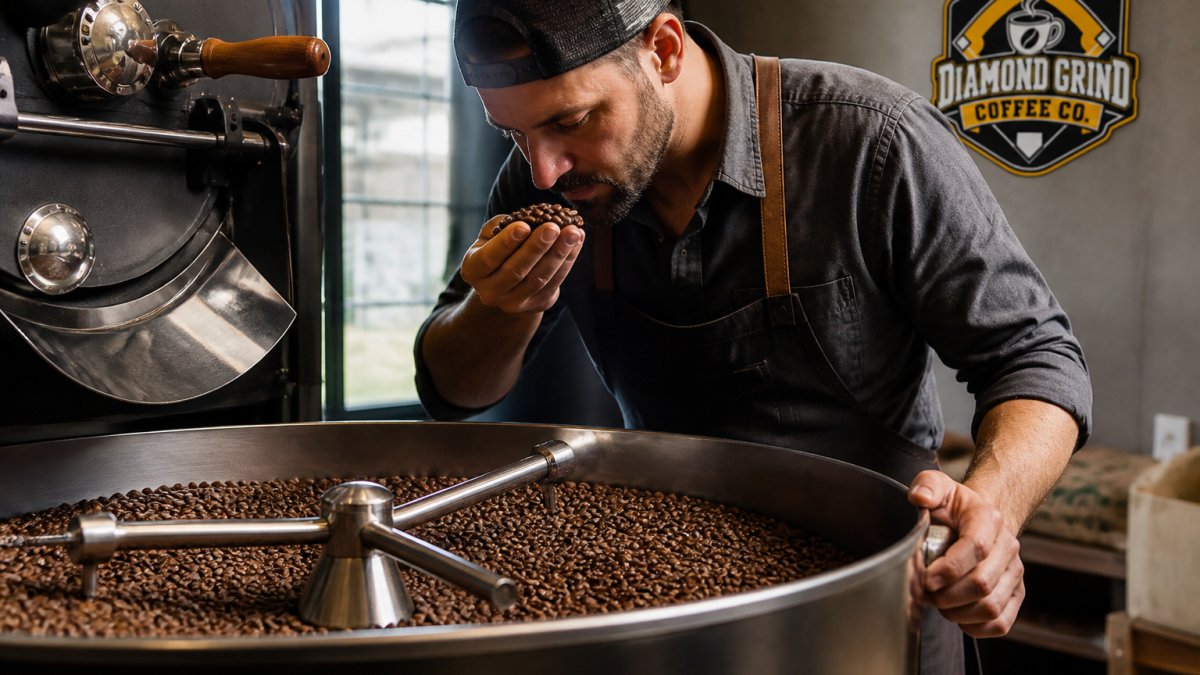
Flavor clarity is the difference between tasting a coffee's actual character and tasting "coffee." Aromatic compounds in roasted beans are volatile, meaning they begin fading the moment the roast finishes. The result is a cup with distinct tasting notes: milk chocolate and caramel in a medium roast, bright fruit in a natural Ethiopian. Mass-produced coffee, roasted in huge volumes and warehoused for months, loses that definition long before it reaches a shelf.

Small-Batch Coffee vs. Mass-Produced Coffee: What's the Difference?
The core difference is batch size and time to market, but that single fact gets stretched into claims it cannot support. Batch size is not a quality guarantee on its own. What actually separates a good small-batch roaster from a large-scale operation is a mix of inherent advantages and choices that any roaster, at any scale, could make or skip.
Here is the honest breakdown:
| Factor | Small-Batch Coffee | Mass-Produced Coffee | Inherent to batch size? |
|---|---|---|---|
| Batch size | Smaller, closely monitored | Large, high-volume | Yes |
| Time to ship | Days after roasting | Weeks to months | Usually, but not always |
| Roast profile | Adjusted per bean | Standardized for consistency | No, a choice |
| Flavor focus | Aroma and origin character | Uniformity and shelf life | Partly, driven by time to market |
| Traceability | Often farm or region named | Frequently blended, unnamed | No, a sourcing choice |
| Equipment | Often smaller drum or fluid-bed roasters | Large drum roasters, sometimes continuous | Yes |
| Quality control method | Per-batch cupping and roast curves | Statistical sampling across large lots | Partly |
| Price per pound | Typically higher | Typically lower | Yes, driven by volume economics |
What batch size actually changes.
What batch size does not change. A small roaster can still buy commodity green coffee, roast it dark to hide defects, and warehouse it for months. A large roaster can publish roast dates, name farms, and cup every lot. Batch size sets the ceiling on how much attention is possible; it does not guarantee that attention is paid.
Where the real differences live. Three variables do most of the work:
- Time from roast to bag. This is the single biggest flavor variable, and it is a logistics choice, not a batch-size law. A small roaster who roasts to inventory and ships slowly can be staler than a large roaster with a tight roast-to-ship pipeline.
- Green coffee sourcing. Named farms, specific lots, and processing details (washed, natural, honey, anaerobic) drive flavor more than roast size does. Traceability is a purchasing decision.
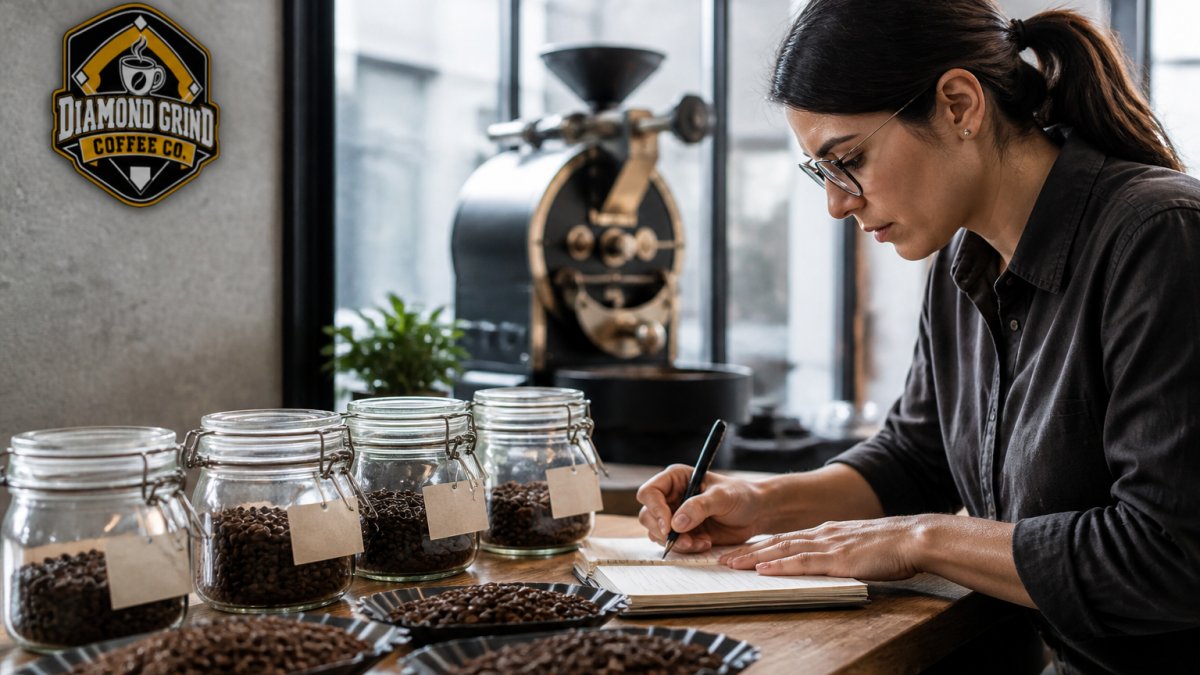
- Roast profiling discipline. Tracking bean temperature, rate of rise, first crack timing, and development time on every batch is what produces repeatability. A roaster who does this at any scale will outperform one who does not.
The practical takeaway. Treat "small batch" as a signal that close attention is possible, not proof that it happened. The verifiable markers, a printed roast date, a named origin, a stated processing method, and fast shipping, tell you more than the batch-size claim alone.
How Small-Batch Roasting Works: Precision at Every Step
Small-batch roasting works by controlling heat and airflow closely across a short, monitored roast cycle.
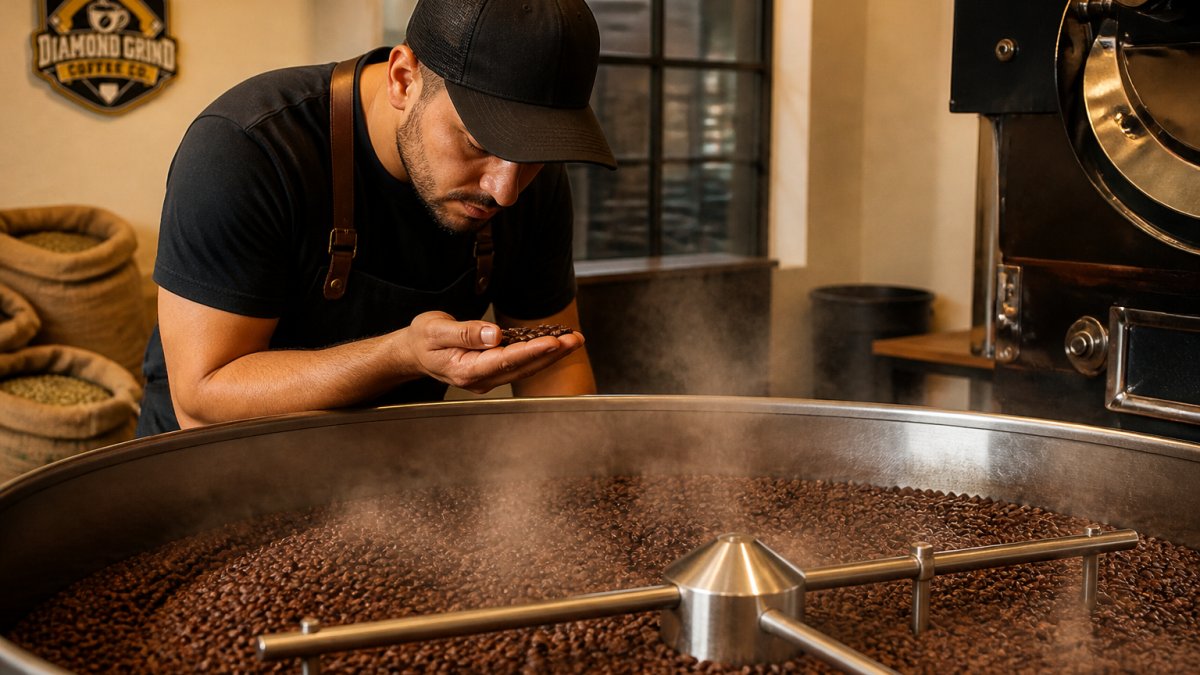
The process follows a defined sequence:
- Green bean selection - beans are chosen by origin, variety, and lot
- Charge and drying - beans enter the roaster and lose moisture
- First crack - sugars caramelize and aromatic compounds develop
- Development - the roastmaster adjusts time and heat for the target flavor profile
- Cooling - rapid cooling stops the roast at the right moment
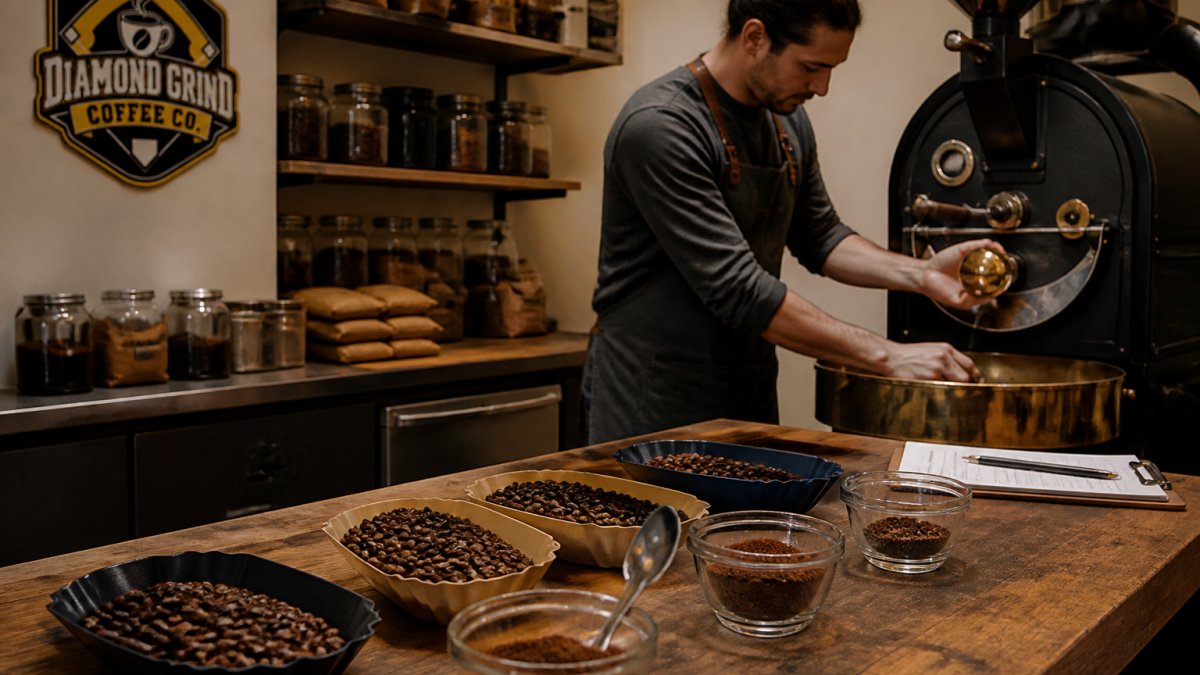
- Resting and cupping - the batch is tasted and evaluated before it ships
How Long to Rest Coffee After Roasting for Peak Flavor
The ideal rest period for freshly roasted coffee is generally 3 to 7 days for filter brewing and 7 to 14 days for espresso. During this window, beans release carbon dioxide in a process called degassing. Brew too soon and the gas interferes with extraction, producing a flat or uneven cup. Wait too long and the aromatic compounds you paid for start to fade.
Rest time also depends on roast level and brew method. Lighter roasts often benefit from a slightly longer rest, while darker roasts settle faster. Espresso tends to need more rest than pour-over because the pressurized extraction amplifies any inconsistency in the bean.
How to Store Roasted Coffee Beans to Preserve Freshness
Storing roasted coffee well comes down to four enemies: oxygen, light, heat, and moisture. But "keep it in an airtight container" is only the first step. The bigger question is how freshness actually moves over time, and what storage choices do at each stage.
First Light- Limited Edition Holiday Blend →
The freshness timeline, from roast date forward
Roasted beans follow a fairly predictable arc:
- Days 0-2: Heavy degassing. Carbon dioxide is escaping fast. Brewing now often produces uneven extraction and a flat or foamy cup, especially in espresso.
- Days 3-7: Degassing slows. Filter brewing hits its sweet spot here for most roasts.
- Days 7-14: Espresso typically peaks in this window as the bean stabilizes. Aromatics are still strong.
- Days 14-30: Flavor is still good but declining. Aromatics fade first, then sweetness, then body.
- Beyond 30 days: Noticeable staleness for most roasts. Still drinkable, but the origin character you paid for is mostly gone.
These windows shift with roast level. Lighter roasts often need a longer rest and hold up slightly longer; darker roasts settle faster and fade faster because more of the bean's structure has been broken down.
Packaging: what to look for and what to do with it
What to avoid:
- Clear or translucent containers on an open shelf, light degrades oils and aromatics
- Loose clips on a rolled bag, air exchange continues
- Pre-ground coffee stored for weeks, surface area accelerates staling
Refrigerator vs. freezer vs. cupboard
- Cupboard: Best for coffee you will finish within two to four weeks. Keep it cool, dark, and away from the stove, oven, or a sunny windowsill.
- Refrigerator: Generally a poor choice. Opening the door cycles temperature and humidity, and beans readily absorb odors from nearby food.
- Freezer: Works for longer storage if done right. Seal beans airtight, freeze in portions you will use in one go, and do not thaw and refreeze repeatedly. Let a portion come to room temperature before grinding to avoid condensation on the beans.
A quick storage checklist
- Airtight, opaque container or the roaster's valved bag, sealed
- Stored at room temperature, away from heat and direct light
- Whole bean preferred over pre-ground
- Bag finished within a few weeks of the roast date
- Freezer portions sealed airtight and used without refreezing
Bean Origin and Traceability in Small Batch Coffee
Traceability in small-batch coffee means you can often name the farm, region, or cooperative behind your beans. That level of sourcing detail is practical, not just romantic: knowing the origin tells you what flavor profile to expect and how the beans were processed. A single-origin Ethiopian natural and a pulped-natural Brazilian taste completely different, and traceable sourcing is how you know which one you are drinking.
Diamond Grind Coffee publishes origin details on its single-origin offerings, so you can see the region, altitude, variety, and processing method before you buy.
How to Verify Small Batch Coffee Claims Before You Buy
Verifying a small-batch claim takes about two minutes. Look for a printed roast date, named origin or farm, and a stated batch or roast approach. Then check whether the roaster ships quickly after roasting. If a bag carries none of that information, the "small batch" line is decoration.
Questions worth asking before you commit:
- Does the bag show a roast date, not just a "best by" date?
- Is the origin named, or is it a vague blend?
- How soon after roasting does the coffee ship?
- Can you order a single bag without a subscription lock-in?
- Does the roaster offer grind options to match your brew method?
Conclusion: Why Small Batch Coffee Is Worth It
Small-batch roasting is worth it because freshness and attention are the two things mass production cannot fake. When beans are roasted in smaller quantities, profiled per origin, and shipped within days, the flavor, aroma, and clarity all show up in the cup. That is the case for choosing a roaster who treats every batch as its own decision.
Diamond Grind Coffee roasts your order the same day it ships, offers customizable grind options from whole bean to espresso, and makes it easy to explore single origins and sample packs without a subscription. Free U.S. shipping keeps it simple. If you want coffee that tastes like it was made for you and not for a warehouse shelf, the roast date is the proof.
Frequently Asked Questions
What are the benefits of small-batch roasted coffee?
Small batch coffee offers fresher flavor because beans are roasted in smaller quantities closer to when you buy them. The smaller batch size gives the roastmaster more control over roast profile and development, which preserves aromatic compounds and produces better flavor clarity. You also get better traceability to bean origin.
Is small batch coffee fresher than mass-produced coffee?
Mass-produced coffee is roasted in large volumes, packaged, distributed through warehouses and retail shelves, and can sit for weeks or months before you brew it. Small batch coffee is roasted in smaller quantities, often to order, and shipped shortly after the roast date.
How long should you wait to drink freshly roasted coffee?
Most small batch coffee reaches peak flavor 3 to 7 days after the roast date. During this resting period, beans degas carbon dioxide, which improves extraction and flavor clarity. Lighter roasts often need closer to 7 days, while darker roasts may be ready in 3 to 4 days. If you brew immediately after roasting, you may notice a flat or uneven taste. Waiting a few days lets the flavor profile fully develop.
How should you store small-batch roasted coffee?
Store roasted coffee beans in an airtight container away from light, heat, and moisture. Always check the roast date for the best freshness.
The gap between ordinary coffee and genuinely fresh coffee comes down to how it is roasted and how fast it reaches you. Diamond Grind Coffee roasts small batches to order, ships the same day, and gives you control over grind, origin, and format so every cup reflects the bean, not the warehouse. Get started with Diamond Grind Coffee and taste what a real roast date does for your morning.