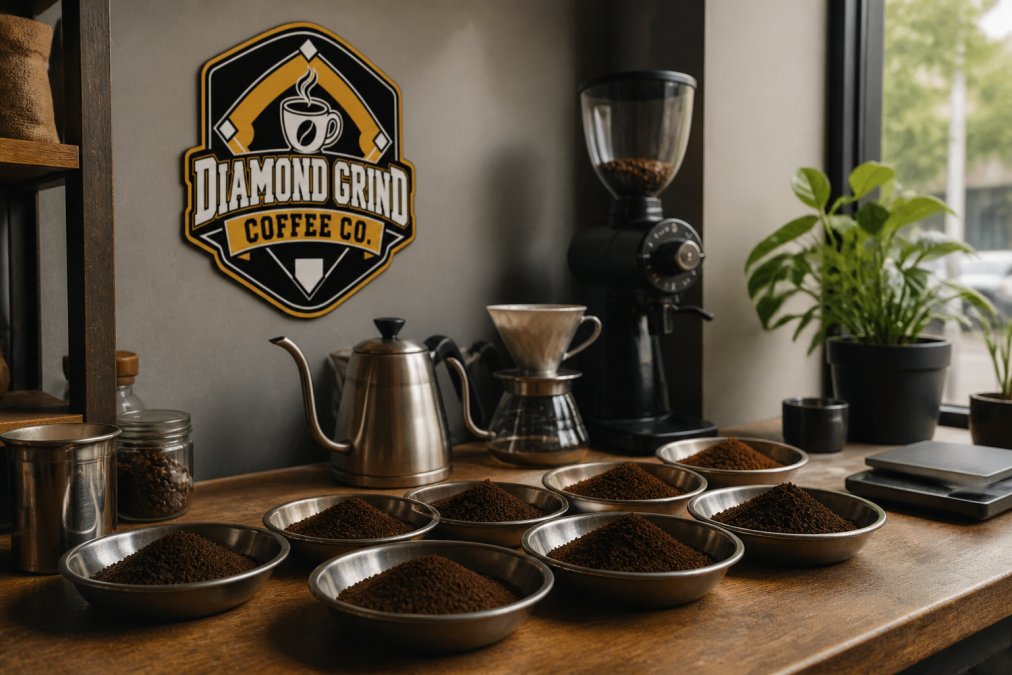
 ultimate-guide
Order Custom Ground Coffee Online: Fresh Guide
Table of Contents
- Why Freshness Makes Custom Ground Coffee Worth It
- The Best Grind Size for Coffee Makers, Espresso, and More
- How to Store Ground Coffee for Maximum Freshness
- Custom Blends, Roast Levels, and Label Options
- Sample Packs and Pricing: Custom vs. Retail
- Corporate Gifting, Weddings, and Bulk Ordering
- Shipping, Subscriptions, and Roast-to-Order Logistics
- Frequently Asked Questions
Last Updated: September 27, 2026
Why Freshness Makes Custom Ground Coffee Worth It
The biggest factor separating a forgettable cup from a memorable one isn't equipment or water temperature, it's how recently the beans were roasted. When you order custom ground coffee online from a roaster that grinds to order, you get coffee at its peak instead of coffee that's sat in a warehouse for months.
Coffee begins losing aromatic compounds the moment it's roasted, and oxygen, moisture, heat, and light accelerate that decline. Pre-ground supermarket coffee is often ground weeks or months before it reaches your shelf, and ground coffee's surface area makes it especially vulnerable to staling.
Diamond Grind Coffee roasts your small-batch order the same day it ships, which means the coffee arrives within days of roasting rather than weeks. That gap matters more than most people realize. You can read more about how oxygen and moisture degrade roasted coffee from the USDA's food storage guidance.
The Best Grind Size for Coffee Makers, Espresso, and More
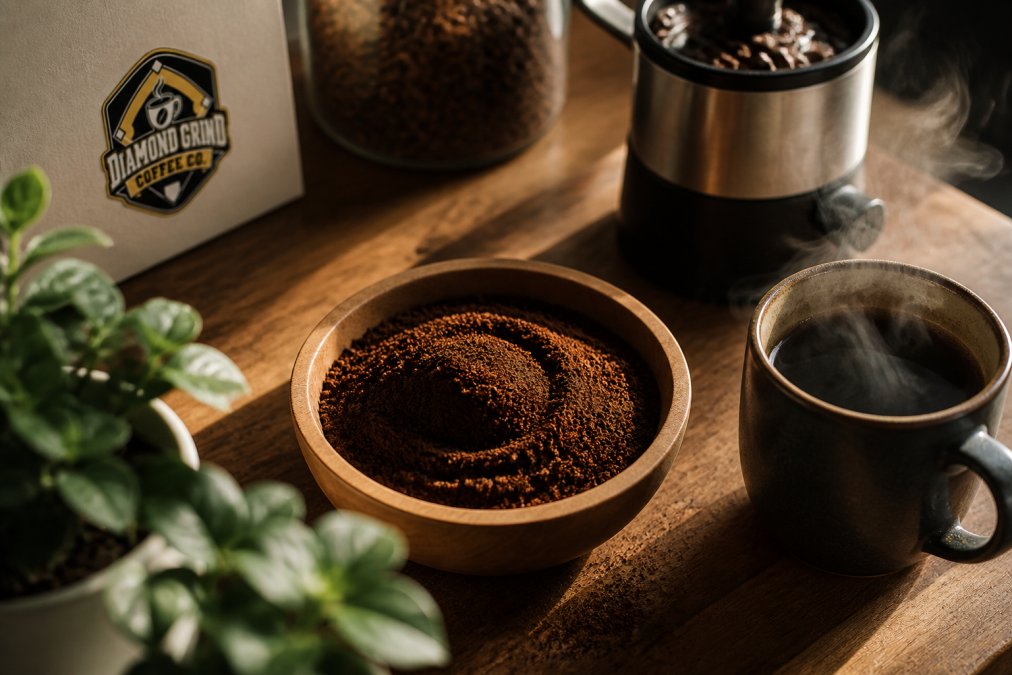
The best grind size for coffee makers is a medium grind, roughly the texture of table salt. Espresso requires a fine grind, while French press and cold brew need a coarse grind. Those pairings work mechanically: grind size controls how much surface area water reaches and how fast it moves through the bed. Fine particles expose more surface area and slow flow, pushing extraction faster; coarse particles do the opposite. Match the grind to brew time and you get balance, mismatch it and the cup tastes sour and weak (under-extracted) or bitter and hollow (over-extracted).
Grind consistency matters as much as grind size. A burr grinder produces uniform particles, while a blade grinder leaves powder and chunks that extract unevenly, so the cup tastes bitter and weak at once.
Matching Grind to Your Brewing Equipment
| Brewing Method | Grind Size | Texture Reference | Typical Brew Time | Why It Works |
|---|---|---|---|---|
| Drip coffee maker | Medium | Table salt | 4-6 minutes | Balanced surface area for a mid-length contact time |
| Espresso machine | Fine | Powdered sugar | 25-30 seconds | High surface area plus pressure forces fast, concentrated extraction |
| Moka pot | Fine-medium | Fine sand | 3-5 minutes | Slightly coarser than espresso so steam pressure doesn't choke the basket |
| AeroPress | Medium-fine | Sand | 1-2 minutes | Short steep plus press rewards a finer grind without clogging the filter |
| V60 / pour-over | Medium-fine | Sand | 3-4 minutes | Cone shape and paper filter need a steady, even flow rate |
| French press | Coarse | Sea salt | 4 minutes | Metal mesh lets fines through, so coarse particles keep the cup clean |
| Cold brew | Extra coarse | Peppercorns | 12-24 hours | Long steep at room temperature needs big particles to avoid bitterness |
How to Dial In a Grind You Actually Like
Start with the table above, then adjust one variable at a time. Sour, thin, or salty means the grind is too coarse, go finer. Bitter, dry, or ashy means it's too fine, go coarser. Change only the grind between brews, and note that a two-click adjustment on a burr grinder is usually enough to move a cup from under-extracted to balanced.
How to Store Ground Coffee for Maximum Freshness
Ground coffee stays freshest in an airtight, opaque container at room temperature, away from light, heat, and moisture. Skip the refrigerator, condensation and odor transfer do more damage than the cool temperature helps. Grinding exposes far more of the bean to oxygen than whole bean does, so ground coffee stales on a timescale of days, not months. The four enemies, oxygen, moisture, heat, and light, work together: heat accelerates oxidation, and moisture carries aroma compounds out of the grounds.
What Actually Happens as Ground Coffee Stales
Roasted coffee releases carbon dioxide for several days after roasting, a process called degassing. That CO2 is protective: while it escapes, it pushes oxygen away from the grounds. Once degassing slows, oxygen oxidizes the oils and aromatic compounds that give coffee its flavor, leaving a cup that tastes flat, papery, or cardboard-like. Ground coffee degasses faster than whole bean because its greater surface area lets CO2 escape quickly, which is why its freshness window is shorter (Coffee Decoded: What is “freshly roasted” coffee?).
A Storage Protocol That Works
- Keep it in the original bag if it has a one-way valve. Roll the top down, press out excess air, and clip it shut.
- If you transfer to a container, use an opaque, airtight one. A clear glass jar on a sunny counter is one of the worst places for coffee. Stainless steel or opaque ceramic is better.
- Store at room temperature, not in the fridge. Every door opening cycles warm and cool air, pulling moisture into the container. Ground coffee is hygroscopic, it absorbs nearby moisture and odors.
- Use the freezer only for longer storage, and only in single-use portions. Seal the coffee in an airtight bag with the air pressed out, freeze it, and take out only what you'll brew that day. Repeated thawing and refreezing introduces moisture each cycle and degrades the cup.
- Buy only what you'll use within two to three weeks. That's the honest answer to how to store ground coffee for maximum freshness: storage helps, but timing helps more. No container outperforms a fresh roast date.
Shelf-Life Expectations by Format
| Format | Typical Peak Flavor Window | Notes |
|---|---|---|
| Whole bean, opened | 2-4 weeks | Degasses slowly; grind just before brewing |
| Ground, opened | 5-10 days | Fastest staling; buy in smaller amounts |
| Ground, sealed with valve | Up to 2-3 weeks | Valve slows oxygen ingress but doesn't stop it |
| Ground, frozen in portions | 1-2 months | Quality holds if thawed once and used immediately |
| Pre-ground grocery bag | Often past peak on arrival | Roast date rarely printed; assume weeks to months old |
Custom Blends, Roast Levels, and Label Options
Custom ground coffee is about more than grind. Roast level shapes the entire flavor profile: medium roasts preserve origin character with brighter acidity and nuanced cupping notes, while dark roasts push toward cocoa, caramel, and smoke as the sugars caramelize.
Best Sellers Sample Pack: 6Bean →
Custom blends combine origins for a specific result.
Sample Packs and Pricing: Custom vs. Retail
Sample packs are the smartest first purchase when you order custom ground coffee online. They cost less than a full bag, let you test grind and roast preferences, and remove the guesswork from a larger order.
| Option | Typical Format | Freshness | Best For |
|---|---|---|---|
| Grocery store bag | Pre-ground, shelf-stable | Weeks to months old | Convenience, last-minute |
| Local roaster | Whole bean or ground | Days to weeks old | Supporting local, in-person |
| Custom online order | Ground to order, shipped fresh | Days from roast date | Freshness, grind precision |
Corporate Gifting, Weddings, and Bulk Ordering
Corporate gifting and wedding favors are where personalized labels earn their keep. A bag of fresh coffee with a custom label reads as thoughtful rather than generic, and works for clients, employees, and guests alike.
Shipping, Subscriptions, and Roast-to-Order Logistics
Roast-to-order means your coffee isn't roasted until you place the order, that's the entire point. Shipping turnaround depends on the roaster's production schedule, so check whether orders ship the same day they're roasted or on a fixed weekly cycle.
Frequently Asked Questions
How long does custom ground coffee stay fresh after shipping?
Custom ground coffee reaches peak flavor within 7 to 14 days of its roast date. Because grinding exposes more surface area to oxygen, ground coffee stales faster than whole bean. Diamond Grind Coffee roasts your order the same day it ships, so your coffee arrives within days of roasting. Store it in an airtight container away from light and heat, and aim to finish the bag within two to three weeks for the boldest cup.
What is the best grind size for coffee makers versus espresso machines?
Drip coffee makers work best with a medium grind, similar to table salt, because it balances extraction time and water flow. Espresso machines need a fine grind, like powdered sugar, to build pressure and pull a concentrated shot. French press and cold brew call for a coarse grind, closer to sea salt, to prevent sediment and bitterness. Ordering custom ground coffee lets you match the grind to your exact brewing equipment.
Is it better to buy whole bean or pre-ground coffee online?
Whole bean stays fresh longer because the bean's surface area is smaller, so it holds aroma and oils for weeks. Pre-ground coffee is convenient and works well if you drink it within two to three weeks of the roast date. If you do not own a burr grinder, ordering custom ground coffee from Diamond Grind Coffee gives you a precise grind for your brewer without buying extra equipment. Choose whole bean if you grind daily; choose pre-ground for speed.
Can I order custom ground coffee for corporate gifting or wedding favors?
Yes. Custom ground coffee works well for corporate gifting and wedding favors. Diamond Grind Coffee offers sample packs starting at $24.99, which let recipients try several single origins and flavored coffees before committing to a full bag. Plan ahead for shipping turnaround.