 blog
blog
Buy Freshly Roasted Coffee Beans Online: 2026 Guide
Table of Contents
- Why Freshly Roasted Coffee Beans Beat Grocery Store Bags
- How to Read Roast Date vs Expiration Date on Coffee
- How to Choose Coffee Grind Size for Your Brew Method
- How to Store Coffee Beans for Maximum Freshness
- Roast Profiles and Flavor: Light, Medium, and Dark Roasts
- Single Origin, Blends, and Small Batch Roasting
- Subscription Models, Shipping, and Buying Freshly Roasted Coffee Online
- Frequently Asked Questions
Last Updated: September 19, 2026
Why Freshly Roasted Coffee Beans Beat Grocery Store Bags
Grocery bags stamped with "best by" dates a year out were roasted months ago. Freshly roasted coffee is roasted days, not months, before it reaches your kitchen, and that difference shows up in the cup.
At Diamond Grind Coffee, we roast your small-batch order the same day it ships. Oxygen, light, heat, and moisture degrade coffee the moment roasting ends, and the drop-off is steep in the first two weeks. Grocery bags use one-way valves and nitrogen flushing, but they can't undo time on a shelf.
If you want to buy freshly roasted coffee beans online, check the roast date before anything else. Below: how to read those dates, match grind size to your brewer, store beans properly, and pick the right roast profile.
How to Read Roast Date vs Expiration Date on Coffee
The difference between roast date vs expiration date on coffee: the roast date tells you when the beans were roasted, while the expiration date tells you how long the roaster thinks the bag stays drinkable. Only one is useful for judging freshness.
A "best by" stamp is a shelf-life estimate set for retailer convenience, not peak flavor. A roast date is a factual timestamp. When you buy freshly roasted coffee beans online, look for the printed roast date, not a vague "packed on" or "best before" line.
Roast date is the day the beans finished roasting. Expiration date is a manufacturer's guess at when quality falls below an acceptable line.
Here's how the timeline typically plays out:
- Days 1-3 after roast: heavy degassing, carbon dioxide releases, flavors are still settling
- Days 4-14: the sweet spot for most brew methods
- Days 15-30: still good, but aroma and brightness fade
- Beyond 30 days: drinkable, rarely memorable
A roaster who publishes roast dates has nothing to hide. A bag showing only a "best by" date a year out is a signal, not a guarantee.
How to Choose Coffee Grind Size for Your Brew Method
Grind size is the biggest variable most people ignore. Match it wrong and even perfect beans taste thin or bitter.
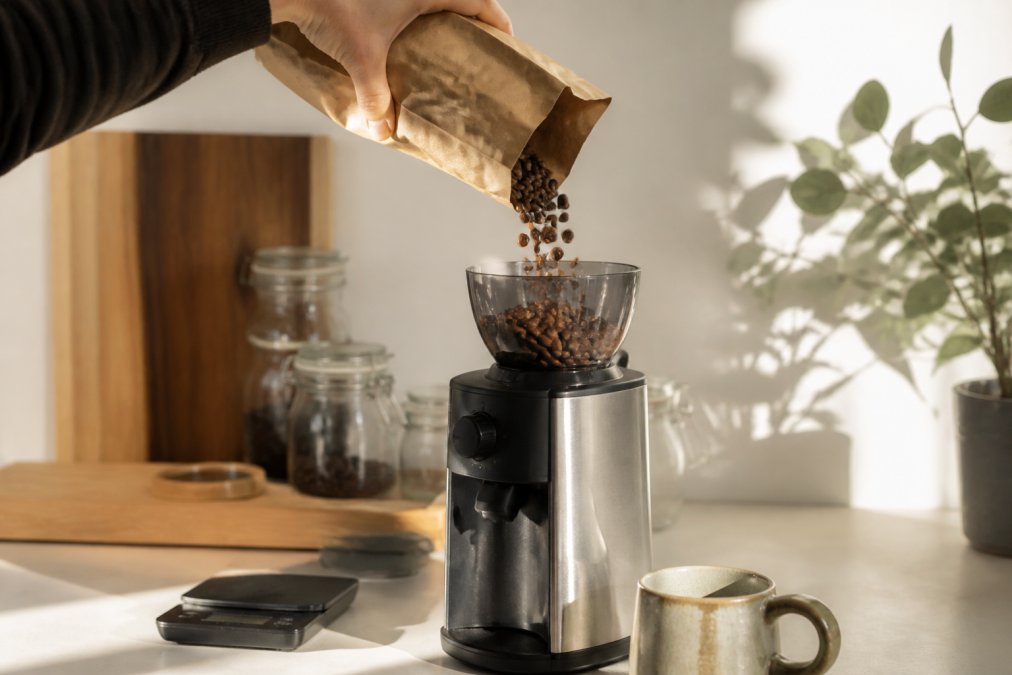
The rule: the longer the water contacts the coffee, the coarser the grind. Espresso pushes water through in seconds and needs a fine grind; a French press steeps for minutes and needs a coarse one. Get this backwards and you'll choke the flow or over-extract.
| Brew Method | Grind Size | Contact Time | Best For |
|---|---|---|---|
| Espresso | Fine | 25-30 seconds | Home baristas, milk drinks |
| Pour-over | Medium-fine | 2-4 minutes | Bright, clear flavor |
| Drip | Medium | 4-6 minutes | Everyday brewing |
| French press | Coarse | 4-5 minutes | Full body, rich texture |
| Cold brew | Coarse | 12-18 hours | Smooth, low acidity |
If you own an espresso machine, order espresso grind; for pour-over or drip, choose the matching setting.
How to Store Coffee Beans for Maximum Freshness
Knowing how to store coffee beans for maximum freshness comes down to four enemies: oxygen, light, heat, and moisture. Beat all four and your beans hold their flavor far longer.
Avoid these common mistakes:
- Storing beans in the fridge, where moisture and odors creep in
- Freezing and refreezing the same bag, which introduces condensation
- Leaving beans in the original bag rolled open on the counter
- Buying more than you'll drink in a few weeks
Roast Profiles and Flavor: Light, Medium, and Dark Roasts
Roast profile decides how a bean tastes as much as its origin does. Light, medium, and dark roasts aren't quality tiers but flavor directions, and the right one depends on how you brew and what you already enjoy.
| Roast | Flavor Notes | Acidity | Body | Best Brew Method |
|---|---|---|---|---|
| Light | Fruity, floral, bright | High | Light | Pour-over, drip |
| Medium | Balanced, sweet, nutty | Medium | Medium | Drip, pour-over, French press |
| Dark | Smoky, bittersweet, bold | Low | Full | Espresso, French press |
Match the Roast to Your Palate, Not the Label
Start from what you already drink and work backward, the fastest way to buy freshly roasted coffee beans online without wasting a bag.
- If you like black tea, green apple, or lemonade, start with a light roast.
- If you like milk chocolate, graham cracker, or caramel, start with a medium roast.
- If you like dark chocolate, molasses, or toasted marshmallow, start with a dark roast.
- If you add milk or cream, lean medium to dark, the roast flavor survives the dairy.
- If you drink it black and want to taste the origin, lean light to medium.
Why Roast Level Changes How You Should Store and Brew
Single Origin, Blends, and Small Batch Roasting
Single origin coffee comes from one region, farm, or cooperative, showcasing a specific place and processing method. Blends combine beans from multiple sources for a consistent, balanced flavor. Neither is better, the question is which fits how you brew and how often you want the cup to change.
How to Verify Roast-to-Order Claims Before You Buy
"Small batch" and "roast-to-order" are marketing terms with no legal definition, so the label alone proves nothing. What separates a real roast-to-order operation is what's printed on the bag and product page. Look for:
- A printed roast date, not a "best by" date. A best-by date a year out tells you the beans were roasted long before they shipped. A roast date tells you exactly when.
- A ship window measured in days, not weeks. Roasters who roast to order typically ship within 1-3 business days of roasting. If the site says "ships in 5-7 days," the beans are sitting somewhere first.
- A stated roast schedule. Many small roasters publish which days they roast. If your order lands the day after a roast day, you're getting beans at peak freshness.
- Lot or batch information. Single origin bags that name the farm, region, altitude, and process are usually traceable. Vague origin labels ("South American blend") are a signal the sourcing is less specific.
- Bag size options. Roasters who care about freshness often sell 8 oz and 12 oz bags alongside 1 lb, because a pound is more than many households finish before flavor fades.
Reading the Roast Date on a Single Origin vs a Blend
When you buy freshly roasted coffee beans online, small batch and roast-to-order are the two labels worth trusting, but only when backed by a printed roast date and a checkable ship window. Those two details do more for your cup than any origin name on the bag.
Subscription Models, Shipping, and Buying Freshly Roasted Coffee Online
Shopping online for coffee unlocks variety a grocery aisle can't match, but the model you choose matters. A subscription delivers on a schedule; one-time orders let you buy exactly what you want, when you want it.
Here's what to weigh before you commit:
| Factor | Subscription | One-Time Order |
|---|---|---|
| Convenience | Automatic delivery | You reorder manually |
| Commitment | Ongoing | None |
| Flexibility | Varies by provider | Full control |
| Best For | Daily drinkers | Variable schedules |
Specialty Coffee Association standards and research
U.S. Food and Drug Administration food storage guidance
U.S. Department of Agriculture coffee and food safety resources
Frequently Asked Questions
How can I tell if coffee beans are actually fresh?
Check the roast date printed on the bag, not just the expiration date. Freshly roasted coffee is best within 2 to 4 weeks of roasting. Whole beans also release carbon dioxide as they degas, so a sealed bag with a one-way valve will look slightly puffed when the coffee is very fresh. If a bag has no roast date at all, treat that as a red flag and look for a roaster that prints one.
Is it better to buy whole bean or pre-ground coffee?
Whole bean keeps its flavor longer because the oils and aromatics stay protected inside the bean. Once ground, coffee stales within days rather than weeks. If you do not own a grinder, order pre-ground but match the grind size to your brew method, and buy smaller amounts more often. For espresso machines and pour-over setups, whole bean with a fresh grind right before brewing gives the best results.
How long does it take for freshly roasted coffee to ship?
It depends on the roaster. Some small batch roasters roast to order and ship the same day, which means your coffee can arrive within a few days of roasting. Others roast on a set weekly schedule. When you buy freshly roasted coffee beans online, check the shipping policy before ordering. Faster roast-to-ship times mean more of your coffee's peak flavor window is left when the bag reaches your door.
Can I order just one bag without a subscription?
Yes, many roasters let you buy single bags with no commitment. Subscriptions often lower the per-bag cost and let you set delivery frequency, but they are not required. If you drink coffee slowly or travel often, ordering one bag at a time and storing it well may suit you better. Start with a single bag or a sample pack to test freshness and flavor before committing to recurring deliveries.