 comparison
Is Subscription Coffee Cheaper Than Grocery Store?
Table of Contents
- The Real Price Comparison: Subscription Coffee vs. Grocery Store
- Coffee Subscription Cost: What Goes Into the Monthly Price
- Cost Per Cup of Coffee: The Only Number That Matters
- Coffee Subscription Shipping Costs and Free-Shipping Thresholds
- Buying Coffee Beans in Bulk: Does Volume Actually Lower Your Cost?
- Freshness, Consumption Rate, and Coffee Waste
- Subscription Terms and Hidden Costs to Check Before You Commit
- Which Option Fits Your Household? A Decision Framework
- Frequently Asked Questions
Last Updated: October 18, 2026
The Real Price Comparison: Subscription Coffee vs. Grocery Store
Whether subscription coffee is cheaper than grocery store coffee depends on one thing most shoppers never calculate: cost per brewed cup.
A coffee subscription is a recurring delivery of freshly roasted beans on a schedule you choose.
Here is the honest version: buying coffee online rarely wins on the lowest possible price per pound. It often wins on cost per drinkable cup, because less coffee gets thrown out.
What You Actually Pay Per Pound
Per-pound price is the fairest starting point, and it exposes the gap immediately.
That does not make subscriptions expensive, just a different purchase. A bag of Diamond Grind Coffee runs $24.99, whether you choose the House Blend, Breakfast Blend, or a single origin.
| Option | Typical Price Model | Roast Date Shown | Grind Choice |
|---|---|---|---|
| Budget grocery bag | Low shelf price, large volume | Rarely printed | Usually limited |
| Upscale grocery bag | Mid-to-high shelf price | Sometimes printed | Limited |
| Specialty subscription | Per-bag price plus shipping | Printed on the bag | Whole bean to espresso |
| Diamond Grind Coffee | $24.99 per bag, free U.S. shipping | Roasted after you order | Whole bean, standard, espresso, coarse |
The per-pound comparison only works when you know the bag weight and the roast date. Ask for both before you judge a price.
Coffee Subscription Cost: What Goes Into the Monthly Price
A coffee subscription cost bundles green coffee, small-batch roasting, packaging, and delivery into one recurring charge, which is why a subscription bag can cost more than a grocery bag and still deliver better value per cup.
The monthly total depends on three inputs: bag size, delivery frequency, and shipping.
Most subscription services lock you into a volume that suits their operations, not your counter. We would rather you order one bag at a time and reorder when it runs low.
Cost Per Cup of Coffee: The Only Number That Matters
The cost per cup of coffee is the price of a bag divided by the number of cups it brews.
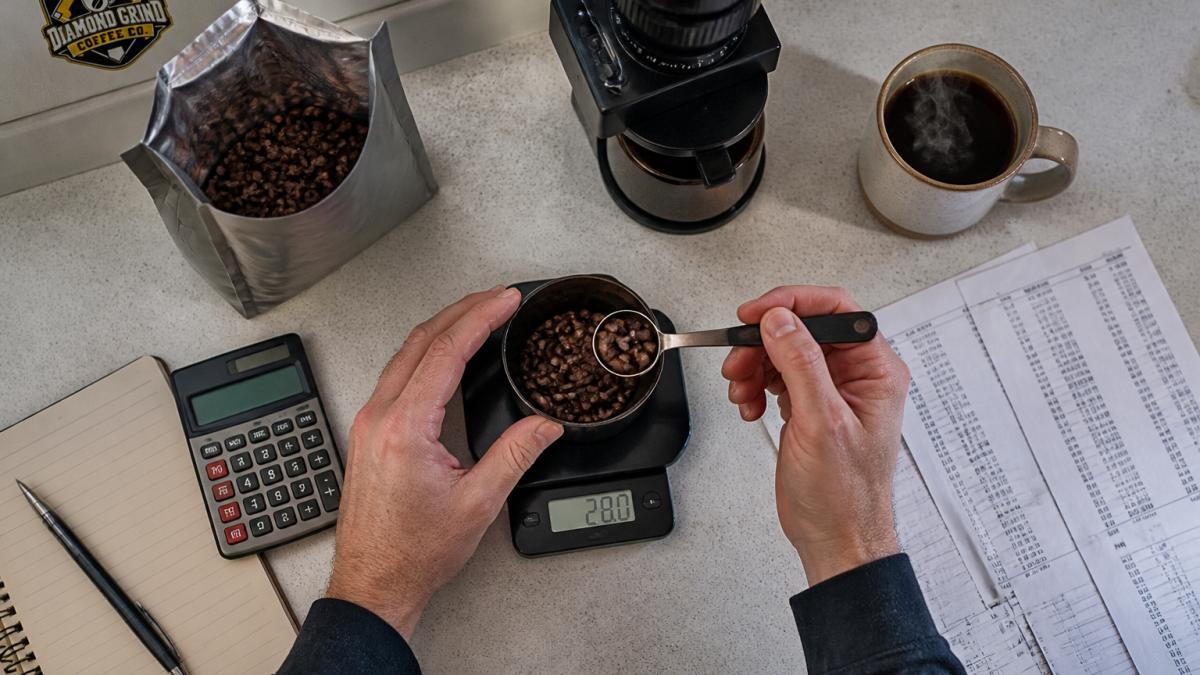
Serving size is the hidden variable. A weak brew stretches a bag to 24 cups; a proper 18-gram dose pulls it back to 16.
Run the same dose through both options and the gap narrows sharply. Then add the waste: stale beans get dumped, not drunk.
Cost Per Brewed Cup by Brewing Method
Brewing method changes cost per cup more than most people expect, because each method uses a different coffee dose. A drip machine is the most efficient; espresso uses more grounds per ounce but delivers a concentrated shot.
- Drip: moderate dose, high cup yield, lowest cost per cup
- Pour-over: slightly higher dose, cleaner flavor, mid-range cost
- French press: higher dose, fuller body, cost climbs
Capsules deserve a fair mention. Our 12 Pack Single Serve Coffee Capsules is $19.99, and each capsule is sealed with no oxygen inside so the coffee stays fresh.
Coffee Subscription Shipping Costs and Free-Shipping Thresholds
Coffee subscription shipping costs are the line item that flips the math.
Shipping is charged per delivery, not per bag. Ordering two small bags more often costs more in shipping than one larger bag on the same schedule.
Diamond Grind Coffee ships free on U.S. orders. That removes the variable most shoppers forget to add: the $24.99 bag price is the delivered price, with no threshold to clear and no per-delivery fee to absorb.
Compare that to a grocery run. A Federal Trade Commission guide to pricing and advertising claims is a useful reminder that advertised prices must be clear about what they include, which is why shipping should never be a surprise at checkout.
How to Calculate Delivered Cost Per Ounce
Use this four-step method on any subscription before you compare it to a store price:
- Add the bag price and the shipping fee for one delivery. If shipping is free above a threshold, note the threshold.
- Divide by the bag weight in ounces to get delivered cost per ounce.
- Multiply by the ounces you actually use per week to get your real weekly cost.
- Compare that weekly figure to the store price for the same weight and quality tier.
A subscription with a $6 shipping fee on a 12-ounce bag adds $0.50 per ounce before you brew a single cup. A free-shipping bag at the same sticker price is meaningfully cheaper per ounce, and the gap widens with every delivery.
Hidden Costs to Check Beyond Shipping
Shipping is the visible fee. These are the ones that hide:
- Minimum order values that force you to buy more than you need to qualify for free shipping.
- Introductory pricing that applies only to the first one or two deliveries, then renews at a higher rate.
- Handling or packaging fees listed separately from shipping.
Run the delivered-cost math once, on paper, before you commit. It takes five minutes and reflects what actually leaves your account each month.
Buying Coffee Beans in Bulk: Does Volume Actually Lower Your Cost?
Buying coffee beans in bulk lowers the per-pound price but raises a different cost: staleness.
Volume discounts reward storage, and storage works against freshness. For a heavy-drinking household, bulk can make sense.
Best Sellers Sample Pack: 6Bean, Cowboy, Breakfast, Peru, Mexico, Bali →
Our approach is the opposite of bulk: roast after the order is placed, ship the same day it is roasted, and keep production small-batch.
If you want variety without committing to a large bag, the Best Sellers Sample Pack is the low-risk entry.

Freshness, Consumption Rate, and Coffee Waste
Freshness decides whether a subscription saves money. Coffee that tastes good gets drunk; coffee that tastes stale gets poured out, and wasted coffee is the most expensive coffee you buy.
Most comparisons ignore this, dividing bag price by an optimistic cup count and calling it cost per cup. That assumes every gram in the bag becomes a drinkable cup. In real kitchens, some of it does not.
Quantifying the Waste
Waste shows up in two forms: coffee thrown out because it went stale, and coffee brewed weak to stretch the bag.
To measure it: weigh the bag when you open it, weigh what remains when it no longer tastes good, and subtract.
If a 12-ounce bag costs $24.99 and you discard the last 3 ounces because the flavor flattened, you paid for 16 ounces of value and received 12.
Matching Delivery Frequency to Consumption Rate
Consumption rate is the other half of the equation. Match your delivery frequency to how fast you brew, not to how often the service prefers to ship.
- Weigh your weekly dose. If you use 18 grams per cup and drink two cups a day, that is 36 grams a day, or about 252 grams a week.
- Convert to bag life. A 12-ounce bag is about 340 grams, so it lasts roughly nine days at that rate.
- Set the schedule to the bag life. Order every nine to ten days, or choose a larger bag if the service offers one.
A household that drinks one cup a day uses about half that volume. A 12-ounce bag lasts nearly three weeks, so a two-week delivery schedule over-delivers and stacks bags in the pantry. That is where subscription waste is born.
Freshness as a Cost Variable
Roast date is the proof point. A grocery bag with no printed roast date could be months old. A subscription that roasts to order puts a date on the bag you can actually check.
A bag roasted to order and shipped the same day reaches you near its peak. A bag that sat on a shelf may already be past it, meaning you paid full price for coffee that was never going to taste its best.
Subscription Terms and Hidden Costs to Check Before You Commit
Subscription terms hide the real cost in three places: minimum commitment, cancellation friction, and grind limitations. Read all three before you enter a card number.
Flexibility is worth paying for.
Grind options matter too. Whole bean, standard drip, espresso, and coarse covers nearly every home setup, and the right grind means you actually brew the bag instead of leaving it on the shelf.
Which Option Fits Your Household? A Decision Framework
The right choice depends on volume, freshness preference, and how much you value convenience. Use this framework to decide in under a minute.
| Your Situation | Better Fit | Why |
|---|---|---|
| One cup a day, price-first | Grocery or capsules | Low volume, fixed cost per cup |
| Two or more cups daily | Subscription | Freshness holds across the bag |
| Espresso machine owner | Subscription | Custom grind and roast date |
| Frequent traveler | Flexible subscription | Pause delivery, no waste |
| Wants variety | Sample pack | Test before committing |
| Values ritual and flavor | Specialty subscription | Roast-to-order quality |
The pattern is clear. Light drinkers save at the grocery store.
If you want to test the second path without a commitment, start with a single bag or a sample pack and measure your real cost per cup.
Frequently Asked Questions
Is subscription coffee cheaper than grocery store coffee?
It depends on what you buy at the grocery store. Mass-market bags often cost less per pound upfront, but specialty subscription coffee is roasted to order and shipped fresh, so you waste less and brew a better cup. When you factor in cost per cup, shipping fees, and how much coffee you actually drink, a subscription coffee service can match or beat grocery prices for households that go through a bag every two to four weeks.
How much does a coffee subscription cost per month?
Most subscription coffee services price per bag rather than per month, and your monthly cost depends on delivery frequency. A single 12 oz bag at $24.99 delivered every two weeks works out to roughly $50 per month for one daily drinker. Lighter drinkers who order monthly spend closer to $25. Always check the coffee subscription cost against how many cups you brew per week before committing.
Do coffee subscriptions include free shipping?
Many do, but the terms vary. Some services include free shipping on every order, while others set a minimum order value or charge a flat rate per box. Coffee subscription shipping costs of $5 to $8 per delivery can add $60 to $96 per year, so read the shipping policy before you sign up. A service with free U.S. shipping on all orders removes that variable entirely.
How do you calculate the cost per cup of coffee?
Divide the bag price by the number of cups it brews. A 12 oz bag holds roughly 340 grams, and a standard dose is 10 to 18 grams per cup depending on your brew method. At 12 grams per cup, that bag makes about 28 cups. A $24.99 bag works out to roughly $0.89 per cup. Compare that to $3 to $5 for a cafe latte and the math changes quickly.
Is buying coffee beans in bulk cheaper than a subscription?
Bulk buying lowers the per-pound price, but only if you drink it fast enough. Coffee peaks in flavor within two to four weeks of the roast date and declines after that. A 5 lb bulk bag that takes you three months to finish means two months of stale coffee. Buying coffee beans in bulk makes sense for high-volume households or offices; smaller households usually get better value from smaller, more frequent deliveries.
The real question is not which option has the lower sticker price. It is which one gives you coffee you actually finish. If you drink regularly and want a roast date you can trust, Diamond Grind Coffee roasts your order after you place it, ships it the same day, offers grind options from whole bean to espresso, and ships free on U.S. orders. Start with a bag or a sample pack and calculate your own cost per cup.