 comparison
Roast To Order Alternative for Home Brewers
Table of Contents
- Why Home Brewers Are Reconsidering Roast To Order Subscriptions
- Quick Comparison: Roast To Order Alternative Options
- What Freshly Roasted Coffee for Home Brewing Actually Delivers
- How Soon to Brew Coffee After Roasting
- Whole Bean vs. Ground Coffee for Home Brewing
- How Coffee Roasters for Home Brewers Compare on Price and Shipping
- Making the Switch: A Practical Decision Framework
- Conclusion
- Frequently Asked Questions
Last Updated: October 12, 2026
Why Home Brewers Are Reconsidering Roast To Order Subscriptions
The biggest complaint we hear about roast to order subscriptions isn't quality. It's timing. Coffee arrives in waves, bags pile up faster than a single brewer can drink them, and by week three that "fresh" roast is just another stale bag on the shelf.
Roast to order is a fulfillment model where a roaster waits until your order lands, then roasts and ships within days. The idea is sound. The execution is where things get messy for home brewers.
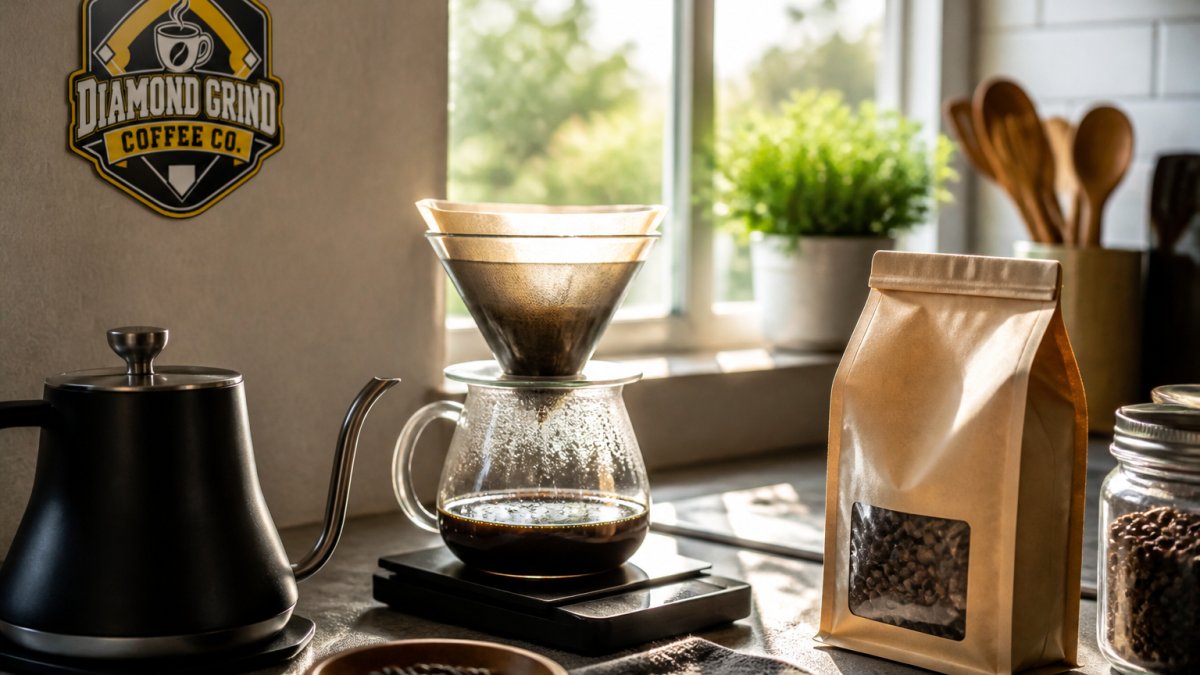
Here's the tension most guides skip: freshness is a clock, not a subscription perk. A 12-ounce bag brewed at two cups a day lasts roughly two weeks. If your subscription ships monthly, you're drinking week-old coffee for half the cycle. That's not a roast-to-order problem. It's a volume-matching problem.
At Diamond Grind Coffee, we roast your small-batch order the same day it ships, which means you can order one bag at a time. Below, we'll break down the real alternatives and how to pick the one that fits how you actually brew.
Quick Comparison: Roast To Order Alternative Options
Home brewers have three realistic paths: single-bag roast-to-order orders, sample packs for variety, and local roaster pickup. Each solves a different problem.
| Option | Best For | Freshness Window | Commitment |
|---|---|---|---|
| Single-bag roast-to-order | One-bag-at-a-time brewers | Roasted same day it ships | None |
| Sample packs | Exploring origins before committing | Roasted to order, 2oz portions | None |
| Local roaster pickup | Same-day brewing, in-person buying | Varies by roast schedule | None |
| Monthly subscription | High-volume households | Fixed shipping cycle | Ongoing |
The single-bag model wins for most home brewers because it removes the two failure points of overstock and staleness.
What Freshly Roasted Coffee for Home Brewing Actually Delivers
Freshly roasted coffee for home brewing delivers peak flavor roughly 4 to 14 days after the roast date. Before day 4, coffee degasses heavily and brews unevenly. After two weeks, oxidation flattens the aromatics that made the roast worth buying.
That window is the entire argument for roast-to-order. You're not paying for a label. You're paying for a narrower gap between roast and brew.
What most guides miss is that freshness only helps if you can drink the bag inside that window. A 2-pound order of a coffee you've never tried is a gamble. That's why we offer sample packs first, then full bags once you know what you like.
How Soon to Brew Coffee After Roasting
The ideal time to brew coffee after roasting is 4 to 14 days post-roast for most methods. Espresso skews earlier, around 5 to 10 days, because the crema stabilizes as the beans degas.
Brew too early and you get a flat, gassy cup that channeling ruins. Brew too late and you lose the fruit and floral top notes that fade first.
A practical rule: rest whole beans 3 to 5 days after the roast date, then start brewing. If you're buying pre-ground, brew within a week, because surface area accelerates staling.
Whole Bean vs. Ground Coffee for Home Brewing
Whole bean wins on shelf life. Ground coffee wins on convenience. For home brewers chasing peak flavor, whole bean is the better default, especially if you brew with a burr grinder.
Best Sellers Sample Pack: 6Bean, Cowboy, Breakfast, Peru, Mexico, Bali →
Here's the honest trade-off. Whole bean stays at peak flavor for around two weeks. Pre-ground starts fading within days because oxygen hits far more surface area. If you brew one cup a day, whole bean is almost always worth the extra 30 seconds.
The exception is travel, office brewing, or anyone without a grinder. That's where customizable grind options matter. We grind to order for standard drip, espresso, and coarse French press, so you get the right consistency without owning a grinder.
How Coffee Roasters for Home Brewers Compare on Price and Shipping
Coffee roasters for home brewers differ most on shipping terms and per-bag pricing, not on bean quality. Free shipping changes the real cost more than a dollar or two off the bag price.
A $24.99 bag with free shipping beats a $19 bag with $8 shipping every time. That's the math most comparison charts bury.
Our sample packs and single origins both run $24.99, and U.S. orders ship free. For brewers who want to try before committing to a full-size bag, the Best Sellers Sample Pack: 6Bean, Cowboy, Breakfast, Peru, Mexico, Bali gives you six 2oz packs, including the Peru single origin with salted caramel and citrus notes. If you'd rather work through origins, the Single Origin Favorites Sample Pack covers Brazil Santos, Colombia, Costa Rica, Ethiopia, Honduras, and Tanzania.


Making the Switch: A Practical Decision Framework
Switching off a roast to order subscription comes down to three questions. Answer them honestly and the right option picks itself.
- How much coffee do you brew per week? Under 12 ounces, buy single bags. Over a pound, a subscription may still fit.
- Do you know which origins you like? If not, start with a sample pack.
- Do you own a grinder? If yes, buy whole bean. If no, order a specific grind.
- What's your landed cost per bag? Add shipping before comparing.
- Can you drink a bag inside two weeks? If not, size down.
The framework matters because the failure mode of roast-to-order isn't bad coffee; it's coffee you can't finish in time.
Conclusion
The real challenge with roast to order isn't finding fresh coffee. It's matching your order size to your brewing pace so nothing goes stale before you drink it. Diamond Grind Coffee roasts your small-batch order the same day it ships, offers customizable grind options from whole bean to espresso, and ships free on U.S. orders, with sample packs that let you explore before committing. Get started with Diamond Grind Coffee and brew coffee at its actual peak.
Frequently Asked Questions
What is the best alternative to roast-to-order coffee for home brewers?
The best alternative depends on how much coffee you drink and how often you want to reorder. A roast to order service like Diamond Grind Coffee roasts your small-batch order the same day it ships, which matches the freshness that subscription models promise. Sample packs at $24.99 let you test six varieties before committing to a full bag, so you only reorder what you actually enjoy.
How soon after roasting should coffee be brewed?
Coffee is typically best brewed 3 to 14 days after its roast date. During the first few days, beans release carbon dioxide, which can make pour-over and espresso taste flat or gassy. Waiting a few days lets the flavors settle. After about 4 to 6 weeks, coffee loses much of its aroma and complexity. Buying freshly roasted coffee for home brewing and checking the roast date on the bag helps you hit that window.
Should home brewers buy whole-bean or pre-ground coffee?
Whole bean is the better choice if you own a grinder, because ground coffee stales much faster once exposed to air. Grinding right before brewing preserves oils and aromatics that pre-ground coffee loses within days. If you do not have a grinder, order pre-ground in the size that matches your brewer, such as espresso, standard drip, or coarse for cold brew, and use it within two weeks.
Where can home brewers buy freshly roasted coffee?
You can buy directly from roasters that roast to order, from local cafes, or from online stores that ship after roasting. Diamond Grind Coffee roasts small batches the same day orders ship and publishes roast dates, so you know exactly how fresh the coffee is. Sample packs at $24.99 are a low-risk way to try single origins like Peru, Ethiopia Natural, or Brazil Santos before buying full bags.