 Comparison
Is Pre-Ground Coffee Worth It for Athletes?
Last Updated: November 9, 2026
Quick Summary
Pre-ground coffee is worth it for most athletes training on a tight schedule, as long as the coffee is fresh and ground for the right brew method. It removes a step most people skip anyway and avoids the equipment cost of a grinder for athletes brewing at home.
- Pre-ground coffee fixes the grind variable, but coffee-to-water ratio, brew method and roast still change caffeine dose.
- Weigh your grounds and aim for a 1:16 coffee-to-water ratio by weight for repeatable cups.
- Ground coffee stales faster than whole bean because grinding multiplies surface area exposed to oxygen.
- Check for a visible roast date, grind options at checkout, and a caffeine-forward blend for early training.
- Our instant coffee offers 30 servings for $20.00, the cheapest per-cup option and easiest to pack for travel.
Table of Contents
- The Athlete's Coffee Trade-Off: Convenience vs. Quality
- Coffee Before Sports: What Caffeine Actually Does for Performance
- How Much Caffeine in a Cup of Coffee: Why Pre-Ground Doses Vary
- Oxidation, Aroma Loss, and Caffeine Stability in Pre-Ground Coffee
- Grinder Quality and Brewing Consistency: What You Give Up With Pre-Ground
- Best Pre-Ground Coffee for Athletes: What to Look For
- Whole Bean vs. Ground Coffee Cost: The High-Volume Athlete's Math
- Ordering Pre-Ground Coffee That Fits Your Training Schedule
- Frequently Asked Questions
The Athlete's Coffee Trade-Off: Convenience vs. Quality
Is pre-ground coffee worth it for athletes? For most athletes training on a tight schedule, yes, with one condition: the coffee has to be fresh and ground for the right brew method. Pre-ground coffee removes a step that most people skip anyway, and it avoids the equipment cost of a grinder for athletes who want to brew at home.
At Diamond Grind Coffee, we roast small batches to order and ship the same day. That detail matters more than the grinder debate for most people reading this.
Below, we break down what caffeine actually does before sport, where pre-ground coffee loses ground, and how to pick a bag that fits a training week. We also run the math on whole bean vs. ground coffee cost for anyone brewing daily.
Coffee Before Sports: What Caffeine Actually Does for Performance
Coffee before sports works mainly on the nervous system. Caffeine blocks adenosine, the compound that builds up through the day and makes you feel tired. With adenosine muted, perceived effort drops and reaction time sharpens.
That is the practical benefit for an athlete: the same workout feels less hard. It does not replace fueling, sleep, or warm-ups.
The catch is dose and timing, and both are harder to control than most people assume. A cup brewed strong hits differently than a weak one, and pre-ground coffee is where that variance starts. For a deeper look at timing and caffeine awareness, our guide to coffee before a workout covers amounts and pre-training routines in detail.
How Much Caffeine in a Cup of Coffee: Why Pre-Ground Doses Vary
How much caffeine in a cup of coffee lands in your mug depends on four things: the coffee-to-water ratio, the brew method, the roast, and the grind. Pre-ground coffee fixes the last variable for you, but the others still move. For an athlete, that variance is not a flavor quibble, it is a performance variable. A pre-workout cup that swings from 80 mg to 160 mg of caffeine changes perceived effort, reaction time, and stomach comfort on race day.
Here is the honest problem. A scoop of pre-ground coffee is not a measured dose. Two tablespoons of a fine grind pack more coffee, and more surface area, than two tablespoons of a coarse grind.
For athletes, that means a pre-workout cup can swing noticeably from day to day. Two ways to tighten it:
- Weigh your grounds. A cheap kitchen scale beats any scoop for repeatability. Aim for a 1:16 coffee-to-water ratio by weight (for example, 18 g coffee to 288 g water) and adjust to taste.
- Match grind to method. Espresso grind in a drip basket over-extracts and turns bitter; coarse grind in an espresso machine under-extracts and tastes thin. Pre-ground bags labeled for drip or French press remove the guesswork.
Pick one ratio, one grind, one brew method, and repeat it. That consistency is the whole game when caffeine is part of your routine.
Watch out: caffeine sensitivity varies widely. Caffeine sensitivity varies widely, so athletes should start lower and be mindful of stacking coffee with other caffeinated products. Check with your doctor if you have questions about caffeine intake.
Oxidation, Aroma Loss, and Caffeine Stability in Pre-Ground Coffee
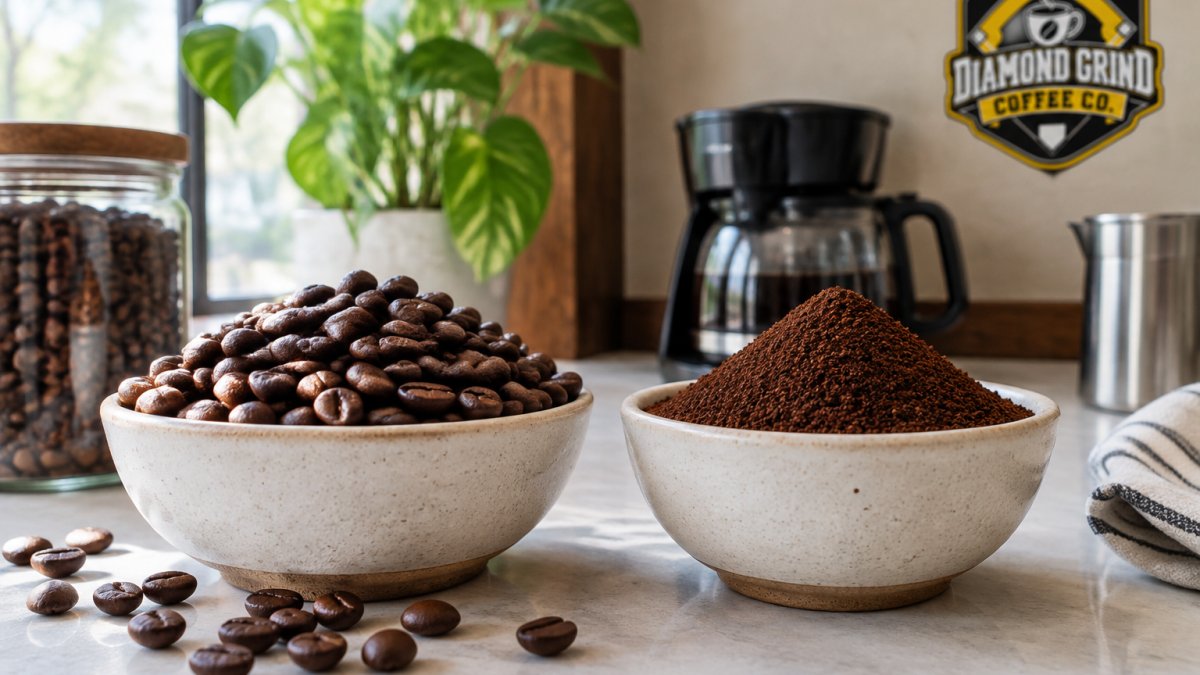
Ground coffee stales faster than whole bean because grinding multiplies the surface area exposed to oxygen.
Caffeine itself is fairly stable. It does not vanish at the same rate as aroma, so a stale bag still delivers a jolt. What you lose is the sensory experience and the predictability of the cup.
Storage slows the slide but does not stop it. Keep pre-ground coffee in an airtight container, away from light and heat, and buy in amounts you will finish within a few weeks. Vacuum sealing and single-serve pouches help. A bag left open on the counter does not.
If you want the full comparison of freshness between formats for rushed mornings, our breakdown of coffee beans vs pre ground coffee goes deeper on oxidation timelines and what each format costs you in aroma.
Grinder Quality and Brewing Consistency: What You Give Up With Pre-Ground
A burr grinder produces a narrow particle distribution: most grounds land at a similar size, so water flows through the coffee bed evenly and extraction stays consistent. A blade grinder chops unevenly, leaving fine dust and coarse chunks in the same dose. The dust over-extracts and turns bitter while the chunks under-extract and taste sour.
What you give up is adjustability. You cannot dial grind size to chase a flavor note or fix a slow espresso shot. If you own a home espresso machine and like to tune your shots, whole bean plus a burr grinder is the better setup. If you brew drip or use a press and want one less machine on the counter, pre-ground is a fair trade.
Ordering custom-ground coffee solves part of this. Our guide to ordering custom ground coffee online explains how to match grind size to your brew method before you buy.
Best Pre-Ground Coffee for Athletes: What to Look For
The best pre-ground coffee for athletes is fresh, ground for your brew method, and dosed consistently. Three things to check before you buy:
- A visible roast date. Not a "best by" date. Roast date tells you how much life is left in the bag.
- Grind options at checkout. Whole bean, standard drip, espresso, and coarse covers most home setups.
- A caffeine-forward blend if you train early. A breakfast blend with robusta in the mix carries more caffeine per scoop than a light single origin.
Our Breakfast Blend + is a medium roast house blend with robusta added for extra caffeine, priced at $24.99.
If you want to compare flavor profiles before committing to a full bag, the Best Sellers Sample Pack gives you six 2-ounce packs, including Breakfast Blend, Cowboy Blend, and single origins from Peru, Mexico, and Bali, for $24.99. The Single Origin Favorites Sample Pack covers six more origins at the same price. Both let you find the cup you will actually drink at 5 a.m.
If you are weighing single origins against blends for pre-workout energy, our roundup of the best coffee beans for pre-workout energy compares the options side by side.
| Option | Price | Grind | Best For |
|---|---|---|---|
| Breakfast Blend + | $24.99 | Whole bean, drip, espresso, coarse | Early training, higher caffeine |
| Best Sellers Sample Pack | $24.99 | 2 oz packs, six coffees | Testing blends before buying |
| Single Origin Favorites Sample Pack | $24.99 | 2 oz packs, six origins | Exploring flavor profiles |
| Instant Coffee | $20.00 | 30 servings, resealable pouch | Travel and game days |
Price
Whole Bean vs. Ground Coffee Cost: The High-Volume Athlete's Math
Whole bean vs. ground coffee cost comes down to equipment, waste, and how much you brew. The difference is what you spend to use it.
A decent burr grinder is a one-time cost that runs well past the price of several bags. Add the minutes per week spent grinding, and the gap widens for anyone brewing one cup a day.
Pre-ground wins on cost for high-volume drinkers in two ways. There is no equipment outlay, and there is less waste from bad grind experiments. You also buy exactly the amount you need, bag by bag, with no subscription lock-in.
Where whole bean pulls ahead: if you already own a grinder, or if you brew espresso and need to tune the grind daily.
Our instant coffee, 30 servings for $20.00 in a resealable pouch, is the cheapest per-cup option of the bunch and the easiest to pack for travel or early games.
Watch out: the per-cup cost of whole bean only beats pre-ground if you actually finish the bags before they stale. Buying in bulk to save per ounce often backfires when half a bag goes flat.
Ordering Pre-Ground Coffee That Fits Your Training Schedule
Ordering pre-ground coffee that fits a training schedule means buying in amounts you will finish before the bag goes flat. Buy two bags at a time if you brew for a household.
Timing matters too. Order so the bag lands before your heaviest training block, not in the middle of a rest week when you will barely touch it.
We roast after the order is placed and ship the same day, which shortens the gap between roast and first brew.
Ready to stock up? You can shop coffee for athletes and pick your grind at checkout, with free shipping on U.S. orders.
The real test is simple: brew the same dose, the same way, for two weeks and see whether your morning cup is one less thing to think about. If it is, pre-ground coffee is doing its job.
Diamond Grind Coffee roasts small batches to order and ships the same day, with grind options from whole bean to espresso and coarse.
Frequently Asked Questions
Is pre-ground coffee as effective as freshly ground coffee for workouts?
For the caffeine hit itself, pre-ground coffee works. The caffeine content stays largely intact as long as the coffee is sealed and stored away from heat, light, and moisture. What degrades faster is aroma and flavor, since volatile compounds escape once beans are ground. If you drink coffee mainly for pre-workout energy and focus, pre-ground is a practical choice. If you also care about tasting notes and a full sensory experience, grinding fresh gives you more.
How long before a workout should you drink coffee?
Most athletes time their cup 30 to 60 minutes before training so caffeine peaks during the session. That window matters more than whether the coffee was ground fresh or bought pre-ground. If you train early, set up your brewing method the night before so you are not scrambling. A drip machine on a timer or a quick pour-over with pre-ground coffee keeps the routine short and repeatable, which helps you hit the same timing every session.
Does pre-ground coffee lose caffeine over time?
Caffeine is stable and does not evaporate the way aromatic oils do, so a sealed bag of pre-ground coffee will not lose meaningful caffeine over its normal shelf life. Flavor is a different story: oxygen exposure and oxidation flatten the taste within weeks of grinding. Store pre-ground coffee in an airtight container away from the stove and sunlight, and buy bags sized to how fast you actually drink them so the last scoop still tastes decent.
What is the best pre-ground coffee for athletes?
Look for three things: a published roast date, a grind matched to your brewing method, and a caffeine level that fits your training. A medium roast breakfast blend with added robusta, like Diamond Grind Coffee's Breakfast Blend + at $24.99, gives a higher caffeine baseline for early sessions. If you want to test different flavor profiles before committing to a full bag, the Best Sellers Sample Pack at $24.99 lets you try six coffees in 2oz packs.
Is it cheaper to buy whole bean or pre-ground coffee?
The real difference between whole bean and pre-ground is usually what you spend on equipment and waste. Whole bean requires a burr grinder, which is a one-time cost, and lets you grind per cup so nothing stales. Pre-ground skips the grinder but starts losing aroma immediately after grinding. For high-volume athletes drinking several cups a day, buying pre-ground in the right quantity and storing it well often costs less overall than a grinder plus bags you grind inconsistently.