 Comparison
Coffee Beans vs Pre Ground Coffee for Busy Mornings
Last Updated: November 5, 2026
Quick Summary
Coffee beans win on freshness, flavor and cost per cup, while pre ground coffee wins on speed and convenience. Whole coffee beans stay fresh for weeks if stored well, but pre ground coffee flattens within days of opening. Choose coffee beans if you own a grinder and drink daily; choose pre ground for rushed mornings with a drip machine.
- Grinding exposes aromatics to oxygen, so pre ground coffee smells flat after a week open.
- A 12-ounce bag yields roughly 28 cups at 12 grams per cup.
- A $100 electric burr grinder adds about $0.14 per cup in year one at two cups daily.
- Espresso needs a fine, consistent, fresh grind, so whole beans plus a burr grinder give more control.
- Buy coffee in amounts you will finish in two to three weeks and store it airtight.
Table of Contents
- Coffee Beans vs Pre Ground Coffee: The Quick Comparison
- Coffee Beans vs Pre Ground Coffee Taste: What Changes in the Cup
- Whole Bean vs Ground Coffee Cost: Price Per Cup Breakdown
- Pre Ground Coffee Beans for Espresso Machine: What Actually Works
- How to Store Whole Bean and Ground Coffee So It Stays Fresh
- Grinder Types, Grind Size, and Brewing Method Compatibility
- Which Option Fits Your Routine: A Decision Framework
- Order Fresh-Roasted Coffee Ground Your Way
- Frequently Asked Questions
Coffee Beans vs Pre Ground Coffee: The Quick Comparison
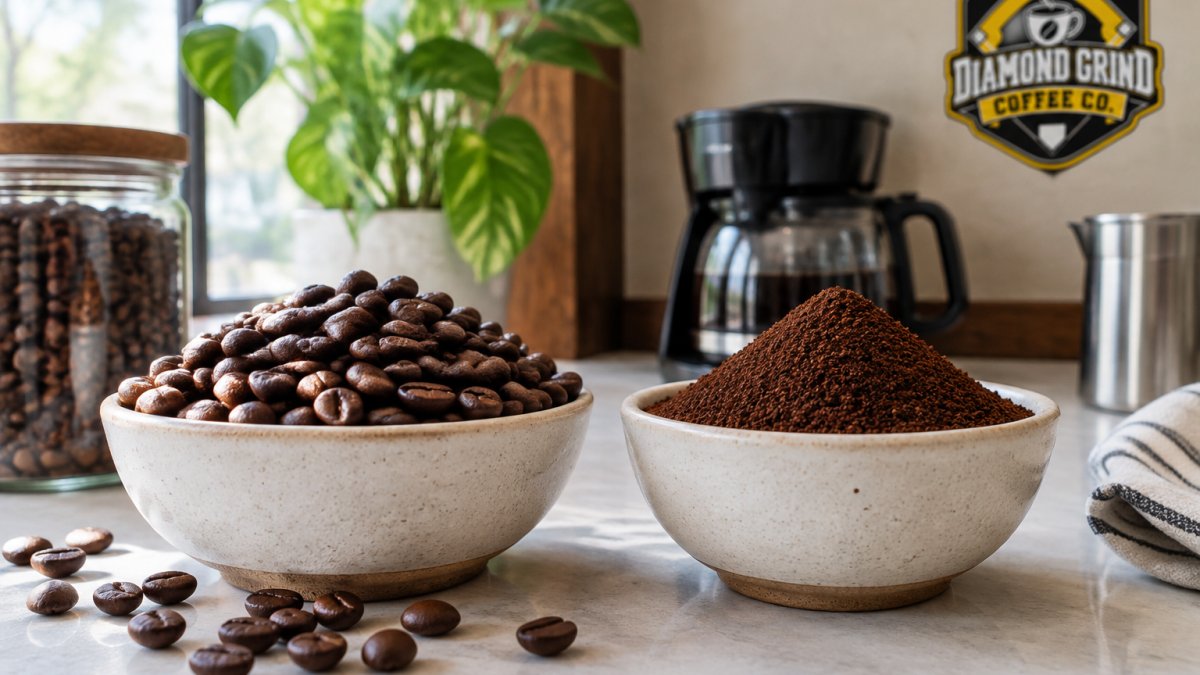
Coffee beans vs pre ground coffee comes down to one trade-off: freshness and control against speed and convenience. At Diamond Grind Coffee, we roast small batches to order and ship the same day, which keeps beans at their freshest. Below, we break down taste, cost per cup, storage, and which grind works in your espresso machine, so you can pick the right bag for your morning.
At-a-Glance Comparison Table
| Factor | Whole Bean Coffee | Pre Ground Coffee |
|---|---|---|
| Freshness window | Weeks if stored well | Days after opening |
| Flavor and aroma | Full, layered, changing | Flattens quickly |
| Equipment needed | A grinder | None |
| Prep time | 30-60 seconds to grind | Zero |
| Cost per cup | Lower per ounce | Higher per usable ounce |
| Best for | Espresso, pour-over, French press | Drip machines, rushed mornings |
The short version: if you own a grinder and drink coffee most days, whole beans win on taste and value. If your mornings are a sprint, pre ground coffee removes a step without ruining your cup, provided you buy it fresh.
Coffee Beans vs Pre Ground Coffee Taste: What Changes in the Cup
Grinding is the moment coffee gives up its best qualities. A roasted bean holds volatile compounds and coffee oils inside its cell structure. Grinding exposes far more surface area to oxygen, moisture, and heat, and those aromatics start escaping immediately.
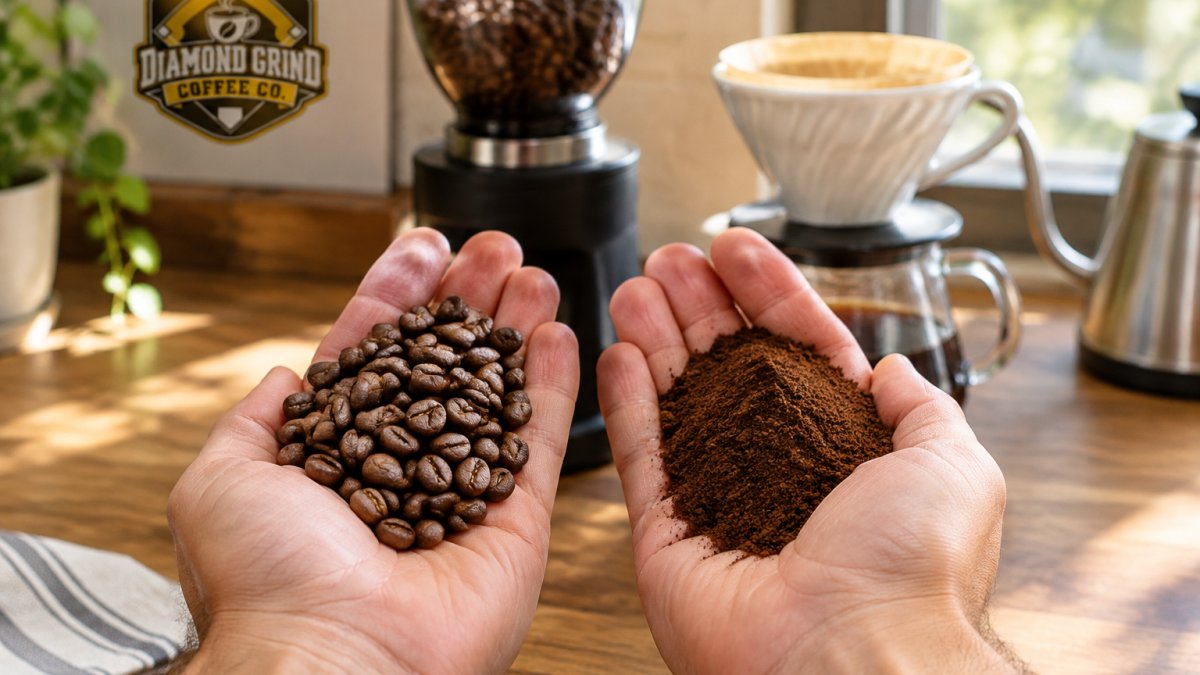
In the cup, expect whole bean coffee to taste brighter and more layered, with a longer finish. Pre ground coffee tends to taste muted once it has sat. The gap widens with light roasts, where delicate fruit and floral notes fade fastest.
Why Grinding Releases Aroma
Aroma is most of what you perceive as flavor, and it lives in those volatile compounds. Grind fresh, brew within minutes, and you capture them in the cup. For a deeper look at matching grind to brewer, see our guide on how to grind coffee beans for a better cup.
Whole Bean vs Ground Coffee Cost: Price Per Cup Breakdown
Whole bean coffee can cost less per cup than pre ground, since ground coffee goes stale faster and more of each bag may be wasted.
Start with a realistic dose. A common baseline for drip and pour-over is about 10 grams of coffee per 6-ounce cup, and most home brewers use somewhere between 10 and 18 grams depending on strength and mug size.
That means a 12-ounce bag (about 340 grams) yields roughly 28 cups at 12 grams each. Now compare two bags at the same $24.99 shelf price:
That waste factor is the hidden line item. A one-cup-a-day brewer takes about four weeks to finish a 12-ounce bag, which is well past the point where pre ground coffee tastes its best. A two-cup-a-day household finishes in about two weeks, so the waste penalty shrinks. The lesson is not that pre ground is always more expensive per ounce; it is that pre ground becomes more expensive per usable ounce the slower you drink.
Then add the grinder.
A few other cost levers matter:
- Buying frequency: smaller bags cost more per ounce but reduce waste. A 12-ounce bag you finish fresh usually beats a 2-pound bag that sits open for two months.
- Roast date versus price: a discounted bag with an old roast date is not a bargain if the flavor is already gone. Check the roast date before you compare prices.
- Grinder quality: a cheap blade grinder saves money upfront but produces uneven particles that brew inconsistently, which can push you to use more coffee to get the strength you want.
- Waste from dialing in: espresso drinkers throw away shots while adjusting grind, and that waste is smaller with a grinder you control than with a fixed pre ground bag you cannot adjust.
For the broader freshness case, our comparison of fresh roasted vs grocery store coffee explains why roast date matters more than the price tag.
Pre Ground Coffee Beans for Espresso Machine: What Actually Works
Pre ground coffee can work in an espresso machine, but grind fineness and freshness both matter. Espresso needs a fine, consistent grind and a fresh one, because pressurized brewing amplifies both good and stale flavors. A pre ground bag labeled "espresso" is ground for a typical machine, not yours. Small differences in basket size and dose change the result.
Watch out: pre ground espresso that sits open pulls thin, sour, or harsh shots, and no amount of dialing in fixes stale coffee. Buy small bags, reseal tightly, and use them within a week or two of opening. If you want the right target before you buy, read what the best grind size for espresso machines is.
How to Store Whole Bean and Ground Coffee So It Stays Fresh
Storage decides how much of that freshness you keep. The enemies are oxygen, moisture, light, and heat, and they attack ground coffee faster because of the greater surface area.
Best Sellers Sample Pack: 6Bean, Cowboy, Breakfast, Peru, Mexico, Bali →
- Keep coffee in an airtight container, not the folded bag
- Store it in a cool, dark cupboard, away from the stove
- Buy in amounts you will finish in two to three weeks
- Skip the freezer for daily-use bags; freeze only sealed, long-term stock
- Never refrigerate coffee, where condensation does the damage
Our step-by-step guide on how to store coffee beans covers the bag, the cupboard, and the freezer in detail.
Grinder Types, Grind Size, and Brewing Method Compatibility
Grind size has to match your brewer, and consistency matters as much as fineness. A blade grinder chops unevenly, leaving fine dust and coarse chunks in the same batch, which extracts at different rates and produces a muddy cup. A burr grinder crushes to a uniform size, and that consistency is the real upgrade.
| Brewer | Grind Size | Notes |
|---|---|---|
| Espresso machine | Fine | Needs a burr grinder for consistency |
| Drip coffee maker | Medium | Pre ground works well here |
| Pour-over | Medium-fine | Freshness shows up clearly |
| French press | Coarse | Even coarse grind avoids sludge |
| Cold brew | Coarse | Long steep, low risk |
Budget trade-off: a hand burr grinder costs little and beats any blade model for consistency. An electric burr grinder costs more but saves daily effort. If you brew drip coffee and value speed above all, pre ground is a fair choice. If you own an espresso machine or brew pour-over, whole beans are worth the extra minute.
Which Option Fits Your Routine: A Decision Framework
Start with the gear question. If you already own a burr grinder, whole bean coffee is the default for anything beyond basic drip.
Then weigh how fast you finish a bag. If you go through 12 ounces within two weeks, either format works.
After those two, the routine constraints decide the rest. Ask yourself these questions honestly:
- Noise: Electric burr grinders are loud enough to wake a sleeping household in a small apartment. Hand grinders are quieter but take 30 to 60 seconds of cranking. If you brew before dawn in a shared space, a quiet hand grinder or pre ground coffee may fit better.
- Counter space: A hand grinder stores in a drawer; an electric burr grinder needs a permanent footprint. Small kitchens often favor a hand grinder or pre ground.
- Cleanup: Burr grinders need occasional brushing, and static cling sends grounds across the counter. Pre ground coffee means no grinder mess, only the brewer to clean.
- Dexterity and hand strength: Hand grinding can be difficult for people with arthritis or limited grip. Electric burr grinders or pre ground coffee remove that barrier.
- Time and attention: Grinding adds 30 to 60 seconds, but the bigger cost is the decision and the cleanup. If your morning is a sprint, pre ground removes a step without ruining the cup, provided you buy it fresh.
- Household size: Two or more daily drinkers justify a grinder quickly, because the equipment cost spreads across more cups and the bag empties before it stales.
A common pattern is a hybrid routine: pre ground for rushed weekdays and whole beans for slower weekend brewing.
There is no wrong answer, only a mismatch between your gear, your schedule, and your expectations. The right choice is the one you will actually use every morning without resenting it.
Order Fresh-Roasted Coffee Ground Your Way
The best of both worlds exists: order whole bean coffee and have it ground to your brewer before it ships. At Diamond Grind Coffee, we roast your small-batch order after you place it and ship it the same day it is roasted, with free shipping on U.S. orders.
Start with a Best Sellers Sample Pack at $24.99 to find your roast, or explore single origins like our medium-roast Colombia with dried orange, berry, and chocolate notes. Prefer to dial in your own grind? Browse our single-origin coffees as whole bean and grind fresh each morning. You can also order custom ground coffee online and have it ground exactly how you brew.


Frequently Asked Questions
Are coffee beans better than pre-ground coffee?
Whole coffee beans stay fresh longer because the flavor compounds stay sealed inside until you grind them. Once ground, coffee begins losing aroma. That said, pre-ground coffee wins on convenience and requires no grinder. If you drink coffee daily and own even a basic burr grinder, whole beans give you more flavor per bag. If your mornings are rushed and you use a drip machine, pre-ground can still make a solid cup when it is fresh and stored well.
Does freshly ground coffee taste better than pre-ground coffee?
In a fair side-by-side test, freshly ground coffee usually tastes brighter and more aromatic, especially in the first few days after the roast date. The gap widens with lighter roasts, where fruit and floral notes fade fastest. However, freshly ground coffee that is ground too coarse or brewed with the wrong water temperature can taste worse than a well-made pre-ground cup. Grind consistency and brew method matter as much as freshness, so match your grind to your brewer before assuming fresh always wins.
Can you use pre-ground coffee in an espresso machine?
You can, but results vary. Espresso needs a fine, consistent grind to build pressure, and most pre-ground coffee is milled for drip or French press, which is too coarse. If the grind is wrong, water rushes through and you get a thin, sour shot. Look for pre-ground coffee labeled specifically for espresso, and expect to adjust your dose and tamp to compensate. For home baristas who want repeatable shots, buying whole bean and grinding per shot remains the more reliable path.
Is whole bean coffee more expensive than pre-ground coffee?
Per bag, whole bean and pre-ground coffee from the same roaster often cost the same or differ by only a dollar or two. The real cost difference shows up per cup. Whole beans let you grind exactly what you brew, so you waste less to stale coffee and throw away fewer half-used bags. Add the one-time cost of a grinder, which can make whole bean a worthwhile choice for daily drinkers. Occasional drinkers may find pre-ground cheaper overall.
Does pre-ground coffee go stale faster than whole beans?
Yes. Grinding exposes far more surface area to oxygen, moisture, and light, which speeds up oxidation and flavor loss. Storing coffee in an airtight container away from heat and sunlight helps preserve flavor, and buying smaller bags helps. Store both in an opaque, airtight container in a cool cupboard, never in the fridge, where moisture and odors creep in.
Your morning coffee should taste like the roast you paid for, not like the air it has been sitting in. Whether you choose whole bean or pre ground, freshness is the variable that matters most. Get started with Diamond Grind Coffee and taste the difference same-day roasting, customizable grind options, and free U.S. shipping make in your first cup.