 Comparison
Single Origin Coffee vs Blends: Which Beans to Buy
Last Updated: November 1, 2026
Quick Summary
Choose single origin coffee when you want to taste a specific place, and choose a blend when you want the same cup every morning. Single origin coffee comes from one farm, region, or country, while a blend combines beans from multiple origins for a repeatable flavor.
- A blend is the safer pick for espresso because it balances acidity, body, and sweetness into a consistent shot.
- Filter brewing rewards clarity, so single-origin coffees usually show best in pour-over.
- Both single origins and blends start at $24.99 per bag at Diamond Grind.
- A single origin follows the harvest, so batch variation is normal and often interesting.
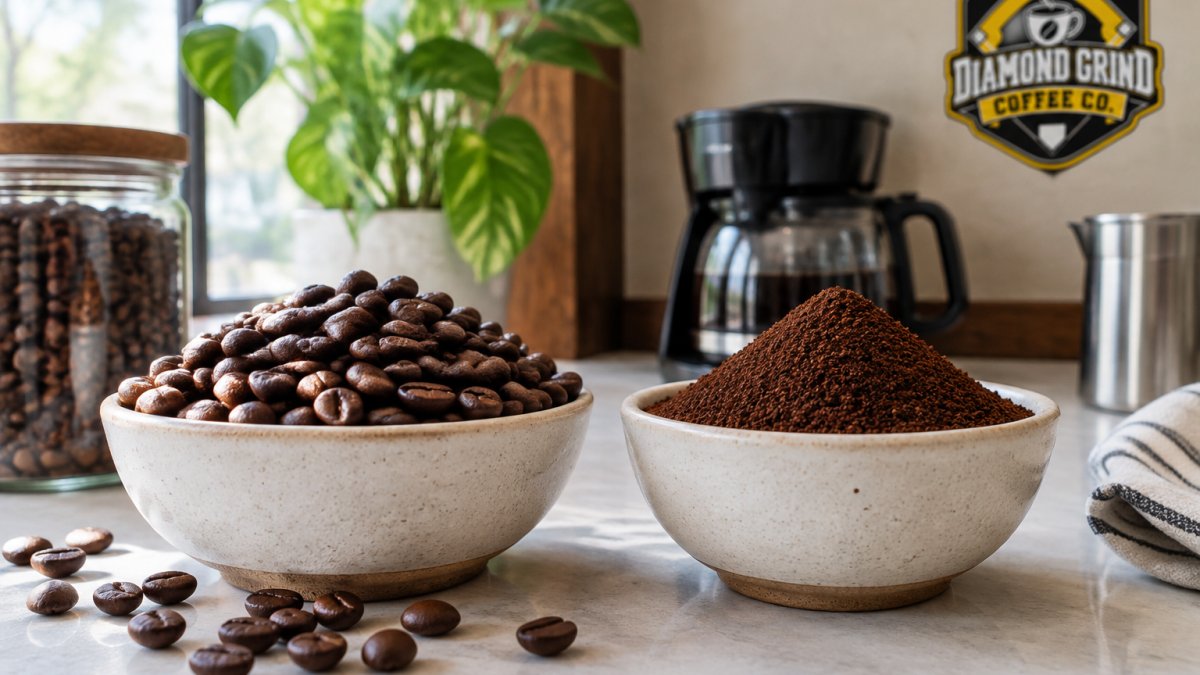
- Buy whole bean and grind per brew, since pre-ground coffee loses aroma quickly.
Table of Contents
- Single Origin Coffee vs Blends: The Short Answer
- What Is Single-Origin Coffee?
- What Is a Coffee Blend?
- Side-by-Side: Flavor, Consistency, and Cost
- Best Coffee for Espresso: Single Origin or Blend?
- How to Choose Coffee Beans for Brewing
- Freshness, Roast Date, and Batch Variation
- Build Your First Order Around Your Brew Method
- Frequently Asked Questions
Single Origin Coffee vs Blends: The Short Answer
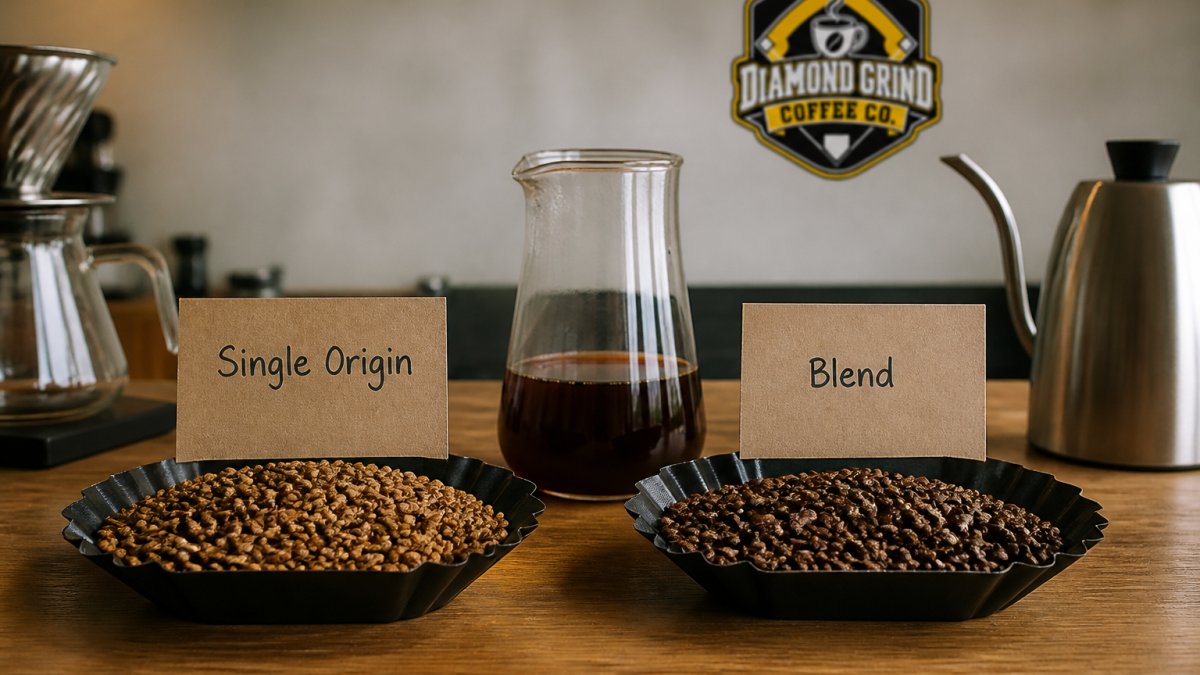
Single-origin coffee comes from one growing region, farm, or country, while a coffee blend combines beans from multiple origins to build a specific, repeatable flavor.
Here's the short answer most guides bury: choose single-origin coffee when you want to taste a place, and choose a blend when you want the same cup every morning.
But there's a catch. A single origin can shift noticeably from one harvest to the next, and a blend can hide a mediocre bean behind a strong one.
What Is Single-Origin Coffee?
Single-origin coffee is coffee traced to one specific place: a single farm, a cooperative, a region, or a country. It is not mixed with beans from anywhere else. That traceability is the point. You can taste the soil, altitude, and processing method in the cup.
Take our Colombia: smallholder farmers near Medellín, Castillo and Caturra varieties, fully washed and dried in solar dryers. The label tells you the region, the altitude, and the process. That's what single origin means in practice.
How to Read a Single-Origin Label
A useful label answers four questions: where, who, how high, and how processed. If you want to compare origins side by side, this guide to sampling different coffee origins shows how. Our Brazil Santos lists a grower, a region, an altitude range, and a pulped natural process. Those details explain the cocoa notes in the cup.
If a bag only says "100% Arabica" with no country or region, it isn't giving you single-origin information. Treat it as a blend in disguise. Browse the single-origin favorites sample pack if you want to compare several origins before committing to a full bag.

What Is a Coffee Blend?
A coffee blend is two or more coffees combined, either before or after roasting, to create a target flavor. Roasters build blends the way a cook builds a sauce: one bean for body, another for sweetness, a third for brightness. The goal is balance and consistency.
Our House Blend is a medium roast of Central and South American coffees with nutty, sweet chocolate, and mild citrus notes. Shop Blends from Diamond Grind Coffee Co. to see both.
Why Roasters Combine Beans
Roasters combine beans for three reasons: to smooth out a flavor, to hold a recipe steady across harvests, and to hit a price point. A washed bean with sharp acidity can be softened by a natural-process bean with heavy fruit. The result tastes intentional, not accidental.
The trade-off is that blending can blur origin character. You get a reliable cup, but you rarely taste one farm's fingerprint. That's a feature for some drinkers and a loss for others.
Side-by-Side: Flavor, Consistency, and Cost
Flavor is where the two styles split hardest. A single origin shows a distinctive flavor: dried orange and berry in our Colombia, pear and jasmine in our Tanzania. A blend aims for balance, so no single note dominates.
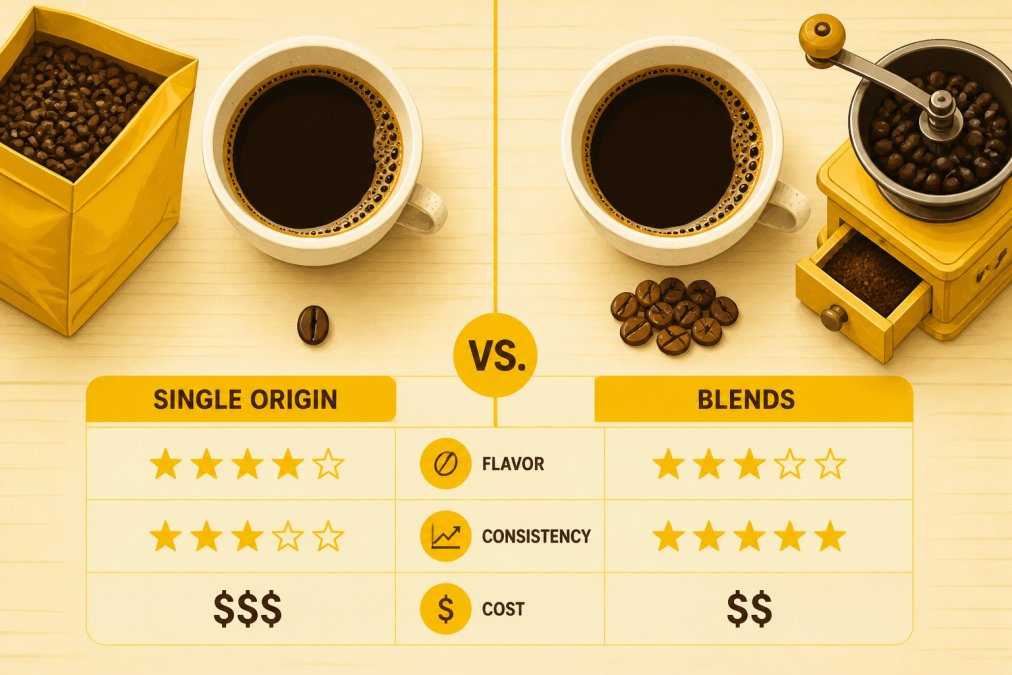
Consistency runs the other way. A blend is built to taste the same bag after bag. A single origin follows the harvest, so batch variation is normal and often interesting. Cost is usually a wash at our shop: both styles start at $24.99 per bag.
| Factor | Single Origin | Blend |
|---|---|---|
| Flavor goal | Distinctive, place-driven | Balanced, repeatable |
| Batch variation | Higher, follows harvest | Low, recipe held steady |
| Best for | Exploring and tasting | Daily routine and espresso |
| Traceability | Farm, region, altitude, process | Component origins, sometimes unnamed |
| Price at Diamond Grind | $24.99 | $24.99 |
Best Coffee for Espresso: Single Origin or Blend?
A blend is the safer pick for espresso. Espresso magnifies every flaw, and a blend lets a roaster balance acidity, body, and sweetness into a shot that pulls consistently. Our 6 Bean Blend is a dark roast built exactly for that job.
Single-origin espresso can be excellent, but it demands more dialing in. If you want a starting point, our guide to the best espresso beans for home brewing walks through choosing fresh whole beans for the drinks you actually make.
How to Choose Coffee Beans for Brewing
Most comparisons stop at flavor theory. The useful question is narrower: which style makes the cup in front of you taste better? Brew method changes the answer more than origin does, because extraction magnifies some traits and mutes others. Use the guidance below as a starting filter, then adjust to your own taste.
Espresso and milk drinks
Espresso concentrates everything: acidity, body, sweetness, and defects. A blend gives a roaster room to balance those elements into a repeatable shot, which is why most espresso recipes are built on blends.
Single-origin espresso can be excellent, especially a washed medium roast with clear sweetness and moderate acidity. It is less forgiving. A bright natural-process origin may taste sharp or muddy at a standard 1:2 ratio in 25-30 seconds, then sing at a finer grind and a slightly longer ratio.
Single Origin Favorites Sample Pack →
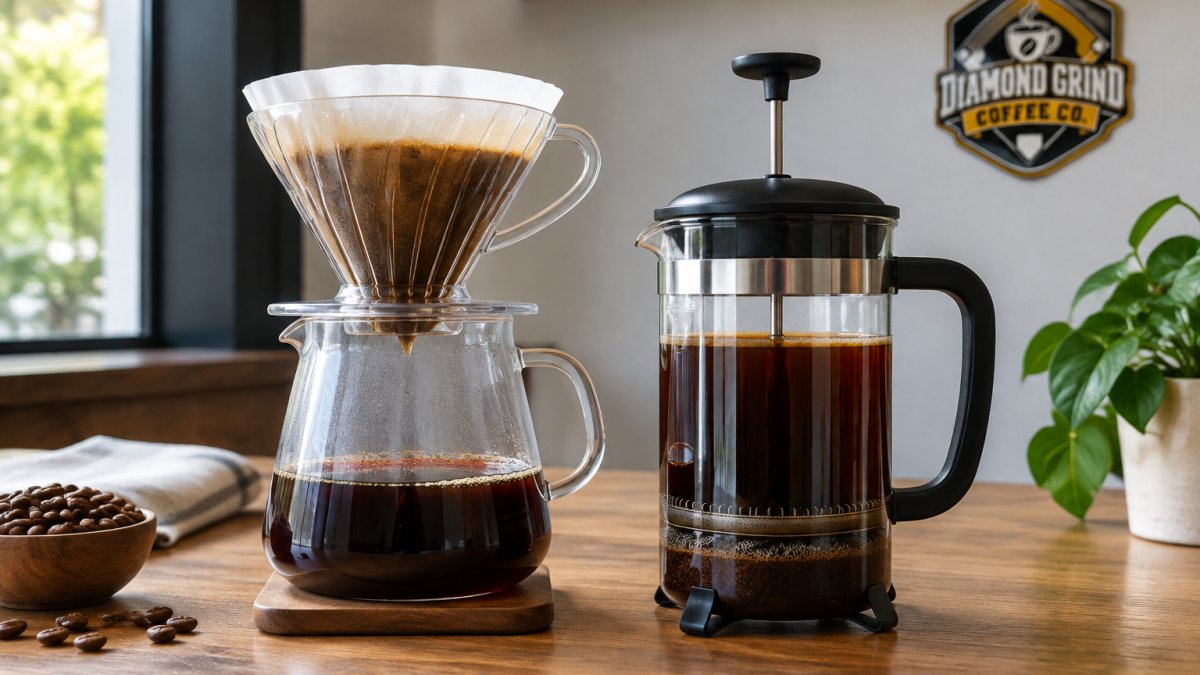
Pour-over and filter
Filter brewing rewards clarity, so single-origin coffees usually show best here. A light or medium-light washed origin lets you taste the region: floral and citrus notes in an East African coffee, red fruit and cocoa in a Central American one.
If you drink filter every day and want variety, rotate single origins by harvest. If you want one bag that tastes the same on Monday and Saturday, a medium blend is the lower-risk choice.
French press and immersion
Immersion brewing extracts evenly and emphasizes body. Medium roasts work well in a French press for either style. A blend with a chocolate-and-nut profile stays rich without turning bitter, while a single origin with heavy fruit can taste syrupy and sweet. Avoid very light roasts here unless you like pronounced acidity; the long contact time can push them toward sourness.
Cold brew
Cold brew favors chocolate, caramel, and nut tones and mutes delicate florals. A medium or medium-dark blend is the practical pick because its balance survives the long steep. A single origin can work, but choose one with a sturdy sweetness rather than a fragile floral top note.
A quick taste-preference guide
- You want to taste a place and don't mind change: buy single origin, especially for filter.
- You want the same cup every morning: buy a blend.
- You drink milk drinks: start with a medium-dark blend.
- You want fruit and florals: choose a light-roast single origin and brew it as filter.
- You want chocolate and nuts: choose a medium or dark blend or a Brazilian single origin.
Match the style to the method first, then refine by roast level and origin. That order keeps you from buying a delicate single origin for a brewer that will bury it, or a dark blend for a method that rewards clarity.
Freshness, Roast Date, and Batch Variation
Freshness affects the comparison more than origin does. A two-week-old single origin will taste flatter than a blend roasted yesterday, because roasted coffee loses aromatic compounds as it stales. We roast after your order is placed and ship the same day, which is the only way to make a roast date meaningful.
Why single origins change across harvests
Coffee is an agricultural product. A single origin is tied to one farm, cooperative, or region, so its flavor follows that season's rainfall, altitude, ripeness at picking, and processing choices.
Roasters manage this in a few ways, from carrying a single lot through the year to labeling each new crop clearly, so you know the bag you loved in spring may taste different by fall.
How blends stay consistent
A blend is a recipe. When one component changes, the roaster adjusts the proportions or substitutes a similar coffee to hold the target flavor. That is why a house blend can taste the same year after year even though every bean in it comes from a different harvest. The trade-off is that the recipe can hide a weaker component behind a stronger one, so consistency is not the same as quality.
How to read origin and blend labels
Labels tell you different things depending on the style.
- Country only (for example, "Colombia"): the coffee comes from that country but may combine regions or farms. Useful, but not fully traceable.
- Region or farm (for example, a named region or producer): stronger traceability, and usually the level at which single-origin character becomes clear.
- Lot or micro-lot: a specific harvest or plot. The most detailed level, and the most likely to shift from year to year.
- Blend descriptions: component origins and roast level tell you the intent. A blend that names its components is more transparent than one that lists only "100% Arabica."
A bag that says only "100% Arabica" with no country, region, or component list is not giving you single-origin information. Treat it as a blend in disguise.
Buying and storage advice
Buy in amounts you will finish within a few weeks of the roast date. If you want storage details, our coffee bean freshness guide covers shelf life and how to keep a bag at its best.
Freshness and label literacy matter more than the single-origin-versus-blend label itself. A fresh, well-labeled blend will usually beat a stale, vaguely labeled single origin, and a single origin with a clear roast date lets you follow its seasonal changes instead of being surprised by them.
Build Your First Order Around Your Brew Method
The honest challenge is that most coffee advice ignores your kitchen. You don't need a universal answer to single origin coffee vs blends explained in theory. You need the bag that makes your morning brewer taste better.
That's where we come in. Diamond Grind Coffee roasts small batches after you order, ships the same day, and lets you choose whole bean, standard, espresso, or coarse grind.
Frequently Asked Questions
What is the difference between single-origin coffee and a blend?
Single-origin coffee comes from one country, region, or farm, so it carries the specific flavor profile of that place, such as the dried orange and chocolate notes in a Colombian bean. A blend combines beans from multiple origins, roasted together to create a balanced, repeatable cup. Single origin highlights a distinctive flavor; a blend prioritizes consistency and a smooth finish across every batch.
Which is better for espresso, single-origin coffee or a blend?
Blends are the safer choice for espresso because the roaster can balance acidity and body across several beans, which keeps shots consistent as bags change. That said, a medium-roast single origin like Brazil Santos, with its cocoa notes, is another option to explore. Try a dark-roast blend for classic chocolate-heavy shots, and a single origin when you want a brighter, fruitier espresso.
Are coffee blends lower quality than single-origin coffees?
No. A blend is a recipe, not a grade. Roasters combine beans to hit a target flavor and hold it steady from batch to batch, which takes skill and good components. Plenty of blends use specialty-grade beans. Quality depends on the beans, the roast, and freshness, not on whether the bag lists one origin or several.
Which is stronger, single-origin coffee or a blend?
Strength comes from roast level and dose, not origin count. A dark-roast blend tastes bolder and heavier in the cup, while a medium or light single origin tastes brighter and more aromatic. If you want a strong, espresso-style cup, choose a dark roast and use a higher coffee-to-water ratio. If you want clarity and sweetness, a medium single origin delivers more of that.
Does single-origin coffee taste better than a blend?
It depends on what you want from the cup. Single origin gives you traceable, distinctive flavor, so a washed Ethiopian tastes floral and a Brazilian tastes nutty and smooth. Blends deliver balance and the same cup every time. Neither is better; pick single origin to explore, and a blend when you want a dependable daily brew that works with milk or espresso.