 Comparison
Fresh Roasted vs Grocery Store Coffee: Which Is Better?
Last Updated: November 2, 2026
Quick Summary
Fresh roasted coffee is roasted close to the day it reaches you, while grocery store coffee often sits on a shelf for months. That time gap changes how the coffee tastes, smells, and brews. The roast date is the most useful freshness clue on any bag.
- Whole beans in a valved bag stay at peak flavor for a few weeks after roasting.
- Ground coffee loses flavor fastest, often within a few days to a week.
- A best-by date can be a year or more after roasting, so check the roast date instead.
- Divide the bag price by the cups it yields to compare cost per cup fairly.
- Store whole beans in an airtight, opaque container in a cool, dark cabinet, not the refrigerator.
Table of Contents
- Fresh Roasted Coffee vs Grocery Store Coffee: The Core Differences
- Roast Date, Bean Freshness and Peak Flavor Windows
- How to Tell If Coffee Is Fresh Before You Brew
- How Long Do Coffee Beans Stay Fresh by Roast and Packaging
- A Fair Taste Test and Cost Per Cup Comparison
- The Best Way to Store Coffee Beans at Home
- Choosing Your Next Bag Based on How You Brew
- Frequently Asked Questions
Fresh Roasted Coffee vs Grocery Store Coffee: The Core Differences
Fresh roasted coffee is coffee roasted close to the day it reaches you, while grocery store coffee often sits on a shelf for months before it is opened. That gap in time changes how the coffee tastes, smells, and brews.
The difference comes down to oxygen, moisture, and light. A National Coffee Association coffee consumption and brewing guidance offers useful background on how brewing quality depends on the beans you start with.
Price matters too. Grocery store coffee usually costs less per bag, but the cost per cup tells a fuller story. Once you factor in how much flavor you get from each brew, the comparison becomes more interesting.
Roast Date, Bean Freshness and Peak Flavor Windows
A roast date tells you when the beans were roasted, and it is the single most useful freshness clue on any bag. Many grocery store bags show a best-by date instead, which can be a year or more after roasting. That date measures packaging life, not flavor.
Coffee tends to taste its best within a window after roasting, often a few weeks for whole beans. To see how roast dates shape those windows, read the deeper roast date guide. A Specialty Coffee Association freshness and roasting resources provides more detail on how roasting and degassing affect flavor.
Watch out: buying a large bag of whole beans and grinding it all at once means the later cups will taste noticeably weaker than the first.
How to Tell If Coffee Is Fresh Before You Brew
You can check freshness before you spend a single cup. Start with the roast date on the bag. For a full checklist covering every freshness check, see complete freshness checklist. If there is none, treat that as a warning sign. Next, look at the beans themselves.
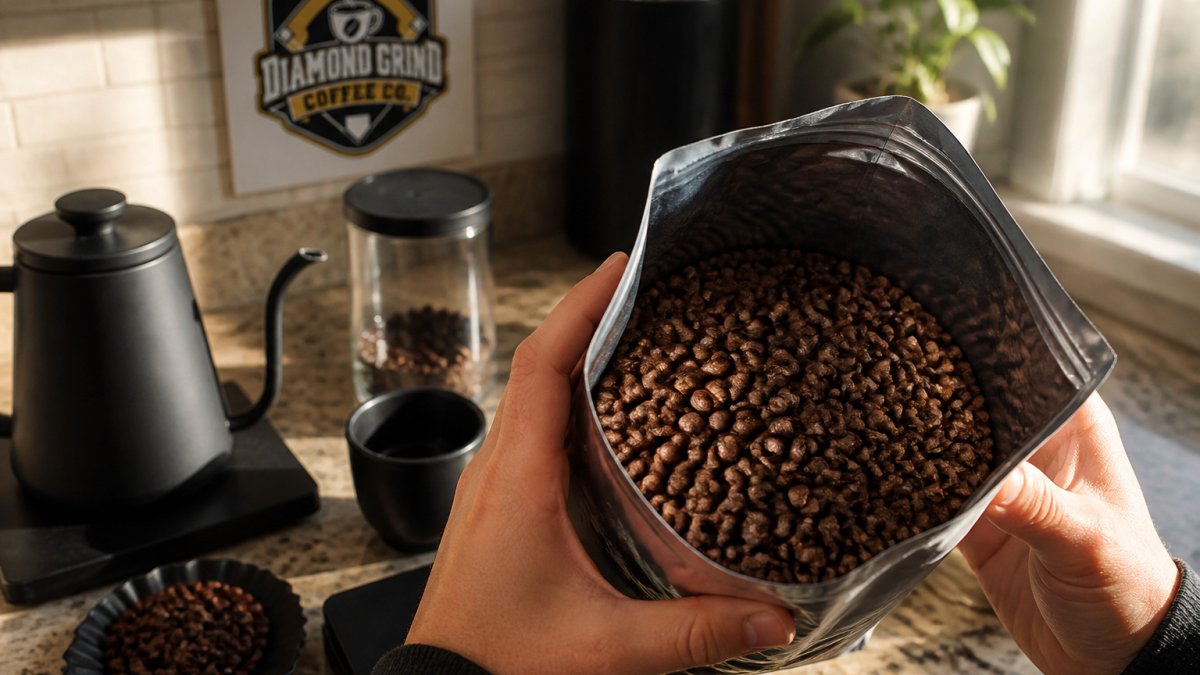
Pinch a bean. Fresher beans are denser and resist crushing, while older beans crumble more easily. Brew a small test cup and pay attention to the first sip. Fresh coffee usually shows brighter acidity and clearer sweetness. Stale coffee tastes flat, bitter, or woody.
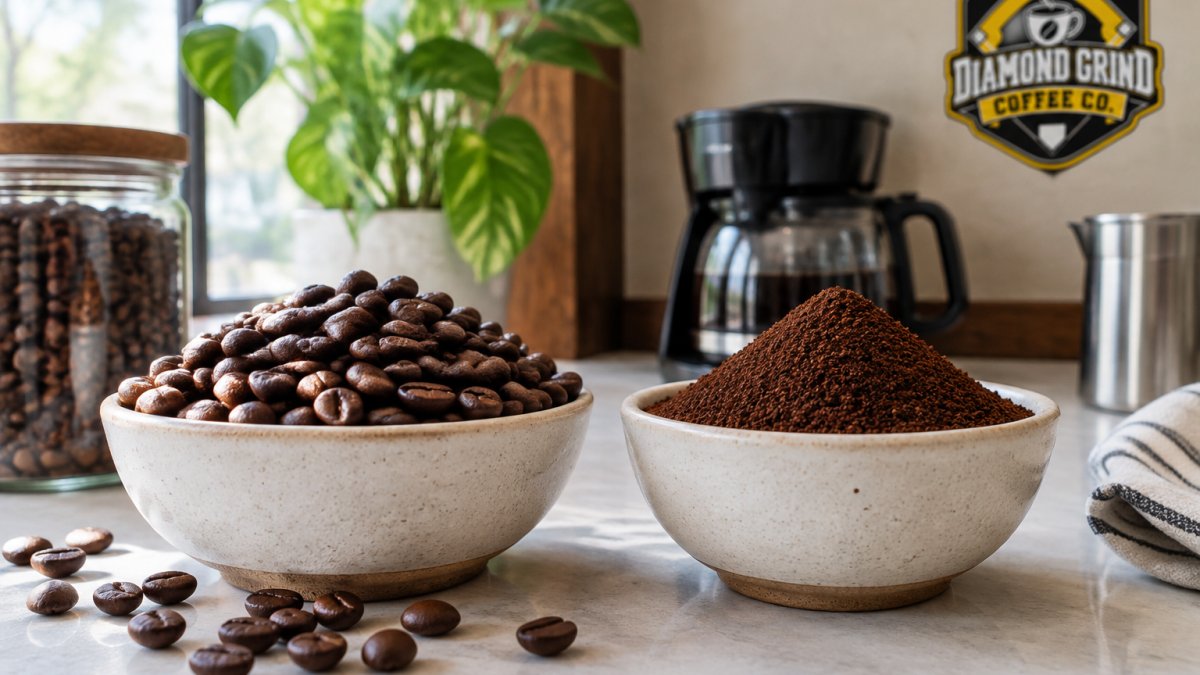
Many buyers also find it helpful to compare two bags side by side. The fresher one typically smells more vibrant and tastes more balanced.
How Long Do Coffee Beans Stay Fresh by Roast and Packaging
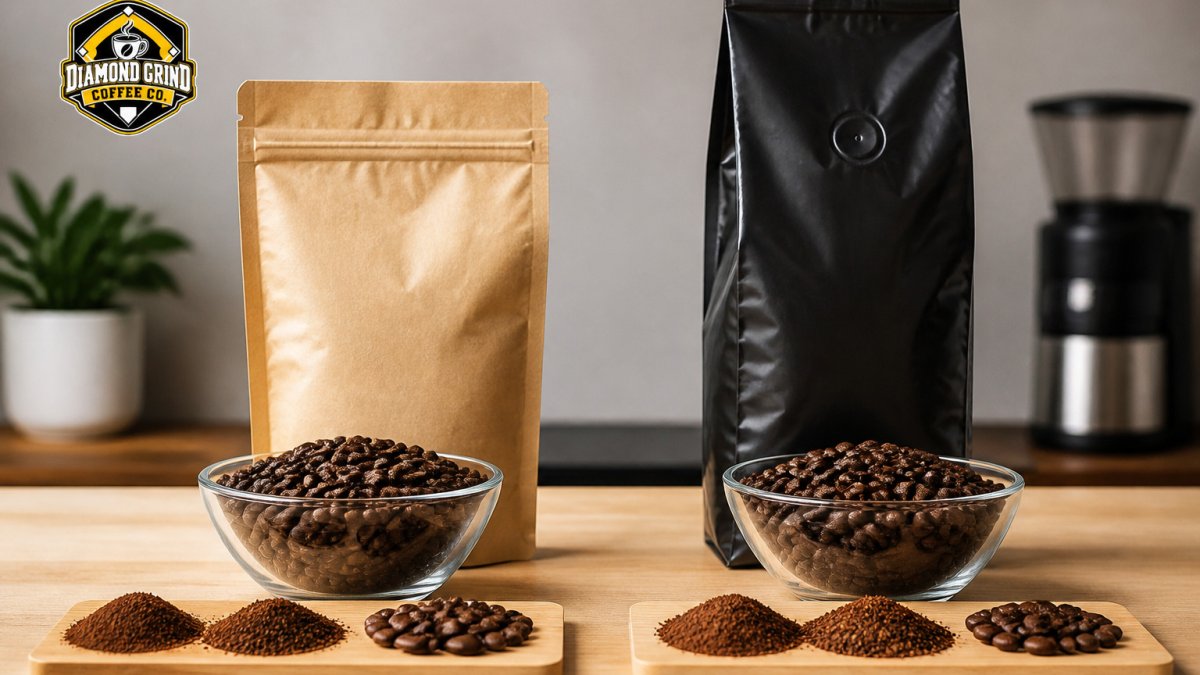
Shelf life depends on roast level, packaging, and storage. Lighter roasts often hold their brightness for a shorter stretch than darker roasts, which can seem more resilient. Packaging matters just as much. Bags with a one-way degassing valve let carbon dioxide escape without letting oxygen in, which helps protect flavor.
As a general pattern, whole beans in valved bags stay at peak flavor for a few weeks after roasting and remain drinkable for longer, though the taste steadily declines. For more detail on shelf life by roast and packaging, see the shelf-life guide.
We roast after each order is placed.
The table below summarises how freshness changes with roast, packaging and grind, as described in this section.
| Factor | Effect on freshness | Note |
|---|---|---|
| Whole beans in valved bag | Peak flavor for a few weeks | Valve releases CO2, blocks oxygen |
| Ground coffee | Loses flavor fastest | Often within a few days to a week |
| Lighter roasts | Hold brightness for a shorter stretch | Shelf life varies by roast |
| Darker roasts | Hold up more resiliently | Compared with lighter roasts |
| Best-by date | Measures packaging life | Can be a year or more after roasting |
| Roast date | Best guide to freshness | Use it over the best-by date |
A Fair Taste Test and Cost Per Cup Comparison
Most comparisons between fresh roasted coffee and grocery store coffee fail for one reason: the two cups are brewed differently. If the fresh bag is ground finer, dosed heavier, or brewed with hotter water, the test measures the recipe, not the beans. A fair comparison holds every variable constant except the coffee itself.
Run a controlled side-by-side test
Use the same grinder, the same water, the same dose, the same brew ratio, and the same method for both coffees. A practical setup for a drip or pour-over test:
- Dose: weigh both coffees on the same scale. A common starting point is a 1:16 coffee-to-water ratio by weight, so 20 grams of coffee to 320 grams of water.
- Grind: grind both at the same setting. If one bag is pre-ground and the other is whole bean, grind the whole bean to match the pre-ground as closely as you can, and note that pre-ground coffee is already at a freshness disadvantage.
- Water: use the same water at the same temperature. For drip and pour-over, water just off the boil, around 200°F, is a standard starting point.
- Roast level: compare like with like. A light roast against a dark roast tells you about roast preference, not freshness. Match roast levels where possible.
- Blind the cups: have someone else label them A and B, or pour into unmarked mugs. Expectation bias is real, and blind tasting is the cheapest way to control it.
Taste across at least two or three mornings. A single cup can be thrown off by a bad grind, a channeling brew, or an off day. Note aroma, sweetness, acidity, body, and finish for each cup, and write the notes down before you compare.
Best Sellers Sample Pack: 6Bean, Cowboy, Breakfast, Peru, Mexico, Bali →
Be honest about the limits of taste claims
Taste is subjective, and no single test settles the question for every drinker. What a controlled comparison can show you is whether the difference is large enough to notice in your own brewing setup. If you cannot taste a difference with your grinder, your water, and your method, that is useful information too. It may mean your grocery store coffee is fresher than average, or that your brew method masks the difference. Either way, the test tells you where your money is best spent.
Do the cost-per-cup math
Bag price is not the same as cost per cup. To compare fairly, divide the bag price by the number of cups it actually produces at your dose.
A worked example: suppose a 12-ounce bag of grocery store coffee costs $9.99 and you dose 20 grams per cup. Twelve ounces is about 340 grams, so the bag yields roughly 17 cups at that dose, or about $0.59 per cup.
The comparison gets more interesting when the coffees brew differently. If the grocery store coffee tastes weak at 20 grams and you need 24 grams to get the same strength, its cost per cup rises to about $0.71, and the gap narrows further.
Our sample packs, such as the Best Sellers Sample Pack: 6Bean, Cowboy, Breakfast, Peru, Mexico, Bali at $24.99, let you sample several blends in small amounts.

The Best Way to Store Coffee Beans at Home
Storage is where freshness is either protected or thrown away. The enemies are oxygen, light, heat, and moisture, and each one attacks the beans in a different way. Oxygen oxidizes the aromatic oils that carry most of the flavor. Light breaks those oils down. Heat speeds the reaction. Moisture invites staleness and, in the worst case, mold.
The everyday setup
Store whole beans in an airtight, opaque container in a cool, dark cabinet. A sealed canister with a one-way valve is ideal because it lets carbon dioxide escape while limiting oxygen intake. Keep the container away from the stove, the dishwasher, and any sunny windowsill. A cabinet that stays near room temperature is better than a counter that swings hot and cold.
Skip the refrigerator. Every time you open the container, the cold beans meet warm, humid kitchen air, and condensation forms on the surface. That moisture is exactly what you are trying to keep out. The refrigerator also exposes beans to food odors, which the beans readily absorb.
Freezing, done right
Freezing is a legitimate option for long-term storage, but only if you portion it correctly. Divide the beans into small, airtight bags sized to what you will use in a week or two. Squeeze out as much air as you can, seal, and freeze. When you are ready to brew, take out one portion and let it come to room temperature before grinding. Do not refreeze thawed beans, and do not thaw the whole bag and put it back.
Match the bag size to your pace
Storage advice only works if the bag fits your habits. A 2-pound bag is a poor choice for someone who brews one cup a day, because the last third of the bag will be well past its peak by the time it is opened.
If you want to test your storage against your current routine, start with a sample pack and store half in your usual spot and half in an airtight container in a dark cabinet. Brew both after two weeks and compare. The difference will tell you more than any general rule.
Choosing Your Next Bag Based on How You Brew
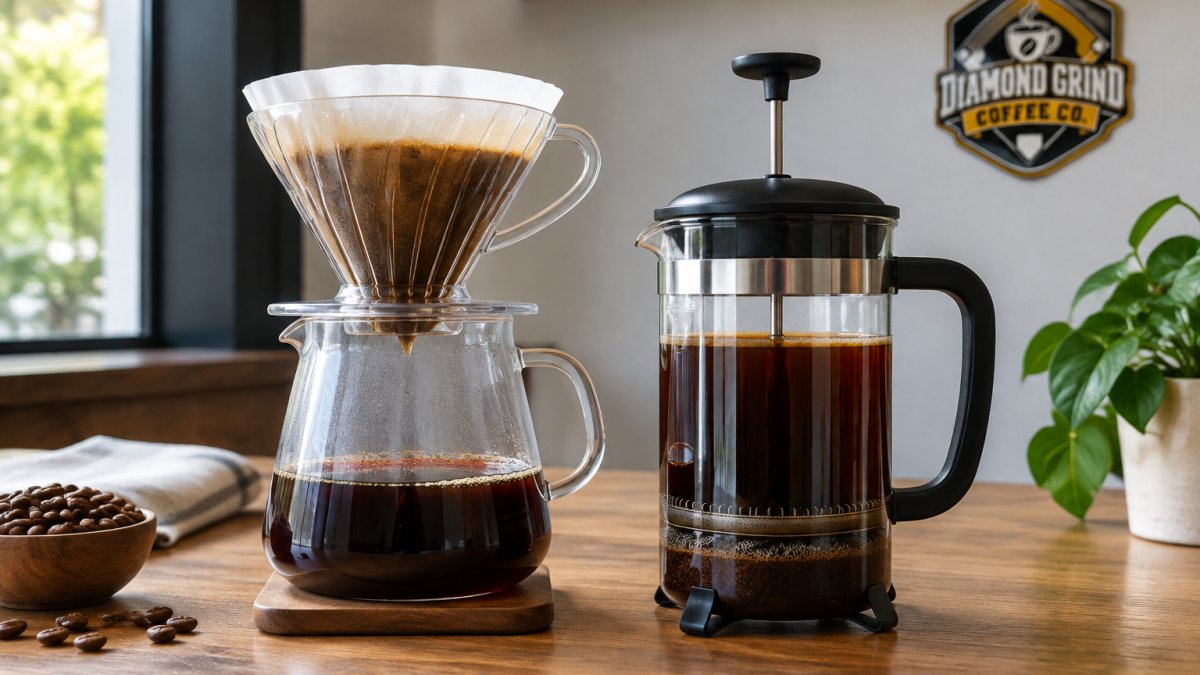
Your brewing method should guide your choice. If you use an espresso machine, a medium-dark or espresso-style roast with a fine grind usually performs well. Pour-over and drip brewers suit lighter roasts that highlight brightness. French press and cold brew work well with medium roasts and a coarser grind.
For a single-origin experience, the Single Origin Favorites Sample Pack at $24.99 covers several origins in small amounts. If you want a consistent everyday cup, the Breakfast Blend at $24.99 is a smooth, lightly roasted option with notes of walnut, mild apple, and toffee. Start with a sample pack and compare the flavor with your current grocery store bag.


Frequently Asked Questions
What is the difference between fresh-roasted and grocery store coffee?
Fresh-roasted coffee is typically roasted close to the time it ships, so its roast date is recent and its aromatic oils are still present. Grocery store coffee often sits in warehouses and on shelves for months, and its best-by date is usually far later than its peak flavor window. The gap shows up most in aroma and sweetness. Check the roast date on the bag, not just the best-by date, to judge how fresh the beans really are.
How can you tell if coffee beans are fresh?
Look for a printed roast date, not only a best-by date. Fresh beans have a visible sheen and a noticeable aroma when the bag is opened, and they should look slightly dense rather than dull or brittle. Beans that are stale often smell flat or cardboard-like and produce a thin crema when brewed as espresso. A one-way valve on the bag indicates the roaster is limiting oxygen exposure, which helps freshness.
Does freshly roasted coffee taste better than grocery store coffee?
In most side-by-side brews, coffee brewed within a few weeks of roasting shows more aroma, clearer fruit and chocolate notes, and a fuller body than older beans. The difference is usually strongest with pour-over and espresso, where extraction is more sensitive to bean age. Taste it yourself by brewing two cups with the same grind and water weight, then compare the brews after they cool slightly.
How long after roasting is coffee at its freshest?
Whole beans generally reach their best flavor a while after roasting, once carbon dioxide has degassed enough to extract evenly. Ground coffee loses flavor much faster, often within minutes to a few days. Medium and light roasts tend to show their best character in this early window, while darker roasts can taste good for a bit longer. Plan to finish a bag within a few weeks of the roast date for the best cup.