 How-to
How to Fix Sharp Coffee From Too-Fresh Beans
Last Updated: November 12, 2026
Quick Summary
Sharp coffee from too-fresh beans is caused by trapped carbon dioxide, not bad beans. Gas released for days after roasting blocks water from reaching the grounds evenly, so the brew tastes sour, sharp, or thin. The fix is to let the beans rest before brewing.
- Dark roasts rest faster than light roasts, which can need a week or more.
- Carbon dioxide leaves the bean fastest in the first 48 hours, then slows.
- Brew a small cup every few days and track bloom behavior, pour-over flow, and espresso shot time.
- Change one variable at a time and taste after each change when troubleshooting sour coffee.
- Keep beans whole, store them at room temperature, and squeeze air out of the bag before sealing.
Table of Contents
- Why Freshly Roasted Coffee Tastes Sharp
- Coffee Degassing After Roasting: What Carbon Dioxide Does in the Cup
- How Long to Rest Coffee After Roasting
- How to Tell If Coffee Is Fresh (Without Guessing)
- How to Fix Sour Coffee: A Controlled Troubleshooting Workflow
- Storing Beans While They Rest
- Ordering Coffee That Arrives Ready to Brew
- Frequently Asked Questions
Why Freshly Roasted Coffee Tastes Sharp
If your coffee tastes sharp when it is too fresh, the cause is trapped gas, not bad beans. Coffee releases carbon dioxide for days after roasting. That gas blocks water from reaching the grounds evenly, so the brew tastes sour, sharp, or thin.
Coffee sold after roasting often arrives at its sharpest. The fix is simple: give the beans time to rest.
The Sour, Sharp, and Bitter Spectrum
Sharpness sits on a spectrum. On one end is sourness, which tastes like citrus or green apple. On the other end is bitterness, which tastes ashy or burnt.
Sharp coffee usually lands in the sour half. It hits the sides of your tongue and finishes fast. Bitterness lingers at the back of the throat.
Here is how to read the cup:
- Sour or sharp: too little extraction, often from fresh beans
- Bitter or burnt: too much extraction, often from a fine grind
- Flat or weak: too little coffee for the water used
- Sharp plus salty: usually a water quality issue
Why Roast Level Changes the Timeline
Dark roasts rest faster than light roasts. Heat breaks down more of the bean's structure during a dark roast, so gas escapes sooner. A dark roast may settle in a few days. A light roast can need a week or more.
Single origins show this clearly. Our Kenya with its bright acidity needs more rest than a medium roast like our Colombia. Expect light, fruit-forward beans to taste sharp the longest.
Coffee Degassing After Roasting: What Carbon Dioxide Does in the Cup
Coffee degassing after roasting is the release of carbon dioxide trapped inside the bean during the roast. The gas escapes slowly over days to weeks. Until it does, the bean behaves unpredictably in water.
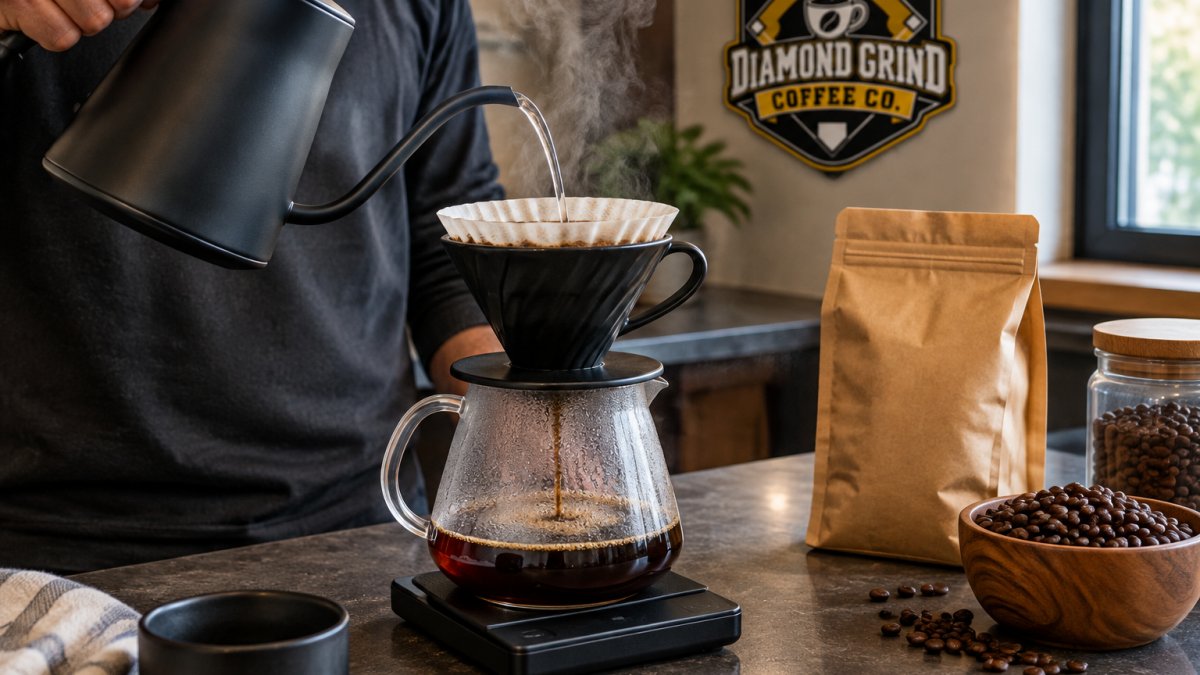
Why does this matter for taste? Gas pushes water away. In a pour-over, fresh grounds bubble and float. Water channels around the grounds instead of through them. The result is uneven extraction and a sharp, hollow cup.
In espresso, the effect is worse. Fresh beans produce foamy, unstable crema and fast, sputtering shots. The puck resists pressure, flow rate jumps, and the shot tastes sour no matter how you adjust the grind.
How Long to Rest Coffee After Roasting
Coffee often benefits from several days of rest after roasting before it brews at its best. The exact window depends on roast level, brew method, and how the beans are stored. Espresso needs the longest rest because pressure magnifies gas problems.
Rest is not a single event. Carbon dioxide leaves the bean fastest in the first 48 hours, then slows. A bean that tastes sharp on day two may taste balanced on day six with no change to your recipe. That is why the roast date on the bag matters more than any universal chart.
A Resting Timeline by Roast Level and Brew Method
Use this as a starting point, then taste and adjust:
| Roast Level | Filter or Pour-Over | Espresso |
|---|---|---|
| Light roast | 7-14 days | 10-14 days |
| Medium roast | 5-10 days | 7-12 days |
| Dark roast | 3-7 days | 5-10 days |
| Decaf | 3-5 days | 5-7 days |
Filter or Pour-Over
Why the ranges differ: a light roast keeps more of the bean's cellular structure intact, so gas escapes more slowly. A dark roast has been through more heat, which opens the structure and lets gas leave sooner. Espresso sits at the long end of every row because a pressurized shot pushes water through a compact puck; trapped gas creates resistance, channeling, and unstable flow.
These are guidelines, not rules. Humidity, bag type, and storage all shift the window. A valve bag that lets gas escape without letting oxygen in will rest faster than a sealed jar. A humid kitchen slows the process. Roast date matters more than any universal chart, and our guide on whether roast date matters for coffee explains how to read one.
How to Check Rest Progress Without Wasting Beans
You do not need to wait blindly. Brew a small cup every few days and track three signals:
- Bloom behavior: fresh grounds puff aggressively and bubble for a long time. As beans rest, the bloom settles faster and looks calmer.
- Flow in a pour-over: very fresh coffee tends to stall or channel. Rested coffee drains evenly.
- Espresso shot time: fresh beans often run fast and sputter. Rested beans hold a steadier flow and build crema that lasts.
A common pattern is a sharp, hollow cup early on that rounds out as the beans rest. If the cup stays sharp well after resting, the problem may be grind or ratio rather than freshness.
Watch out: do not judge a bag on the first day it arrives. If you brew immediately after delivery and adjust your grinder to fix the sharpness, you will overshoot once the beans rest and the next shots will run too slow.
How to Tell If Coffee Is Fresh (Without Guessing)
You can judge freshness without a lab. Check the roast date first, then use your senses. A bag with no date tells you nothing useful.
Try these checks:
- Look for the date: a printed roast date beats a "best by" date every time
- Smell the bag: fresh beans smell sweet and bready, stale beans smell papery
- Watch the bloom: fresh grounds puff and bubble when hot water hits them
- Taste the cup: sharp and thin means too fresh, flat and dusty means too old
For a full breakdown of these signals, read our guide on how to tell if coffee is fresh.
How to Fix Sour Coffee: A Controlled Troubleshooting Workflow
How to fix sour coffee starts with one rule: change one variable at a time and taste after each change. If you change grind size, dose, and temperature together, you learn nothing. The sequence below is built to isolate freshness first, because fresh beans mimic under-extraction and send people adjusting the wrong dial.
- Check the roast date. If the bag is under 5 days old, wait before changing anything. No grind adjustment fixes gas. Mark the date and brew again in three days with the same recipe.
- Run a controlled comparison. Brew the same beans, same dose, same water, same grind, five days apart. If the sharpness softens, freshness was the cause. If it tastes identical, move to extraction variables.
- Adjust the grind finer. Move one step at a time and taste after each change. Finer grind increases surface area and raises extraction.
- Raise the water temperature. Hotter water pulls more flavor from the grounds. Move in small increments and taste between changes.
- Extend brew time. A longer contact time increases extraction, especially in immersion methods.
- Check your ratio. Too much water dilutes the cup and reads as weak or sharp. Weigh your dose and water rather than eyeballing.
- Clean your equipment. Old oils in a brewer turn sour fast. A dirty carafe or shower screen can make good beans taste sharp.
Telling Roast Sharpness From Under-Extraction
These two problems taste similar but need opposite fixes. Roast sharpness fades on its own as the beans rest. Under-extraction stays until you change your recipe.
Use this side-by-side diagnostic:
| Signal | Roast sharpness (degassing) | Under-extraction |
|---|---|---|
| Timing | Worst in the first 3-5 days after roast | Consistent across the bag's life |
| Bloom | Aggressive bubbling, grounds float | Normal bloom, little gas |
| Flow | Uneven, channeling, sputtering espresso | Fast flow, thin body |
| Taste | Sharp on the sides of the tongue, hollow finish | Sour plus weak, watery |
| Fix | Wait | Grind finer, raise temperature, extend time |
The tell is repetition. Brew the same beans again five days later with the same recipe. If the sharpness softens, freshness was the cause. If it tastes identical, your grind is too coarse or your brew time is too short. Our guide on troubleshooting bitter coffee covers the other side of this balance.
Watch out: adjusting your grind to fix a freshness problem usually makes the next bag brew wrong, because rested beans need a finer setting than fresh ones. Keep a written record of the grind setting and roast date so you can reset when the next bag arrives.
Storing Beans While They Rest
Resting only works if the beans are stored well. Air, light, heat, and moisture all speed up staling. Keep beans in an airtight container away from the stove and out of sunlight.
A few habits make a real difference:
- Keep beans whole until brew day
- Store at room temperature, not in the fridge door
- Squeeze air out of the bag before sealing
- Buy amounts you will finish within a few weeks
For a deeper look at containers and timing, see our guide on storing coffee beans for freshness.
Ordering Coffee That Arrives Ready to Brew
The easiest fix for sharp coffee is to plan around the rest. Order before you run out, so the bag rests on your shelf instead of in your grinder.
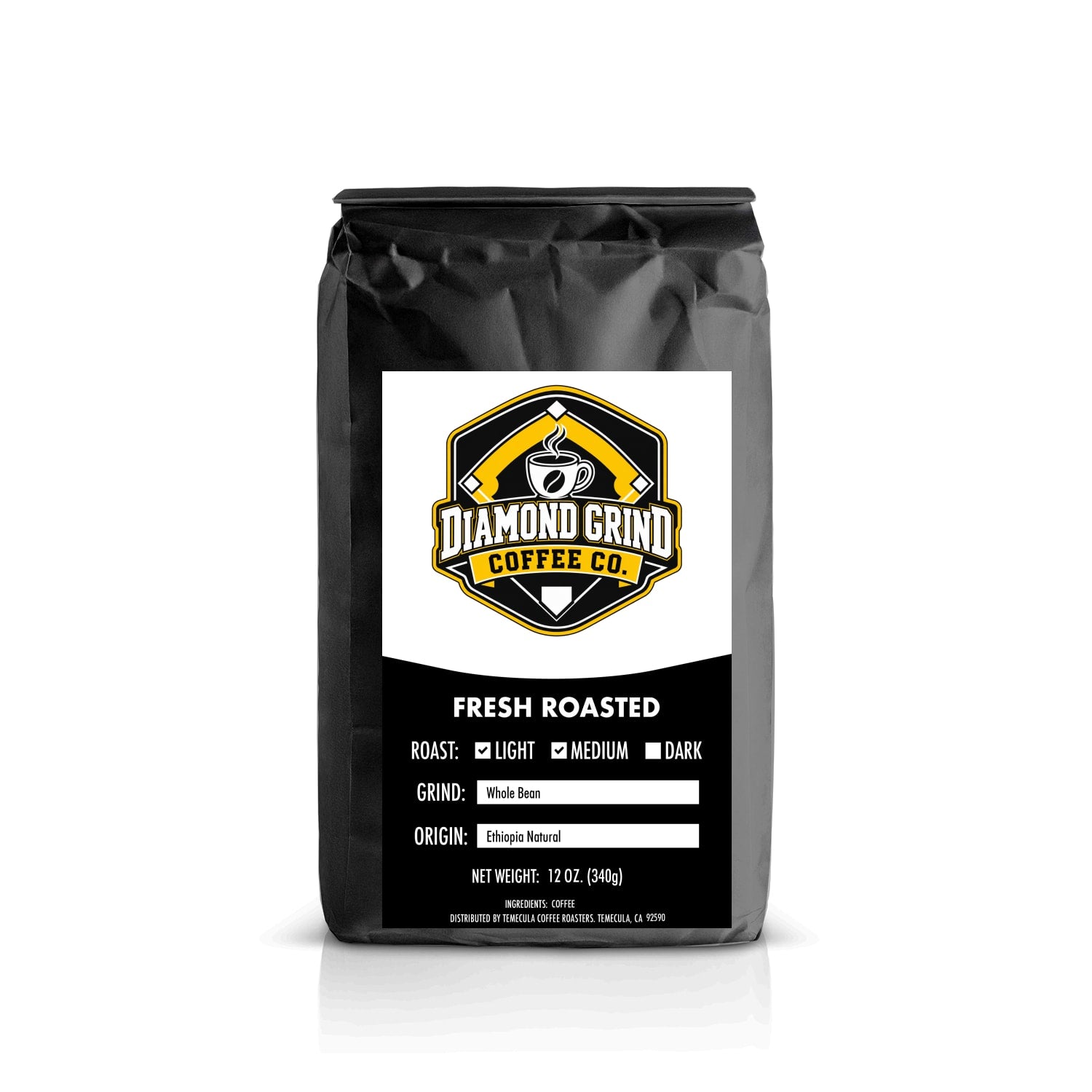
Diamond Grind Coffee roasts after you order and ships the same day. Choose whole bean or a customizable grind, from whole bean to espresso and coarse.
The Ethiopia Natural, with its milk chocolate and caramel notes, is a medium-light roast. If you want to explore before committing to a full bag, sample packs let you try several varieties.
If you are deciding what to order next, browse our fresh coffee picks delivered to your door and match a roast to your brew method.
Sharp coffee from fresh beans is a timing problem, not a quality problem. Give your beans a rest window, store them well, and adjust one variable at a time. Diamond Grind Coffee roasts to order, prints the roast date on every bag, and ships the same day, so you always know when to start brewing. Get started with Diamond Grind Coffee and taste the difference a proper rest makes.
Frequently Asked Questions
Why does coffee taste sharp when it is too fresh?
Freshly roasted beans release carbon dioxide for days after roasting. That gas pushes water away from the grounds during brewing, so the water extracts fewer flavor compounds than it should. The result is a cup that reads sour, sharp, and thin rather than sweet and balanced. The effect is strongest in the first 48 to 72 hours after the roast date and fades as the beans degas.
How long should coffee rest after roasting?
Resting time depends on roast level and brew method. A rough starting point: light roasts brewed as filter coffee often need 5 to 10 days, medium roasts 4 to 7 days, and dark roasts 2 to 5 days. Espresso usually needs more rest than filter coffee because the pressurized brew amplifies degassing effects. Taste on day three, day five, and day seven to find where your beans peak.
How can I tell if my coffee is too fresh to brew?
Check the roast date first. If the bag was roasted within the last two or three days, the beans are likely still degassing heavily. A bloom that foams aggressively and collapses fast, plus a cup that tastes sharp or sour no matter how you adjust the grind, points to freshness rather than technique. Wait a few days and brew the same recipe to compare.
How do I fix sour or sharp-tasting coffee?
First rule out freshness by checking the roast date. If the beans are rested, adjust extraction: grind finer, extend brew time, or raise water temperature slightly to pull more sweetness out of the grounds. If the cup turns bitter instead, back off one variable at a time. Change only one thing per brew so you can tell which adjustment helped.