 comparison
Press Coffee vs The Bean Coffee Company: 2026 Comparison
Table of Contents
- Press Coffee vs The Bean Coffee Company: How the Two Compare
- Side-by-Side Comparison: Roasts, Grinds, and Pricing
- Best Coffee Beans for Home Brewing: What Actually Matters
- Fresh Roasted Coffee Beans: Why Roast Dates Beat Brand Names
- Coffee Subscription Comparison: Locked-In Plans vs One-Time Orders
- Coffee Grind Size Guide: Match Your Beans to Your Brewer
- Where Press Coffee and The Bean Coffee Company Each Win
- Conclusion
- Frequently Asked Questions
Last Updated: October 20, 2026
Press Coffee vs The Bean Coffee Company: How the Two Compare
Press Coffee and The Bean Coffee Company both sell roasted beans to home brewers, and both lean on freshness as their main selling point. At Diamond Grind Coffee, we watch this comparison closely because it comes down to one question: which roaster gets genuinely fresh beans into your grinder?
The short answer: neither brand wins on every measure. One tends to favor a curated, café-style selection, while the other leans toward breadth and subscription convenience. What matters more than either name is the roast date on the bag and whether the grind matches your brewer. That is the lens we use throughout this comparison.
Side-by-Side Comparison: Roasts, Grinds, and Pricing
Before comparing anything, confirm you are on the right page.
Here is how the two stack up on the factors that actually change what lands in your cup.
| Factor | Press Coffee | The Bean Coffee Company | What to Check |
|---|---|---|---|
| Business type | Specialty roaster with retail cafés and online ordering | Online-led roaster and subscription seller | Confirm you are on the roaster's site, not a café with a similar name |
| Roast range | Light to dark, café-style lineup built around a core house style | Broad range across blends and single origins, with rotating catalog | Roast date printed on the bag, not just roast level |
| Bag sizes | Typically 12 oz bags, with some larger formats | Typically 12 oz and 2 lb bags depending on SKU | Cost per ounce, not cost per bag |
| Grind options | Whole bean and select pre-ground | Whole bean and pre-ground | Match grind to your brewer; whole bean is safest |
| Pricing model | Per-bag purchase, with multi-bag discounts | Per-bag and subscription | Total cost per bag shipped, including shipping |
| Shipping | Free over a stated order threshold; flat rate below it | Free over a stated order threshold; subscription shipping terms vary | Threshold and whether subscriptions ship free |
| Ordering | Online and in cafés | Online, subscription-led | Lock-in terms and cancellation |
| Sourcing transparency | Origin information on single-origin bags; blend components listed | Origin information on single-origin bags; blend components listed | Whether the roast date and origin are printed, not just described online |
| Best for | Buyers who want a curated roster and a café-style buying experience | Buyers who want variety on repeat | Your brewing routine and how often you finish a bag |
Roast Options and Flavor Profiles
Press Coffee tends to run a tighter, more curated roast lineup, which suits drinkers who want a house style they can rely on. Expect a core espresso blend, one or two rotating single origins, and a dark roast that holds up in milk.
A practical way to compare flavor without guessing: buy the same roast level from both, a medium roast, say, and brew them identically for a week. Note which one you reach for on the second cup. That is a better signal than any tasting-note description on a bag.
Grind Options and Brewing Compatibility
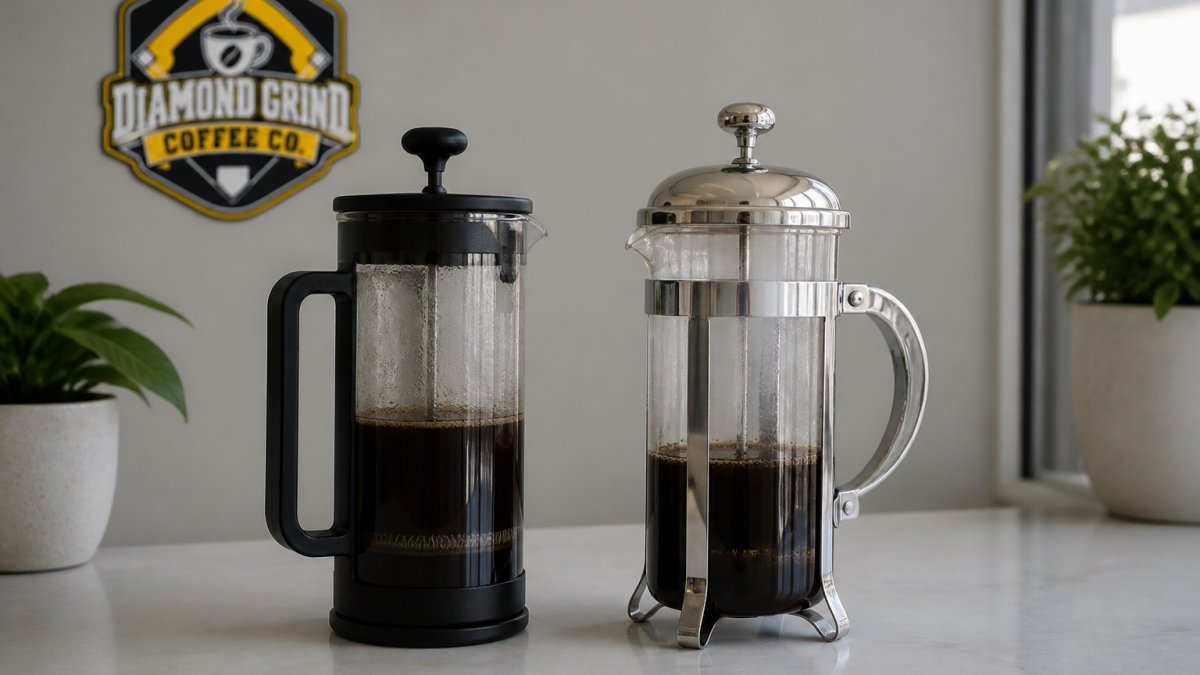
Both roasters offer whole bean and pre-ground options, but the details matter. Pre-ground coffee stales faster because more surface area meets oxygen. If you own an espresso machine, buy whole bean and grind fine and fresh. For a French press, ask for a coarse grind. For pour-over or drip, a medium grind works best.
One more check that separates a roaster that grinds to order from one that ships shelf stock: ask whether the grind is applied after you order or before. A roaster that grinds to order can tell you the grind date as well as the roast date.
Best Coffee Beans for Home Brewing: What Actually Matters
The best coffee beans for home brewing are fresh, correctly ground for your brewer, and matched to the roast level you actually enjoy drinking. Brand prestige ranks fourth. We see the same pattern repeatedly: a modest bag roasted last week beats a premium bag roasted two months ago.
Three things drive that result:
- Roast date over brand name. Coffee peaks in flavor roughly one to three weeks after roasting.
- Grind consistency. An uneven grind extracts unevenly, producing both sour and bitter notes in one cup.
- Storage. Keep beans in an airtight container away from light and heat, and buy in amounts you will finish within a few weeks.
If you want to control all three variables, a roaster that grinds to order and prints the roast date on the bag removes most of the guesswork.
Fresh Roasted Coffee Beans: Why Roast Dates Beat Brand Names
Fresh roasted coffee beans are beans roasted recently enough that the flavors have not faded, and the roast date on the bag is the only reliable way to confirm it. A "best by" date tells you almost nothing. Roast date tells you everything.
This is where our own approach at Diamond Grind Coffee differs from a typical retail shelf. We roast each small-batch order after it is placed and ship it the same day it is roasted, so the bag in your hands carries a date close to the day it left the roaster.
Coffee Subscription Comparison: Locked-In Plans vs One-Time Orders
Subscriptions win on convenience and lose on flexibility. A recurring plan suits drinkers with a stable daily habit, but it punishes anyone whose consumption varies by week. The Bean Coffee Company leans subscription-led, which works well if you drink the same volume every month.
Before you commit to any recurring plan, check five things, and check them on the roaster's own site, because terms change:
- Cancellation terms. Can you cancel online, or do you have to email or call? A plan you can only cancel by phone is a plan that is hard to leave.
- Skip and pause options. Can you skip a shipment without canceling? Drinkers who travel or brew irregularly need this.
- Grind changes between orders. If a plan locks your grind setting, it locks your brewing options too. You should be able to switch from whole bean to espresso grind on any shipment.
- Shipping threshold. Free shipping usually kicks in above a stated order total. A subscription that ships free at a lower threshold is worth more than a per-bag discount that disappears at checkout.
- Roast date on subscription bags. A subscription is only as good as the freshness of what ships. Ask whether subscription bags are roasted to order or pulled from shelf stock.
A common pattern among subscription-led roasters is a discount on the first shipment followed by full price on later ones. Read the per-shipment price, not the introductory price, and compare it to the per-bag price on a one-time order.
For anyone who travels or brews irregularly, one-time orders are the safer structure.
Coffee Grind Size Guide: Match Your Beans to Your Brewer
Grind size determines how fast water moves through the coffee, and that controls extraction. Too fine and you get bitterness and sediment. Too coarse and the cup tastes weak and sour. Match the grind to the brewer and the rest follows.
| Brewer | Grind Size | Brew Time | Watch For |
|---|---|---|---|
| French press | Coarse | 4 minutes steep | Sediment in the cup |
| Pour-over | Medium | 3-4 minutes | Uneven saturation |
| Drip machine | Medium | Machine cycle | Clogged filter |
| Espresso | Fine | 25-30 seconds | Channeling, gushing |
If you are unsure, order whole bean and grind in small batches. A burr grinder produces a more consistent particle size than a blade grinder, and consistency matters more than any single setting.
Where Press Coffee and The Bean Coffee Company Each Win
Press Coffee wins on curation. If you want a focused roast lineup and a café-style buying experience, its tighter selection is easier to navigate than a sprawling menu. The Bean Coffee Company wins on variety and subscription convenience, which suits drinkers who want a rotating selection delivered on a schedule without thinking about it.
Neither wins outright on freshness transparency, and that is the gap worth noting. Ask both for a roast date. If the answer is vague, that tells you more than any marketing page will.
For a side-by-side starting point, our 6 Bean Blend is a dark roast built for espresso, and the Best Sellers Sample Pack lets you test six coffees before committing to a full bag.


Conclusion
Choosing between these two roasters comes down to how you brew and how often you buy. If you want variety on a schedule, a subscription-led roaster fits. If you want control over roast date, grind, and timing, buy from a roaster that grinds to order and ships the day it roasts.
That is how we built Diamond Grind Coffee: small-batch roasting after your order, same-day shipping, and grind options from whole bean to espresso and coarse, with free shipping on U.S. orders. Start with a sample pack, find the roast that fits your brewer, and let the roast date settle the argument.
Frequently Asked Questions
What is the difference between Press Coffee and The Bean Coffee Company?
Press Coffee runs its own cafes and roasts in-house with a focus on espresso drinks and pour-over service, while The Bean Coffee Company sells packaged beans and ground coffee for home brewing. The practical difference is control: Press Coffee's cafe menu is fixed by the barista, while The Bean Coffee Company lets you pick roast level and grind at checkout. Neither publishes a full side-by-side spec sheet, so compare roast dates, grind options, and price per bag before choosing.
Which brand offers better beans for home brewing?
The better choice depends on your brewer. For French press and pour-over, look for whole bean coffee with a printed roast date and a grind you can adjust yourself. For drip machines, a medium grind matched to a medium roast is the safest starting point. Diamond Grind Coffee ships the same day it roasts and offers whole bean, standard, espresso, and coarse grind options, so you can dial in the grind for your setup instead of accepting a single default.
How do Press Coffee and The Bean Coffee Company compare on roast options?
Both roasters cover the light-to-dark range, but the depth varies by season. Press Coffee tends to rotate single-origin offerings through its cafe menu, while The Bean Coffee Company keeps a more fixed lineup of blends and flavored coffees. If you want a dark roast built for espresso, Diamond Grind Coffee's 6 Bean Blend ($24.99) is a dark house blend designed for espresso. If you prefer medium, the House Blend ($24.99) delivers nutty, sweet chocolate notes with mild citrus.
Which brand is better for French press coffee?
French press rewards coarse, evenly ground coffee and fresh beans. Whichever roaster you pick, order whole bean and grind coarse just before brewing, then use a 4-minute steep with water just off the boil. Diamond Grind Coffee offers a coarse grind option at checkout, and its Best Sellers Sample Pack ($24.99) lets you test six coffees in 2 oz packs before committing to a full bag, which is useful if you are still comparing roasters.
How should I compare coffee freshness between two roasters?
Check three things: whether a roast date is printed on the bag, how soon after roasting the coffee ships, and whether the bag has a one-way valve. Coffee peaks roughly 3 to 14 days after roasting for most brew methods. A roaster that prints only a "best by" date gives you no way to verify freshness. Ask directly, and treat same-day roast-and-ship as the strongest signal a roaster can offer.